
- Locations
- Interviews
- Luxury Home
- Luxury Lifestyle
- Luxury Travel
- Luxury News
- Events
- More
- Magazine
- Contact Us

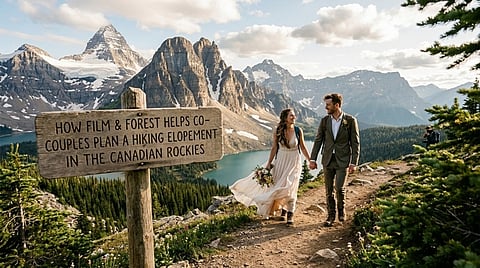
A hiking elopement in the Canadian Rockies works best when couples match the route to their fitness, secure a Parks Canada permit, and book an elopement photographer who reads alpine conditions confidently. Pair a sunrise or shoulder-hour ceremony with a tested trail, weather buffers, and lightweight formalwear. The outcome is an intimate exchange of vows that respects the terrain and captures the landscape with honesty.
Couples drawn to mountain weddings often underestimate the logistical work sitting between the daydream and the trailhead. A hiking elopement in the Canadian Rockies asks for more than a scenic backdrop and a willing officiant. It calls for route research, permit paperwork, gear selection, and a creative partner who can move equipment across uneven ground without slowing the day.
That coordination is where seasoned specialists earn their place. Working with a team like Film & Forest gives couples access to professionals who treat trail safety, light timing, and ceremony pacing as one connected workflow. The reality is that alpine ground rewards preparation and punishes improvisation, so the groundwork laid months ahead shapes everything from outfit fabric to the moment vows are spoken.
A successful trail ceremony begins well before the wedding morning. Couples who approach the day as a guided expedition, rather than a styled shoot in a wild setting, walk away with stronger images and a safer experience. The mountain corridor stretching from Banff through Yoho rewards that mindset, since conditions shift quickly across elevation bands, slope exposure, and seasonal snowpack.
The opening decision is pairing the path with the couple's actual conditioning, not their aspirational version of it. A moderate alpine trail with 300 to 500 metres of vertical gain demands different preparation than a lakeshore stroll. In practice, that means picking ground that leaves room for the ceremony, portraits, and a relaxed descent before afternoon weather builds.
Adventure wedding photographers familiar with the regional ranges routinely scout paths for footing quality, wind exposure, and shaded micro-locations that protect skin and fabric from harsh midday sun.
Parks Canada requires a Special Event Permit for ceremonies on federal land, with fees and group caps that vary by site. Pacing is the second variable. Local-area weather can swing from clear to convective inside an hour during summer, so the schedule needs slack.
Tip: Build a 90-minute weather buffer into any ceremony set above treeline. Storm cells in the regional ranges often form mid-afternoon, and dropping below exposed ridgelines before that window protects both safety and gear.
Clothing choices matter more than couples expect. A packable garment bag, trail-rated footwear for the approach, and a clean change layer at the ceremony site keep the look intact. Booking an adventure engagement photographer earlier in the planning cycle offers a realistic preview of how outfits behave under wind, sun, and pack straps.
A 30-to-40-litre pack that carries dress, shoes, and camera gear without crushing fabric
Layered base clothing rated for shoulder-season temperature swings
A compact emergency kit covering bear spray, blister care, and a satellite communicator
Lightweight tripod or stabilizer for ceremony footage when the wind permits
Once the path is locked in, attention shifts to sequencing the hours so the ceremony, portraits, and walk-out fit a realistic energy curve. A well-structured day protects both the couple's experience and the integrity of the imagery.
Most ceremonies in the area follow a sunrise or late-afternoon arc, driven by light quality and crowd patterns. An early start usually means a pre-dawn trailhead meet, a headlamp ascent, vows at first light, and a leisurely walk down for breakfast. The afternoon model reverses that rhythm, ending at golden hour with a quieter descent.
A typical sunrise sequence looks like this:
Trailhead arrival 90 minutes before sunrise
Ascent with breaks for hydration and pack adjustments
Outfit change at a sheltered staging point near the summit
Vow exchange at first light
Portrait window of 45 to 60 minutes across two micro-locations
Controlled walk-down with mid-trail stops for candid coverage
A compact, mobile crew works better on trail than a traditional wedding party. One lead from your team of adventure wedding photographers, plus an optional second shooter or videographer, is generally the ceiling on technical ground. An officiant comfortable with elevation, a witness or two, and a guide for longer routes round out the group without crowding sensitive ecosystems.
Vendor coordination should cover three points:
Confirmed meeting location with GPS coordinates and a backup waypoint
Shared weather decision tree with go, delay, and reroute thresholds
Clear handoff of who carries what across the ascent
The outcome is a day that feels purposeful rather than rushed, with each person on trail adding to a calm and well-documented ceremony.
Securing a creative partner months in advance shapes how confidently a couple moves through the wider planning process. A pre-wedding session on similar ground works as both a portrait shoot and a low-stakes rehearsal.
A trail-based engagement shoot tests footwear, fabric behaviour, and how the couple moves together under a pack. Working with an adventure engagement photographer in the same alpine zone reveals how light reads across complexion, how wind affects veil or jacket choices, and which poses feel natural after a climb. Beyond the basics of headshots, these sessions build trust and an easy working shorthand between the couple and the creative.
Picking a photographer for technical terrain takes more than scrolling through a portfolio. Practical screening questions include:
Documented experience on multi-hour alpine routes in shifting weather
Familiarity with Parks Canada permit categories and group size limits
A defined backup plan for storm reroutes or trail closures
Insurance coverage extending to backcountry photography work
A booking lead time of nine to twelve months is standard for peak summer dates, and shoulder seasons fill almost as fast for autumn larch coverage.
The right hiking elopement photographer converts logistical complexity into a calm, well-paced day, leaving couples with images that match the scale of the landscape and the intimacy of the moment.
A successful mountain ceremony comes down to disciplined preparation, honest fitness assessment, and the right creative partnership. Couples who research permits early, match their route to real conditioning, build weather buffers into the timeline, and brief a small mobile team set themselves up for a calm and well-documented day.
The landscape will deliver its share of drama on its own. A thoughtfully planned hiking elopement in the Canadian Rockies turns that drama into a ceremony that feels grounded, intimate, and entirely true to the couple standing at altitude.
Inspired by what you read?
Get more stories like this—plus exclusive guides and resident recommendations—delivered to your inbox. Subscribe to our exclusive newsletter
The products and experiences featured on RESIDENT™ are independently selected by our editorial team. We may receive compensation from retailers and partners when readers engage with or make purchases through certain links.