
- Locations
- Interviews
- Luxury Home
- Luxury Lifestyle
- Luxury Travel
- Luxury News
- Events
- More
- Magazine
- Contact Us

Choosing an iPhone repair shop in San Diego, California, should involve more than finding the fastest or cheapest option. A damaged phone can affect calls, payments, photos, work access, and private data, so the repair process needs clear pricing, careful diagnostics, suitable parts, and written warranty terms. Customers should also look at model coverage, technical depth, communication, turnaround time, and how the shop protects personal information during service. Reviews and intake habits can reveal whether a provider treats repairs with care or simply pushes quick replacements. When comparing “the best iPhone repair near me”, you should weigh skill, transparency, and after-repair support together. That approach helps a damaged iPhone return to daily use with fewer risks.
Neighborhood repair experience matters because technicians see recurring failure patterns across nearby users. While searching for a good iPhone repair shop, you should compare service history, intake testing, model coverage, and posted pricing. A capable shop handles cracked screens, weak batteries, charging faults, liquid exposure, and board-level damage with direct explanations instead of vague guesses.
A qualified repair shop should support both current and older iPhone models. Broad coverage suggests stronger parts access and a deeper hands-on experience. Families often bring in more than one device, so range matters. Customers should ask about screens, batteries, charging ports, rear glass, cameras, housings, speakers, microphones, and data recovery before leaving a phone.
Clear pricing protects customers from checkout surprises. Common services should be listed by model or explained before repairs begin. Diagnosis fees, labor, part grades, and possible add-on charges need plain disclosure. A written estimate gives both sides a shared record. It also makes comparison easier than relying on quick verbal numbers.
Replacement parts differ in fit, brightness, touch response, and long-term stability. Some shops may offer aftermarket displays, premium organic light panels, or Apple original components. Each choice carries a different cost and expected performance. A careful technician explains those tradeoffs without pressure. That guidance helps customers match the repair to budget, device age, and daily use.
Accurate repair begins with testing, not assumptions. A broken screen can hide frame bends, battery swelling, or touch sensor faults. Charging trouble may come from lint, cable damage, port wear, or internal board failure. Diagnosis confirms the cause before parts are replaced. That step reduces wasted money and repeat visits.
Some failures require advanced repair skills. Liquid damage, no-power symptoms, and data recovery often involve board inspection under magnification. Micro soldering capability can separate a full-service repair shop from a basic parts counter. Technical depth matters most when a failing phone traps photos, contacts, work files, or authentication features inside.
Speed helps, but accuracy matters more. Many screen and battery replacements can be finished the same day if parts are available. More serious faults need extended testing after repair. A dependable shop gives a realistic time range at intake. Honest timing lets customers plan around work, school, transportation, and family needs.
Good communication lowers stress during repair. Staff should explain the suspected fault, estimated cost, expected timeline, and warranty terms before work starts. They should also mention risks, such as liquid damage uncertainty or Face ID sensitivity. Clear updates show discipline. Confusing answers, pressure tactics, or missing details should make customers pause.
A warranty shows accountability after the phone leaves the counter. Customers should ask what is covered, how long coverage lasts, and which conditions void it. Screen defects, battery faults, and part failures may carry different terms. Written details beat casual promises. Clear policies make follow-up care simpler if symptoms return.
Phones hold private messages, photos, payment apps, passwords, and work accounts. A professional repair process should limit unnecessary access. Staff should explain any testing step that requires a passcode. Customers should back up data whenever possible before service. Even then, every device deserves careful handling, privacy awareness, and respectful intake procedures.
Reviews reveal service patterns that price lists miss. Customers should look for repeated comments about honesty, turnaround, repair quality, and problem resolution. One poor review does not define a business. A consistent pattern carries more weight. Responses from staff also show whether concerns are handled with professionalism and care.
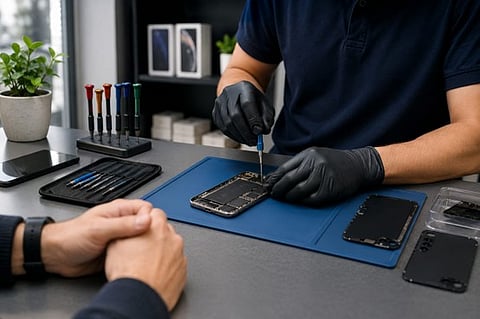
An organized workspace often reflects disciplined repair habits. Labeled parts, proper tools, clean benches, and detailed intake notes reduce preventable mistakes. Customers can see whether staff document visible damage at drop-off. That record protects both parties. Strong systems create fewer disputes and clearer answers if questions arise later.
Prices far below local averages can signal weak parts or rushed labor. Missing estimates, unclear warranty terms, and vague explanations deserve caution. Customers should also question any promise made before inspection. Honest technicians know some damage requires testing before final answers. Trust grows from accuracy, not inflated certainty.
The lowest quote may cost more if the repair fails. Value includes part quality, technician skill, warranty support, speed, and communication. A fair price should match the chosen component and repair difficulty. Customers benefit from comparing complete service details, not a single number. Strong value usually means fewer future problems.
A trusted iPhone repair shop makes the process clear from diagnosis through pickup. Customers should expect transparent pricing, suitable part choices, careful data handling, and proven technical skill. Same-day service can be useful, but accurate repair should remain the priority. Strong reviews, written warranty terms, and calm communication all point to dependable care. With the right provider, a damaged iPhone can return to daily use with less stress.
Inspired by what you read?
Get more stories like this—plus exclusive guides and resident recommendations—delivered to your inbox. Subscribe to our exclusive newsletter
The products and experiences featured on RESIDENT™ are independently selected by our editorial team. We may receive compensation from retailers and partners when readers engage with or make purchases through certain links.