
- Locations
- Interviews
- Luxury Home
- Luxury Lifestyle
- Luxury Travel
- Luxury News
- Events
- More
- Magazine

Launching multiple product variants helps brands to attract new customers. It is a smart way to test what they actually prefer while opening up extra sales. Yet, in practice, it adds up to costs quicker than expected.
Each new product needs its own ingredients, packaging, labels, plus storage space and production plans on top of everything else. This means costs stack before money flows back. Small businesses with limited cash often put in more than they recover.
But it doesn't mean that you cannot get profits either. This guide lays out some practical steps for keeping those extra versions affordable, quality holds steady, and profits get a better chance at surviving the ramp-up.
How can small brands reduce the cost of launching multiple product variants? Let's get started.
Launching ten cosmetic serum variations looks like an easy expansion, right? But each one brought its own expenses that ate profits before any real sales started.
Here are factors that make launching multiple product variants expensive.
Product Development
Product development hits early and hard. Just think about it. A soap maker pushing five fragrances needs its own round of formulation tests for every last one. Meanwhile, cosmetic brands need compatibility checks, stability work, and full evaluations on top.
Product Packaging
Product packaging also follows suit fast. You get separate designs, plus labels and boxes in different sizes, which forces small production runs.
Product Inventory
Inventory turns messy quickly. Slow movers sit around anyway. You keep paying for the warehouse space even when they generate barely any revenue.
Product Marketing
Marketing stretches the budget further. Each variant needs its own images, web pages, and dedicated campaigns.
New brands chase the idea that more choices equal more sales. It rarely works out that way. Too many options just overwhelm people at the shelf. They walk away. And those extra products quickly add up in inventory and production costs.
A focused launch makes way more sense. You handle marketing and stock without the usual headaches. Customers give you feedback early. That proves useful before you spend money on a bigger lineup.
Take soap makers, for example. Starting with three core scents often beats rolling out fifteen varieties at once. Turns out it creates problems instead.
Cosmetics brands face the same reality. They would rather roll out 3 product lines first than flood the market with a whole makeup collection on day one,, and the limited range ends up feeling a lot more manageable.
Skincare brands follow a similar path in practice. They open with the basics: a cleanser, some moisturizer, and a serum to set down that foundation. Only after that foundation is solid do they start with the specialty items.
The goal stays simple enough not to scare anyone off, yet with enough variety mixed in to pull customers. Balance matters more than a big splashy debut. Not exactly surprising, but it shows.
Skincare brands follow this too. They start with the essentials. A cleanser, moisturizer, and serum create that base. Only then do they add the specialty items.
Overall, small brands must stay simple with enough variety to draw customers in before launching a huge product line.
Launching with fewer SKUs keeps those initial costs from exploding. Every additional product you bring out creates extra inventory, sits in warehouses, and the need for packaging differences. Forecasting that never feels accurate, and more production runs than you want. Starting small gives some breathing room to identify the real sellers.
Using shared ingredients and standardized product sizes can help you launch without breaking the bank.
Here's how.
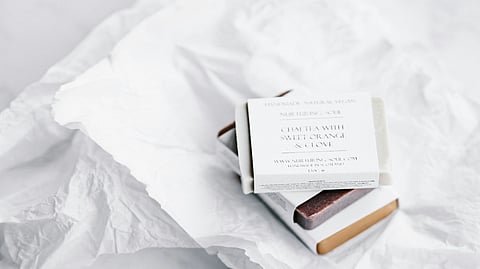
Soap makers can make real savings with one base recipe. Keep the foundation steady and experiment with other scents or colors. This overlap makes ordering supplies less of a pain and gets bigger discounts on bulk items.
Cosmetics brands run the same play. One starting mix supports a range of looks or feels. That way, you switch around the equipment less.
And the bottle sizes matter for extra wins. You can load all the same-sized facial wash bottles into the same container, no matter the version.
Soap bars work like this also. Uniform dimensions across every fragrance. The wrapping fits all of them. It smooths the entire chain from the mixer to the shelf.
This strategy is not exactly rocket science. But it adds up when you're running consistent business operations.
Soap brands spend a lot on packaging. And for what exactly? Each new scent does not need its own special box built from scratch. One structural design across the board changes the cost equation.
For example, small soap brands using custom soap boxes can maintain a single structural design across multiple scents. Whether the soap contains lavender, oatmeal, mint, or charcoal, the box dimensions can remain the same. This approach lowers production costs, simplifies inventory management, and speeds up packaging procurement.
Cosmetics brands have done this for ages with lipstick ranges, foundation collections, or full skincare sets. Use the same base package every time; only labels and graphics change.
Startups and small businesses run nothing like those giant corporations, and suppliers understand that. All you need is to share your growth picture, and options appear.
Soap makers will sometimes order a smaller fragrance batch for new customers. Packaging suppliers drop their box requirements if they like the chance of repeat work.
Skincare lines do this constantly. They contract manufacturers that offer low minimums.
Negotiate and explain your projected path when you reach out, and ask directly about trial production or those starter quantities. Even a modest cut there reduces your upfront cost. Smaller runs cut inventory risks too.
Small launches carried real costs in the old days. All because of those setup charges and printing plates that traditional methods required.
Digital printing has simplified things up.
Brands can now print smaller amounts without the big expenses. Perfect for trying different versions. Customization is also very easy with this method. Change the look, change the message or details on ingredients—no entire new setup needed.
Small brands fail when they manufacture huge runs before any customer proves they want the product. Well, this choice leaves warehouses full and bank accounts empty.
Here is how to test customer demand before scaling production.
Pre-order method
Try a method like pre-orders, where customers pay for products that don't exist yet. You will get a clear read on demand without the full risk.
Social media ads
Social media adds another layer. Post a concept out there and watch what comments and likes actually show up before you commit serious money to manufacturing. For example, we can mention brands that redefine modern skincare products. They use social media ads to attract customers.
More choices would pull in extra customers. A soap outfit starting out with lavender charcoal and oatmeal pretty much needs three labels, a couple of scent batches, and inventory that does not spiral. It stays manageable. But jump straight to ten. The ingredient orders grow fast, you scramble for more packaging designs, marketing shots multiply, and the warehouse fills with products that might not move.
Skincare brands run into the same wall. Start with cleanser, serum, and moisturizer to keep marketing sharp and keep day-to-day ops from getting bloated. Launching ten right away? More mixes to test, unique bottles for each one, a pile of how-to guides, the website needs real expansion, and ad spend adds up faster than planned.
Small brands tend to grow steadier with three to five picks done right. Jumping into ten or more from the beginning rarely pays off.
Reducing product launch costs is a common goal for small brands. Here are answers to some of the most frequently asked questions about launching product variants on a budget.
How many product variants should a small brand launch initially?
Three to five. Customers get enough variety this way while production, inventory, and marketing costs stay under control.
What is the most effective way to lower manufacturing costs across multiple variants?
Using one base ingredient. That's all some soap brands need for a whole range of scents, and it applies to skincare products with those active ingredients. Small brands can also launch standardized product sizes into the equation.
Why is testing demand important before launching new variants?
When a brand uses pre-order sample campaigns or social media polls, they can figure out which products will actually sell before going all in on big production runs that create excess inventory.
Is digital printing better for small product launches?
Digital printing lets small businesses and startups order much smaller amounts—without the giant setup fees.
What is the biggest mistake small brands make when expanding product lines?
Some small brands love flooding shelves with every option imaginable. However, that move creates headaches faster than you would expect. Inventory costs climb, cash flow takes a hit, and operations grow more complicated. In the end, you lose track of which products drive actual sales.
Launching multiple product variants can support business growth. But the planning has to be right, or it fails to stay affordable.
Small brands can do better by starting with fewer SKUs, using shared ingredients across the line, and keeping packaging consistent while negotiating lower minimum orders with suppliers. Follow these steps to reduce what your business needs to spend to get to market.
Inspired by what you read?
Get more stories like this—plus exclusive guides and resident recommendations—delivered to your inbox. Subscribe to our exclusive newsletter
The products and experiences featured on RESIDENT™ are independently selected by our editorial team. We may receive compensation from retailers and partners when readers engage with or make purchases through certain links.