
- Locations
- Interviews
- Luxury Home
- Luxury Lifestyle
- Luxury Travel
- Luxury News
- Events
- More
- Magazine

Code-switching is adjusting how you speak, present, and operate as you move between different settings, from boardrooms to family to cultural spaces.
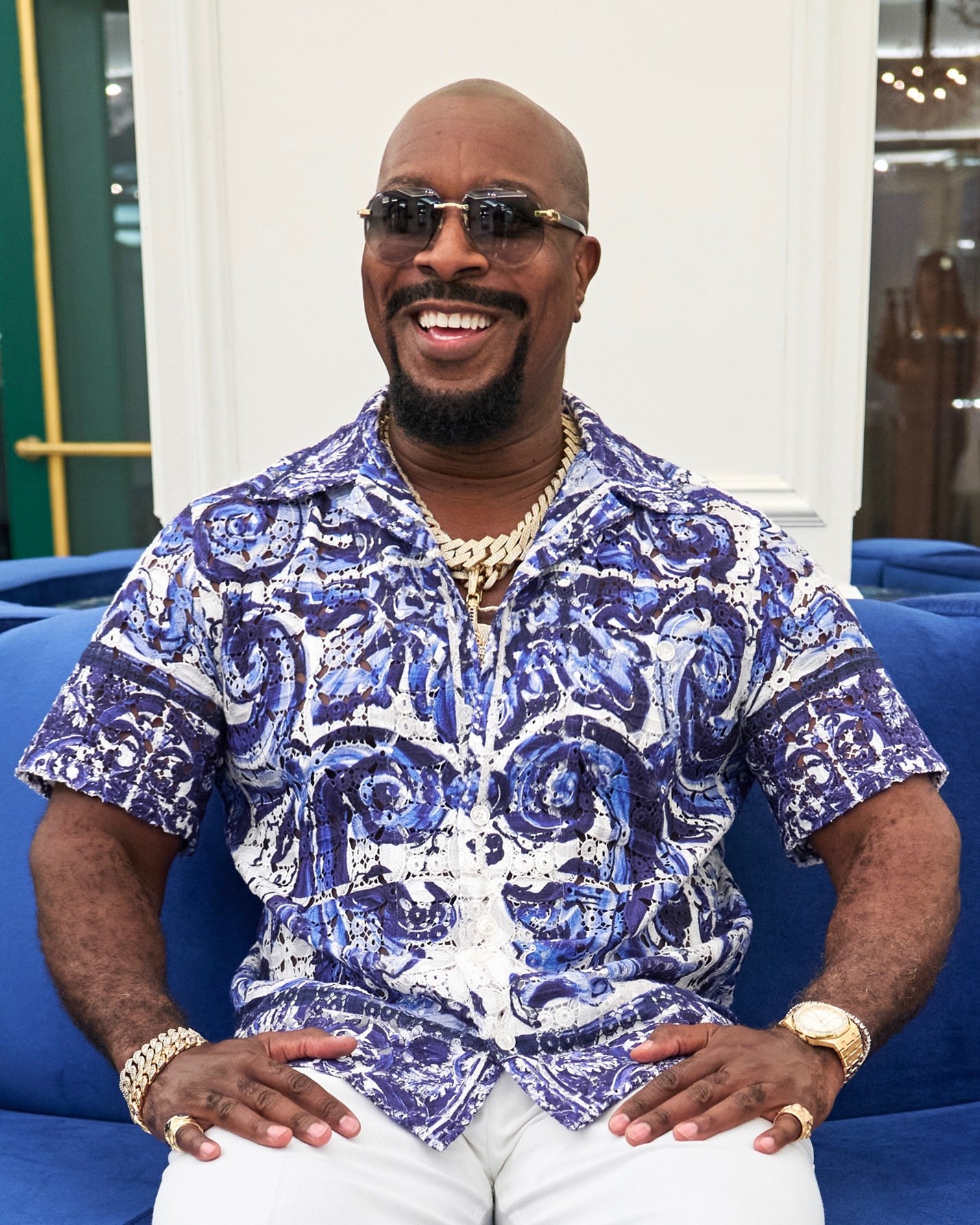
In his memoir Code Switch: The Diary of Demetrius A. Matthews, entrepreneur and filmmaker Demetrius A. Matthews reframes it as a deliberate skill rather than a loss of authenticity.
The book expands on his documentary Kling: A Hidden Hero and traces his path from inner-city Chicago to the business world.
Matthews is building Legacy Media, a multi-platform storytelling company spanning film, books, and digital.
Code-switching is the practice of adjusting how you speak, present yourself, and operate as you move between different social, cultural, and professional settings. Most people do it without naming it. The tone that works in a boardroom is rarely the one used at the family table. For entrepreneur and filmmaker Demetrius A. Matthews, that instinct became both a survival tool and the subject of his memoir, Code Switch: The Diary of Demetrius A. Matthews.
Blending personal storytelling with cultural insight, Matthews traces his journey from inner-city Chicago to the business world, revealing the unspoken rules, shifting identities, and quiet calculations required to move through spaces that demand different versions of self. Written with a raw, cinematic tone, Code Switch expands on themes first introduced in his documentary Kling: A Hidden Hero, A Teacher That Defied the System, and reframes code-switching as something far broader than a communication tactic.
Matthews shares how his journey shaped the book, what code-switching has taught him about identity and leadership, and why the conversation feels more urgent now than ever.
Code-switching is often reduced to changing vocabulary or accent, but Matthews treats it as a deeper act of awareness: reading a room, understanding an audience, and choosing how to show up without abandoning a core sense of self. In an era when people move constantly between social media, corporate environments, and cultural expectations, the skill has become nearly universal, even for those who never had a word for it. The question at the heart of Code Switch is not whether we adapt, but whether we stay grounded while doing so.
Matthews: It challenges identity and authenticity. Are we truly being ourselves, or adapting to survive systems that weren’t built for us? It also asks how much of who we are is chosen versus conditioned. Today, people are navigating more environments than ever, from social media, corporate spaces, cultural expectations, and the pressure to adapt is constant. This book gives language to something many people are already doing unconsciously. I want readers to understand that adapting doesn’t mean losing yourself; it means learning how to operate effectively while staying grounded.
Matthews: Communication is the simplest example. The way you speak in a boardroom versus with family is different, and that’s not inauthentic, it’s awareness. It’s about understanding your audience and communicating in a way that builds trust and achieves results.
Matthews: Growing up in Chicago, decisions had to be made quickly: who to align with, how to respond and where to go. I was constantly moving between different worlds: family, school, and the streets, each with its own expectations. Loyalty mattered, but so did survival. I learned early how to read the room, adjust my tone, and make choices that protected my future.
Matthews: It gave me control. Instead of feeling like I had to adjust, I started using it as a strategy. What surprised me most was realizing it’s not a weakness, it’s a skill. Once I embraced that, I could move confidently across different spaces without losing who I am.
What surprised me most was realizing it's not a weakness, it's a skill.
Matthews: He taught belief and accountability. One of the biggest lessons he gave me was that your environment doesn’t define your outcome—your decisions do. That stayed with me.
Matthews: Purpose. Everything I’m engaged in, from my business to my creative work and personal growth, is driven by impact and legacy.
Matthews: I’m building across platforms—film, books, and digital—through my company, Legacy Media. That includes new documentaries, additional books on identity and transformation, and adaptations of existing work like Code Switch. The goal is to create a connected storytelling ecosystem. I’ve always been drawn to real experiences and translating them into something meaningful. If a story can shift someone’s perspective or change their direction, that’s powerful.
Across film, books, and now a memoir, Matthews keeps returning to a single idea: adaptation and authenticity are not opposites. Code Switch gives readers language for something many already do instinctively, and a framework for doing it with intention. As he builds Legacy Media into a multi-platform storytelling company, with new work on identity and transformation ahead, his throughline stays the same: purpose, impact, and the belief that the right story can change someone's direction.
Inspired by what you read?
Get more stories like this—plus exclusive guides and resident recommendations—delivered to your inbox. Subscribe to our exclusive newsletter
The products and experiences featured on RESIDENT™ are independently selected by our editorial team. We may receive compensation from retailers and partners when readers engage with or make purchases through certain links.