
- Locations
- Interviews
- Luxury Home
- Luxury Lifestyle
- Luxury Travel
- Luxury News
- Events
- More
- Magazine

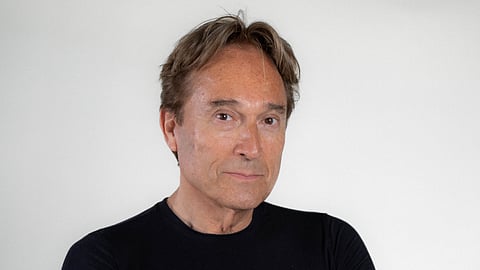
Mark Derho: Hardy, one of the things that struck me about you is that you're not really a conventional corporate executive, and you're not really a conventional entrepreneur either.
Hardy Steinmann: I'm kind of a hybrid between a corporate animal and an entrepreneur.
I'm originally from Switzerland. I grew up there for about 23 or 24 years. Then I lived in Asia for just under 20 years, and the rest has been between New York, California, and Shanghai. So I've really lived one-third, one-third, one-third on different continents.
I'm very much into the culture of people. To understand what's happening in this world, what the habits are, what the psychology is. That's what really makes me go.
I'm also normally a turnaround person. I move into companies and fix companies. And the funny thing is, for me, the more a company sucks, the more I want it.
Mark Derho: That's actually a pretty good definition of a turnaround guy.
Hardy Steinmann: Exactly. It's something that doesn't always work out well.
But culturally, turnarounds are different everywhere. Thailand is different from Shanghai. Shanghai is different from Vietnam. Vietnam is different from the Philippines. Then you go to Europe or the United States. The thinking of people is slightly different everywhere.
Where I'm coming from is that I look at everything with a very deep level of detail. I want to understand where something went wrong and why.
I've worked with multibillion-dollar companies, including the Swatch Group and DKSH, which is a 120-year-old Swiss company operating throughout Asia. I also worked with Andy Warhol in the 1980s in a much more creative environment.
So I like that mixed bag.
I love art. I love precision. I love uniqueness and detail. Bringing those things together is what you see today in OKAPA.
Mark Derho: And OKAPA is actually a pretty unusual name.
Hardy Steinmann: It comes from Papua New Guinea.
In the mid-1970s, I lived in a village called Okapa. I was there for a couple of years, literally in the jungle. I spoke the language of the people there.
That experience is tattooed in my brain. It was very, very deep for me.
When I was looking for a name for this bottle, which I thought was so unique in its design, I wanted something that had a backdrop. Something where people would say,
"What is OKAPA?"
I didn't necessarily want people to immediately connect the name to Papua New Guinea. I wanted OKAPA to eventually take on its own persona through the people using the bottle.
But there is this enormous 180-degree progression behind it. I went from living in a jungle hut in Papua New Guinea to creating what is essentially a highly engineered luxury object.
Mark Derho: So it's fair to say the bottle was born in a hut in New Guinea?
Hardy Steinmann: The idea of the name, yes. And the progression from there is incredible.
I was very young then. I'm not sure I could survive in a hut today.
Mark Derho: You might have a shot.
Hardy Steinmann: Maybe.
But that's the thing. We're still human beings. They were human beings. We are human beings today. And yet look at what has happened between then and now.
That experience gave me an appreciation for health, for the basics, for what we actually need.
And that became part of the thinking behind OKAPA.
Mark Derho: You told me something else that really caught my attention. You had been thinking about a luxury water bottle for almost 20 years.
Hardy Steinmann: Twenty years ago, I was already telling friends that the bottle market was going to move into the luxury space because people use bottles all day long.
But I thought we were using the wrong materials.
You hydrate all day long, and you're putting your water into steel bottles, plastic bottles, all kinds of materials.
I always asked myself, are we eating from steel plates? Are we eating from plastic plates?
Not necessarily.
So I wanted to bring something to market with a completely different character.
I went to an industrial design firm in San Francisco with maybe 300 or 400 bottles. I put them all on the table and said, "Okay, guys, if you find one bottle here that you like, we'll never work together."
Mark Derho: That's a pretty good way to start a design meeting.
Hardy Steinmann: I really wanted something completely different.
Then I had this perfume spray from Japan that used aluminum and glass. When I saw it, I thought, "I'm going to make OKAPA out of this."
That became the beginning.
Mark Derho: But you didn't take an existing bottle and simply make it more expensive.
Hardy Steinmann: No. From scratch. Absolutely from nothing.
That's actually the great question. The bottle market is huge. Massive. So how can the market possibly need another water bottle? There is so much stuff out there.
That's why it took so long.
It wasn't just choosing better materials. We had to find the materials, understand where they were produced, figure out how they could be manufactured, and then figure out how the whole concept could work together.
We made thousands of prototypes.
There were endless no's. Every factory, every designer, everybody would tell you, "It doesn't work. You can't manufacture it this way. This material doesn't work with that material."
But eventually you get there.
It took eight years.
Mark Derho: Eight years for a water bottle.
Hardy Steinmann: Eight years.
You could almost say we went to hell and back. Or at least up and down a very high mountain.
Mark Derho: Let's talk about the glass, because that's where this gets really interesting.
Hardy Steinmann: The glass is one of the most important parts.
It's essentially zero-porosity glass, the kind of glass associated with demanding medical applications. The glass comes from Germany, and there is essentially one factory that makes this particular type of glass.
We spent about a year and a half to two years just getting the glass right.
The factory initially told me, "Hardy, forget it. We cannot make it that lightweight and that thin."
And I said, " That's exactly what we need.
The idea was to protect the glass inside the outer shell with shock absorption and the other components.
Mark Derho: So if you put coffee in it and then rinse it out, you're not getting that lingering coffee taste when you put water back in?
Hardy Steinmann: Exactly.
Nothing finds a little crevice to stay there. That's the big thing.
Then we worked on the shell, the shock absorption, the locking mechanism, and everything else.
The spout uses a material from Switzerland. It's made in a small village, and it has extremely high tensile strength. It's used in applications including baby bottles.
It feels good on the lips. It doesn't crack easily, doesn't develop those little hairline cracks, and doesn't accumulate odor.
Your OKAPA luxury water bottle uses 100% recyclable materials because the OKAPA brand loves the world
Mark Derho: I've cracked the plastic top on so many water bottles and coffee cups. I get swag from art shows and food and wine festivals all the time, and those bottles last exactly until you break or lose the top.
So right there, that's the last water bottle you'll ever buy.
Mark Derho: Swiss watch. Swiss engineering. Swiss bottle.
Hardy Steinmann: With the fanaticism of a Swiss, you could say. But it's built on a global basis.
Mark Derho: Precision.
Hardy Steinmann: Precision.
You don't necessarily see all the precision.
There are nine or ten silicone pieces inside that hold the bottle stable and help create the leak- and spill-resistant system. The spout feeds into the neck of the glass bottle.
Mark Derho: Dude, I took it apart.
Hardy Steinmann: I'm glad you did.
It's like LEGO. Snap, snap, snap.
We wanted to make sure a five-year-old could actually handle it.
And those little holes you see are part of the aeration system. Air comes up from the bottom through the bottle. That means humidity can't simply build up and stay there, which helps prevent mold.
Obviously, you still have to wash the bottle.
Mark Derho: I figured that part out.
Hardy Steinmann: Except for the shell, the components can be removed and cleaned. Some of them can even be boiled.
Mark Derho: So you could practically boil the whole thing, and you're still good.
Hardy Steinmann: Except the shell.
Mark Derho: Except the shell.
Hardy Steinmann: Exactly.
Mark Derho: There's another little thing I loved. There's that little silicone piece on the bottom that keeps the bottle from sliding around.
Hardy Steinmann: The little nose.
Mark Derho: The little nose. Whatever you call it, I don't know why I haven't seen that before.
How many times have you knocked your own water bottle or coffee cup off a table?
And I'm a detail guy. I've been building websites for more than 35 years. I build software applications. I have a background in design, and I really appreciate when somebody has thought through the tiny things.
With OKAPA, I kept finding those little things.
I've never seen that much thought, craft, and technology packed into something that most people would look at and simply call a water bottle.
Hardy Steinmann: That's because you're a detail person. That's why you see it.
Once you really hone in on the detail, you see why everything functions so smoothly.
Inside the opening mechanism, for example, there is a tiny titanium component.
That little component is more expensive to make than an entire Stanley cup.
We test the opening and closing mechanism to 100,000 cycles.
Mark Derho: That's absurd for a water bottle.
Hardy Steinmann: Exactly.
But if you're spending that amount of money, you want it to last.
You want clean hydration. You want healthy hydration. You want to feel good when you hydrate.
Mark Derho: This brings me to Stanley.
I remember the old Stanley thermos. Those things were tanks. You could put soup in there. You could abuse them.
Then the company came back with this enormous resurgence, and suddenly the water bottle became a fashion object and a status symbol.
Hardy Steinmann: Social media lit a fire under it.
Mark Derho: Exactly.
And here's what fascinates me. People have already demonstrated that they're willing to spend serious money on a water bottle.
So the question isn't really whether people will spend money on a bottle.
The question is: what are they getting for that money?
Because now you have people buying plastic bottles as status objects.
And you had said something earlier that really stuck with me: Where is the luxury water bottle?
Hardy Steinmann: That's exactly what I was thinking.
Luxury, at the end of the day, is a feeling of fine-tuned precision. Detailed precision gives you a feeling of total satisfaction.
With OKAPA, the water touches only very high-level materials. The glass, the spout, everything.
The idea is that the water tastes like what it is. The bottle shouldn't change it.
And then there is the performance and function.
Mark Derho: And what about all these smart bottles?
Because I'm looking at some of these products and thinking, "This is not smart."
I don't need a bottle to tell me when to drink water.
Hardy Steinmann: And batteries. Battery-operated UV systems and all this.
Mark Derho: Lithium batteries in a water bottle? That sounds like an airplane explosion to me.
Hardy Steinmann: Exactly.
How much technology do you actually need to remind you that you are using a bottle?
How much advice do you need from technology to tell you how to behave every day?
I think we sometimes lose sight of the basics.
For me, it's not about selling yourself out just to get another product. It's about understanding the value of what you're buying.
That's why we are very open about our materials and how the whole thing is put together.
Mark Derho: That's really where I think your philosophy gets interesting.
Because you're not simply saying, "We made a beautiful bottle."
You're saying the materials themselves are part of the luxury.
Hardy Steinmann: Health is luxury.
That's something I always say.
The appreciation and respect we give to health is reflected in the materials we chose.
That's the honesty of OKAPA.
Whatever I do, I can defend this product all day long because it is as good as we say it is.
There are more than 70 patents around the concept and how all these components work together.
There are eight different materials, and they all work in tandem.
That harmony gives you the result: health, hygiene and performance.
Mark Derho: I like another distinction you made.
You said you're not beautifying the outside and then figuring out the function.
You're going from the inside out.
Hardy Steinmann: Exactly.
We beautify the hell out of it, because that's the last touch.
But we're not going outside in.
We're going inside out.
That's the total difference.
A lot of other products start with, "Let's make it beautiful. Let's put something here. Let's put some stones on it."
And then they use the wrong materials underneath.
For us, the choice of materials goes back to the basics.
It's a $350 water bottle.
My first reaction, because of my technology background, was basically, "$350 water bottle? Somebody will buy it. Probably not me."
But the more I dove into it, the more I appreciated the craft and the technology.
And I think there's an interesting psychology here.
There are people who don't think twice about spending $500 or $1,000 on a meal. They buy watches, pens, cars, jewelry, and everything else because they want the best.
But here's who I think might actually want a $350 water bottle the most:
Someone who can already afford a $200 water bottle.
Hardy Steinmann: Exactly.
Mark Derho: Because they've already entered the category.
They've already demonstrated that they'll spend $150 or $200 on some other fashionable bottle.
Then they start thinking, "Okay. If I'm going to spend this kind of money on a bottle, why wouldn't I get the best?"
And suddenly $350 doesn't sound quite as crazy.
Hardy Steinmann: That's the appreciation.
And the experience justifies what you spent.
You want it to last. You want it to perform. You want clean hydration.
And you want to feel that you've done something good for yourself.
That's not just function.
Mark Derho: I also think it's an amazing gift.
When you walk into a gym and put this down, people notice it.
You walk into a meeting, open your bag, and pull out your OKAPA. It's a little like sitting down at a meeting and pulling out a beautiful Montegrappa pen.
You're saying something without saying anything.
It's a great gift. Will you continue to refine the product?
Hardy Steinmann: It's never done.
I have two mantras.
Life has a beginning and an end.
Whatever is in between, there's never an end.
It's always forward. Forward. Forward.
And we're not going to make five different bottles just because everyone else does.
This is the iconic look.
Mark Derho: And it fits perfectly in the hand.
Hardy Steinmann: Exactly.
One iconic look.
But the outside is a canvas.
The whole bottle is a canvas.
Mark Derho: That's exactly where my mind went.
I'm not saying reinvent the bottle. I'm saying once you establish the product, once people understand it, there is an opportunity to bring art into it.
I recently participated in an art show here in Puerto Rico featuring 32 local artists and inspired by Benito, Bad Bunny, and the 100-by-35 dimensions of Puerto Rico. More than 500 people came through.
And I could envision something like that around OKAPA.
Not necessarily putting a cover over the bottle, because that could compromise the hygiene concept. But thinking about the bottle as art.
Hardy Steinmann: I like that because you cannot take away from hygiene and health.
At the same time, this is high-level architecture. It is high-level craft.
What we can do in factories today is extraordinary.
The shell alone is one piece. It has no seam.
And the shell goes through 30 different processes.
Every piece, every part, every material has its own story.
And its own headache.
Mark Derho: Great headache.
Hardy Steinmann: Great headache.
Mark Derho: That's where I think the story gets bigger than the bottle.
Hardy Steinmann: It absolutely is.
And that's very difficult sometimes.
Not everybody is going to get it right away.
That's okay.
First, there's the price. That's a little shocker.
But then people who really go into the detail, who dive in and see what we're doing with the materials, that's when the understanding starts to happen.
Mark Derho: Exactly.
Because when you first see it, you see a beautiful water bottle.
Then you take it apart.
You see the engineering.
You learn about the glass.
You hear about the eight years.
You hear about the patents and the thousands of prototypes.
And suddenly you understand that you're not really buying a bottle.
You're buying the result of an obsession with doing one thing extremely well.
Mark Derho: And I'll close with this.
I spent four days at the Puerto Rico Wine & Food Festival. I went to wine tastings where they were incredibly serious about the hygiene and cleanliness of what people were drinking.
And I think we've found the only water bottle worthy enough to sip a Bordeaux.
Hardy Steinmann: You can definitely drink a Bordeaux with OKAPA.
Absolutely.
Mark Derho: That's what I thought.
And maybe that's the simplest way to explain what fascinated me about this conversation.
OKAPA isn't trying to convince everyone that they need a $350 water bottle.
It doesn't need to.
It's trying to convince the right person that if you're going to make something you use every single day, perhaps you should make it exceptionally well.
Hardy went from a jungle hut in Papua New Guinea to eight years of engineering, more than 70 patents, and an object built around health, hygiene, precision, art, and craftsmanship.
And somewhere along that journey, the water bottle stopped being just a water bottle.
The story became bigger than the bottle.
Maybe that's what luxury really is.
Not more. Better.
Inspired by what you read?
Get more stories like this—plus exclusive guides and resident recommendations—delivered to your inbox. Subscribe to our exclusive newsletter
The products and experiences featured on RESIDENT™ are independently selected by our editorial team. We may receive compensation from retailers and partners when readers engage with or make purchases through certain links.