
- Locations
- Interviews
- Luxury Home
- Luxury Lifestyle
- Luxury Travel
- Luxury News
- Events
- More
- Magazine

Spring does not quietly arrive in New York. It builds anticipation. Sidewalks fill, park benches reclaim their purpose, and neighborhoods begin to shift their rhythm outdoors. This April, the Flatiron NoMad district is leaning into that seasonal reset with a full calendar of Earth Month programming designed to bring sustainability into everyday city life.
Timed alongside Earth Day on April 22, the initiative transforms one of Manhattan’s most walkable neighborhoods into a hub for community-driven events, environmental awareness, and open-air experiences that feel distinctly New York.
On April 15, Flatiron South Plaza becomes a drop-off point for items that rarely find a second life. Community Recycling Day, running from 10:00 a.m. to 2:00 p.m., invites New Yorkers to responsibly dispose of e-waste such as old computers, cell phones, and printers.
This year introduces a notable expansion. For the first time, the initiative will also accept textiles, including clothing, shoes, bedding, and linens. The addition reflects a growing awareness around fashion and household waste, two categories that often go overlooked in traditional recycling efforts.
The impact is already measurable. In the previous year, community members contributed nearly 3,000 pounds of e-waste, signaling strong local engagement and a willingness to participate in more sustainable habits when access is made simple.
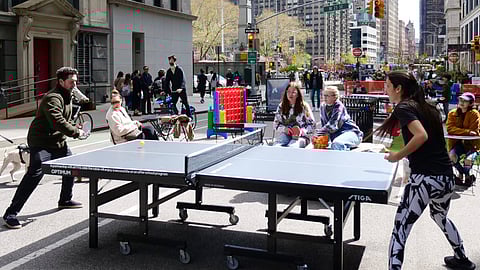
By April 25, the district takes on a different energy. Car-Free Earth Day returns, closing Broadway from 31st to 20th Streets to vehicular traffic as part of a broader 30-block initiative stretching from Times Square to Union Square.
The result is a rare opportunity to experience Manhattan at a slower pace. Cyclists move freely. Pedestrians reclaim space typically reserved for traffic. The usual noise of engines gives way to conversation, movement, and the hum of a city enjoying itself outdoors.
Flatiron South Plaza will serve as a focal point for the day, hosting interactive, family-friendly programming designed to engage both riders and those simply passing through. For many, it offers an early glimpse of Summer Streets, which returns in June, but with an added emphasis on environmental awareness.
Sustainability extends beyond programming and into the district’s culinary scene. Flatiron NoMad’s Green Dining District brings together 12 restaurants committed to reducing waste and emissions through thoughtful operational practices.
Restaurants such as Scarpetta, Rezdora, and BLACKBARN are part of this collective effort, which has already resulted in nearly 100,000 pounds of waste saved annually. The initiative positions dining as part of a broader environmental conversation, allowing visitors to engage with sustainability in a way that feels both accessible and refined.
Throughout April, the neighborhood itself becomes part of the experience. Refreshed flower boxes and planters introduce seasonal color across the district, while Madison Square Park offers a natural pause point for those looking to step away from the pace of the city.
Public art adds another layer. Charlotte Colbert’s 30-foot installation, “Dreamland Sirens,” invites visitors to engage with the space visually, while a spring photo frame provides a playful way to capture the moment. Nearby, the soon-to-be uncovered Flatiron Building adds a sense of anticipation, signaling both restoration and renewal.
Flatiron NoMad’s Earth Month programming does not attempt to reinvent the city. It reframes it. Familiar streets become pedestrian corridors. Everyday habits take on new meaning. Even a simple walk through the neighborhood feels more intentional.
As April unfolds, the district offers a version of New York that feels aligned with the season. Open, active, and quietly focused on what comes next.
Inspired by what you read?
Get more stories like this—plus exclusive guides and resident recommendations—delivered to your inbox. Subscribe to our exclusive newsletter
The products and experiences featured on RESIDENT™ are independently selected by our editorial team. We may receive compensation from retailers and partners when readers engage with or make purchases through certain links.