
- Locations
- Interviews
- Luxury Home
- Luxury Lifestyle
- Luxury Travel
- Luxury News
- Events
- More
- Magazine

A school's cleanliness does more than keep surfaces looking neat. It directly affects whether students show up, stay focused, and perform well in the classroom. Creating healthier learning environments through consistent cleaning is one of the most impactful and underappreciated investments a school can make in student success.
Most people think of school cleaning services as a maintenance task. The research tells a different story.
Studies collected by the EPA link poor indoor environmental quality in schools to reduced concentration, lower test scores, and higher absenteeism. The physical condition of a classroom is not background noise. It is an active factor in how well students learn.
When a school is consistently clean, students arrive at a space that signals safety, order, and care. That signal matters more than most administrators realize.
Schools are among the highest contact environments in any community. Hundreds of students move through shared spaces every day, touching the same surfaces, breathing the same air, and using the same facilities.
The most persistent hygiene challenges in school buildings include:
High-touch surface contamination: Desks, door handles, water fountains, and shared equipment harbor bacteria and viruses for up to 48 hours without regular disinfection.
Poor restroom sanitation: Inadequately maintained restrooms are a leading source of germ transmission and a top driver of student discomfort and avoidance behavior.
Dust and allergen buildup: Carpets, vents, and upholstered furniture accumulate allergens that trigger asthma and allergy symptoms in sensitive students
Mold in moisture-prone areas: Poorly ventilated bathrooms, locker rooms, and storage areas develop mold that degrades air quality across the building.
Each of these issues compounds over time when cleaning is inconsistent, creating a slow-moving health problem that affects the whole school community.
Research shows that improved school hygiene can reduce student absenteeism by up to 50 percent by limiting the spread of contagious illnesses.
Viruses like influenza and norovirus spread rapidly through shared surfaces and close contact. Without daily disinfection of high-touch zones, a single sick student can trigger an outbreak that pulls dozens of classmates out of school within days.
Indoor air quality has a direct and measurable effect on how well students think.
Research published in the journal Building and Environment found that elevated CO2 levels in classrooms, caused by poor ventilation and dust buildup, correlate with a measurable drop in student attendance and attention. Students in poorly ventilated rooms show higher rates of drowsiness, slower response times, and reduced ability to concentrate during instruction.
Regular cleaning of vents, filters, and dust-accumulating surfaces keeps air quality at a level where students can actually focus.
Cluttered and dirty classrooms increase cognitive load, which means students spend mental energy processing visual disorder instead of learning.
Clean, organized spaces send a message of structure and expectation. Students in well-maintained classrooms consistently show better behavioral compliance, lower stress levels, and improved engagement with instruction. A clean environment does not just support health. It shapes how students approach learning.
Cleanliness affects teachers as much as students. When schools fail to maintain hygiene standards, teachers get sick too.
Teacher absences disrupt lesson continuity in ways that are difficult to recover from. Substitute teachers review old material rather than advancing the curriculum, leaving gaps that accumulate over the school year. Keeping the learning environment clean protects the instructional chain from teacher to student and keeps academic progress on track.
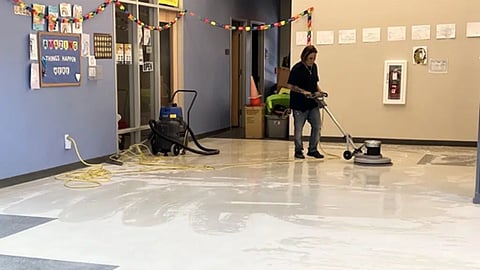
In-house custodial teams handle day-to-day tasks effectively. But deep cleaning, HEPA vacuuming, air quality management, and proper disinfection of high-risk surfaces require specialized equipment and training that most school custodial programs do not have.
Professional school and daycare center cleaning services bring documented protocols, EPA-approved disinfectants, and the consistency that keeps hygiene standards from slipping between school terms, during high illness seasons, and after large gathering events.
Schools that combine strong daily custodial routines with scheduled professional deep cleans consistently maintain better health outcomes and lower absenteeism than those relying on a single approach alone.
The most successful school hygiene programs treat cleanliness as a shared responsibility, not just a custodial task.
When school administrators communicate cleaning protocols clearly, students develop respect for their environment. When teachers reinforce desk organization and personal hygiene habits, those habits extend beyond the classroom. A clean school culture starts with the physical environment and grows into the behavior of everyone inside it.
How does school cleanliness affect student performance?
Clean schools reduce illness, improve indoor air quality, and create organized spaces that help students focus and perform better academically.
Can a dirty school increase student absenteeism?
Yes. Poor hygiene accelerates the spread of illness, and research shows that better school cleaning can reduce absenteeism by up to 50 percent.
How often should school classrooms be cleaned?
High touch surfaces should be disinfected daily, with deeper cleaning of floors, vents, and restrooms scheduled regularly throughout the week.
Do allergens in schools affect learning?
Yes. Dust, mold spores, and poor air quality trigger asthma and allergy symptoms that reduce concentration and increase sick days.
Should schools use professional cleaning services?
Professional services provide deep cleaning, proper disinfection, and air quality management that in house custodial teams typically cannot match alone.
Inspired by what you read?
Get more stories like this—plus exclusive guides and resident recommendations—delivered to your inbox. Subscribe to our exclusive newsletter
The products and experiences featured on RESIDENT™ are independently selected by our editorial team. We may receive compensation from retailers and partners when readers engage with or make purchases through certain links.