
- Locations
- Interviews
- Luxury Home
- Luxury Lifestyle
- Luxury Travel
- Luxury News
- Events
- More
- Magazine
- Contact Us

For most of my life, weight loss meant one thing: eat less, move more, and hope the scale dropped fast enough to feel like progress. Sometimes it worked. But it never lasted.
I would lose weight, feel smaller, and then slowly realize I also felt weaker, more tired, and less capable in my day-to-day life. It took me a long time to understand what was happening. I wasn’t just losing fat — I was losing muscle, too.
When you’ve struggled with obesity, seeing the scale go down feels like a win, no questions asked. But over time, I started noticing that not all weight loss felt the same.
Some phases left me feeling stronger and more in control. Others left me drained.
Part of that comes down to body composition. Individuals with obesity who lose weight without resistance training can also lose a meaningful portion of lean mass along with fat. In some cases, lean mass can account for 20–30% of total weight lost, depending on the approach.
For me, that was the missing piece.
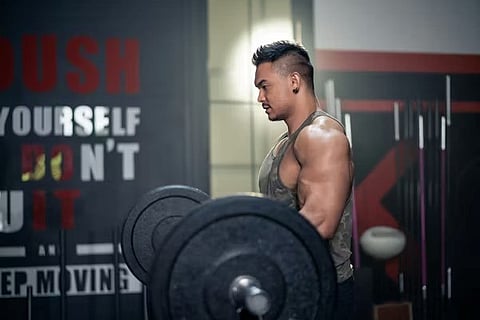
I didn’t start lifting weights right away. At first, it felt intimidating. I was embarrassed to stand around with guys who looked like they could bench press cars while I was struggling with the bar. And, to be honest, where weights felt like it was all about ego, cardio (in comparison) felt so much more approachable.
But once I started incorporating resistance training, things shifted.
My strength improved, my posture changed, and my body started to look different even when the scale moved more slowly. That was new for me. Progress wasn’t just about losing weight — it was about keeping what mattered.
This is because muscle plays a central role in how your body functions and adapts, especially during weight loss. It was something I might have heard before, but I didn’t really accept it until I was living the proof.
For years, I never paid attention to protein. Calories were the focus, and everything else felt secondary. That changed once I started learning how muscle is maintained.
Protein supports muscle repair, especially when you’re in a calorie deficit. Without enough of it, your body has a harder time holding onto lean tissue. I didn’t need to be perfect, but I did need to be consistent. A practical range for many people in fat loss phases is around 1.6 grams of protein per kilogram of body weight, which helps support muscle retention while still allowing for fat loss.
Once I started building meals around protein, I noticed I stayed fuller, trained better, and recovered more consistently.
This was probably the hardest lesson to accept.
For a long time, I believed faster weight loss was better weight loss. But the faster I tried to push things, the more likely I was to burn out, get discouraged, or lose strength along the way. A slower, more controlled approach gave me something I never had before: consistency.
Instead of swinging between extremes, I found a rhythm that I could actually maintain. My workouts improved, my energy stabilized, and the results started to stick.
One thing I underestimated early on was how much the “small stuff” matters. Sleep, stress, hydration, and overall diet quality all influence how your body responds to fat loss.
Maintaining muscle and losing fat isn’t just about exercise or protein alone. Your body relies on proper digestion, nutrient absorption, and overall balance to support lean tissue.
And sure, that’s an easy thing to say, but once I really embraced it as truth, I was able to zoom out to see the bigger picture. It wasn’t about one perfect habit — it was about stacking enough good ones together.
My approach looks very different these days, but it’s also much simpler:
I strength train consistently
I prioritize protein at most meals
I keep my calorie deficit moderate
I pay attention to recovery and sleep
I track progress beyond the scale
There’s nothing extreme about it.
But it works.
Losing weight after years of obesity is still something I’m proud of. But maintaining muscle while doing it changed everything about how that progress feels. Today I’m lighter than I was through much of my early adulthood. But it’s so much more than that; I’m stronger, more capable, and better equipped to keep the weight off long term.
Inspired by what you read?
Get more stories like this—plus exclusive guides and resident recommendations—delivered to your inbox. Subscribe to our exclusive newsletter
The products and experiences featured on RESIDENT™ are independently selected by our editorial team. We may receive compensation from retailers and partners when readers engage with or make purchases through certain links.