
- Locations
- Interviews
- Luxury Home
- Luxury Lifestyle
- Luxury Travel
- Luxury News
- Events
- More
- Magazine

The rich have always paid for wellness. Long before "self-care" had a hashtag, the wealthy kept doctors on call, decamped to spa towns and mountain sanatoriums, ate the best food money could buy, and took the waters at resorts built for exactly that. Health has been a quiet luxury for centuries.
What's changed isn't that luxury has discovered wellness — it's what wellness now signals, and how openly. The status symbol used to sit on the surface: the watch, the label, the car. Increasingly, it's the skin itself — clear, rested, unmistakably well-kept. The glow has quietly become the flex.
And the spending has scaled with the shift. According to the Global Wellness Institute, the global wellness economy hit a record $6.8 trillion in 2024 — a figure that outstrips global tourism, IT, and sport, and one that has doubled since 2013, growing faster than the world economy itself. What was once a private habit of the few is now a vast market. Yet among its most fluent spenders, the mindset is the old one in a new language: wellness isn't an indulgence. It's infrastructure.
That word matters. The affluent increasingly treat skin and health as assets rather than expenses — things you invest in early, maintain deliberately, and expect to compound. A standing facial, a course of treatments, a considered supplement routine: budgeted the way a past generation budgeted for a watch or a cellar. The return they're after isn't one dramatic result. It's resilience — skin and a body that age slowly and photograph well for decades, not seasons.
Listen to how people talk now, and you can hear the shift. "Anti-aging," with its faint note of panic, is being quietly retired. In its place: "longevity," "pro-aging," "skin health." The question posed to a good facialist is no longer "what will fix this?" but "how do I keep my skin strong and luminous for as long as possible?"
It sounds subtle. It isn't. It's a move from correction to cultivation, from the quick fix to the long game. The ingredients trending alongside it read less like a cosmetics counter and more like a longevity lab — peptides, NAD+, adaptogens — each marketed as supporting the skin's own repair, resilience, or vitality rather than just painting over it. Whether every promise holds up is a debate for the dermatologists. The signal is clear enough: the goal has moved from looking younger to staying well.
The 2010s were about more — more products, more steps, shelves buckling under serums. The mood now is pared back. "Skinimalism," beauty's answer to quiet luxury, prizes fewer, better things: a short, deliberate routine that lets skin breathe instead of a ten-step ritual performed like a nightly liturgy.
It's the same logic reshaping fashion. The loudest thing in the room is no longer the most expensive. Status has learned to whisper — and nothing whispers like skin that plainly looks after itself. A balanced complexion is harder to fake and harder to buy off a shelf than any single product. That is exactly what makes it aspirational.
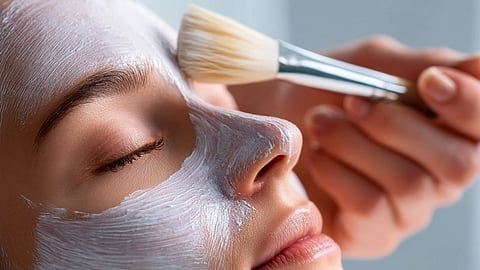
The deepest change is philosophical, and it lands on one word: personalization. Mass luxury — the same bag, the same bottle, the same protocol for everyone — is starting to read as a contradiction. The new luxury is something made for you, in the moment, by someone who actually looked. In the treatment room it shows up in small, telling ways: shorter menus, longer consultations, and a provider who spends real time reading the skin before reaching for a device or opening a jar.
Nowhere is that clearer than in high-end facials, where the most respected names have dropped the fixed menu. The French house Biologique Recherche is the reference point. Built in the late 1970s by a biologist and a physiotherapist, run from the start like a research lab, and offered only through trained providers, its method rejects the idea of a "skin type" outright. Every treatment opens with a hands-on reading it calls the Skin Instant© — what your skin is doing today, under this week's sleep, stress and weather — and is built from there, fresh, out of a library of concentrated boosters. Today's protocol won't be next month's, because you won't be the same.
That thinking is spreading through the top tier of skin studios. Studios such as Bogat Aesthetics & Wellness in South Florida build the whole Biologique Recherche visit around that in-the-moment reading rather than a script. It's the opposite of one-size-fits-all — and, not by accident, exactly what the modern luxury client will wait, travel and pay for.
Which brings up the other thing this client is really buying: time. In an always-on world, ninety unhurried minutes — phone away, hands-on, no upsell — are their own extravagance. The treatments are increasingly medical-grade in their actives and precise in their technique, yet the experience feels closer to ritual than errand. Real results, delivered with genuine, unhurried care: that is the sweet spot the category has chased for years, and why the best rooms now feel less like spas and more like ateliers.
And the client base has widened. What used to be coded as a women's indulgence is now simple maintenance across genders and generations — men with standing facial appointments, thirty-somethings starting early, executives folding recovery and skin health into performance. The glow, it turns out, is unisex.
None of this means the logo is dead or the handbag obsolete. But the center of gravity has moved. The people who can buy anything are, more and more, buying time, attention, and the slow compounding returns of looking after themselves — then wearing the results on their faces.
That is the one status symbol money alone can't shortcut. You can have the serum couriered overnight; you can't order the year of sleep, sunscreen, and steady care that produces skin worth noticing. In a world that has seen every filter and outlived every trend, the quietest luxury left is looking, unmistakably, like yourself — only unmistakably well.
Inspired by what you read?
Get more stories like this—plus exclusive guides and resident recommendations—delivered to your inbox. Subscribe to our exclusive newsletter
The products and experiences featured on RESIDENT™ are independently selected by our editorial team. We may receive compensation from retailers and partners when readers engage with or make purchases through certain links.