
- Locations
- Interviews
- Luxury Home
- Luxury Lifestyle
- Luxury Travel
- Luxury News
- Events
- More
- Magazine

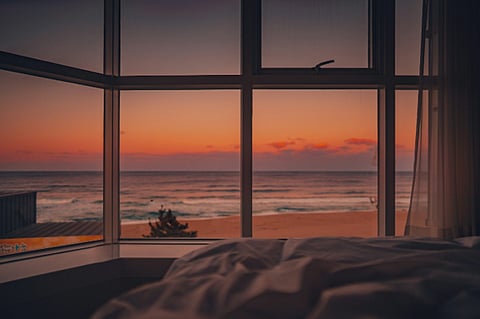
Anyone who has stood in a glass-walled living room at the edge of the sea knows the feeling. The view is extraordinary, the light is golden, and within an hour the room is too hot, the sofa is glaring and the neighbours have a clear line of sight. From Miami Beach to the Amalfi Coast, owners of waterfront homes spend a surprising amount of design effort on one question: how to keep the view without paying for it in comfort.
Window coverings are a large part of the answer. This article looks at why coastal light is so demanding, what it does to a home, and how blinds, shutters and plantation shutters each solve a different part of the problem, with some local detail from Sydney, a city that has been managing harbour glare for a very long time.
Water is a mirror. Sunlight arrives directly from above and bounces back off the surface, so a waterfront room can receive light from two directions at once. Add pale sand, white render and glass balustrades, and the result is a very bright environment that changes hour by hour and shifts with the seasons.
Architects love this light, but the most admired waterfront homes are rarely the ones with the most glass. They are the ones that can dial the light up or down depending on the time of day, the season and what the owners are doing.
The first reason that matters is also the most practical: heat.
Large windows let in solar heat as well as light, which pushes up cooling bills and makes rooms uncomfortable even with air conditioning running. Glare creates its own trouble, washing out screens, making reading difficult and turning a dining table into a squint-fest at breakfast.
Then there is fading. Ultraviolet light slowly bleaches timber floors, rugs, upholstery and artwork, and the damage is often noticed only years later, when moving a sofa reveals a darker patch underneath. Blocking the sun before it passes through the glass is far more effective than trying to cool the room afterwards, and coverings that sit close to the window, with a light or reflective face, tend to do this best.
Heat and glare explain why windows need covering. The second challenge is why people cover them even when they would rather not: privacy.
Waterfront homes are visible. Neighbouring balconies, passing boats, footpaths and ferries all create sightlines that are easy to forget during the day and impossible to ignore at night, when a lit room becomes a stage. Many owners respond by keeping curtains closed, which defeats the purpose of buying a view in the first place.
The better solution is control rather than concealment: coverings that filter light, block sightlines and still let the view appear when wanted. That is where the main types of window covering come in, starting with the most flexible.
Blinds are the quiet workhorses of coastal design. Roller blinds, Roman blinds and venetians all sit neatly within the window frame, take up little visual space and can be adjusted in seconds. Sheer fabrics soften glare while keeping the horizon visible, and heavier block-out options turn a bedroom into a dark retreat for late sleepers.
In Sydney, where harbourside apartments catch the sun from early morning until late afternoon, the best window blinds Sydney has to offer are often layered, pairing a light-filtering fabric for daytime with a block-out roller for night. Motorised controls are increasingly common, allowing a whole wall of glass to be adjusted from the sofa.
Blinds suit modern, minimal interiors beautifully, but not every room wants a soft fabric look. Some call for something more architectural, which brings us to shutters.
Shutters bring structure to a window. Made from timber, aluminium or composite materials, they are fixed to the frame with hinges or tracks and have louvres that tilt to direct light. Closed, they offer excellent privacy and some thermal benefit. Tilted, they bounce light up towards the ceiling, filling the room with a soft glow rather than harsh direct sun. Quality shutters also stand up to salt air, humidity and years of daily adjustment. In beachside suburbs such as Manly and Coogee, the shutters Sydney homeowners prefer are usually moisture-resistant, with fittings chosen specifically to handle sea spray.
Plantation shutters are the best-known style in the family, defined by wide louvres, usually between 63 and 114 millimetres across, which give a window a broad, calm, graphic pattern. The style grew out of homes in warm climates, from the American South to the Caribbean, where families needed airflow and shade without losing the breeze. Open the louvres and the sea air moves through the room. Close them and the space is cool, private and softly lit. In heritage terraces in Paddington and beach houses at Palm Beach, they suit both period and contemporary interiors, whether painted white for a coastal look or stained dark for something more formal.
Most owners end up using more than one style, which is where layering comes in.
Most luxury homes do not rely on a single covering. Instead, they layer them so each does a different job at a different time of day. A sheer blind or open louvres handle the morning, tilted shutters manage the harsh midday sun, and a block-out layer takes over in the evening or for sleeping. The result is a home that adapts, rather than one that is simply shaded.
Automation makes layering effortless. Motorised blinds and shutters can be programmed to close when the sun reaches a certain angle, open at sunrise or move together as a scene at the touch of a button.
Choosing between blinds, shutters and plantation shutters is easier with a clear brief. These five questions help narrow the choice:
Which way does the window face? West-facing glass needs the most help in the late afternoon.
How much privacy do you need? Rooms facing walkways or neighbouring balconies need more coverage.
What is the view worth? Sheer blinds or tilted louvres keep the outlook visible while softening glare.
How salty is the air? Coastal rooms need materials and fittings that resist moisture and corrosion.
What is the style of the home? Modern spaces often suit blinds, while heritage and classic coastal homes suit shutters.
There is rarely a single right answer. Many of the best homes mix styles, so the whole house feels considered rather than matched.
The most admired waterfront homes treat light as a material to be shaped, not a problem to be blocked. Whether the setting is Sydney Harbour, the Mediterranean or the Florida coast, the principle is the same: choose coverings that let owners control the light through the day and keep the view available when it matters.
Inspired by what you read?
Get more stories like this—plus exclusive guides and resident recommendations—delivered to your inbox. Subscribe to our exclusive newsletter
The products and experiences featured on RESIDENT™ are independently selected by our editorial team. We may receive compensation from retailers and partners when readers engage with or make purchases through certain links.