
- Locations
- Interviews
- Luxury Home
- Luxury Lifestyle
- Luxury Travel
- Luxury News
- Events
- More
- Magazine

A carton packed for a move across a few Sydney suburbs spends a morning on the truck. Packed for Melbourne or Brisbane, the same carton is loaded once, travels the whole way by road under heavier furniture, and is not opened again until it reaches the new house. Professionals pack for that longer trip from the first box, and the difference shows most in the wardrobe, on the walls and in the glass cabinet.
Few households hand over the entire house. The more common arrangement is to pack the books, linen and kitchen basics yourself and leave the difficult rooms to someone with more practice. A professional packing service can usually be booked for a whole home, for a few rooms, or for fragile pieces only, and that last option suits anyone whose real worry is a set of crystal or a framed print.
It also changes the timeline. Owners who pack their own everyday things can start a fortnight out, a few boxes a night, and leave the valuable rooms untouched and lived in until the end.
Good clothes suffer more from folding and pressure than from distance. Suits, coats and evening wear go into wardrobe cartons with a hanging rail, straight off the hanger, so they arrive ready to wear rather than ready for the dry cleaner. A wardrobe carton holds less than it looks like it should. Packed loosely, the garments keep their shape.
Knitwear is folded flat with tissue between the layers. Shoes are packed in pairs, toes stuffed with paper, each pair wrapped so the heels cannot mark the uppers next to them. Leather bags hold their form best filled with paper and kept out of sealed plastic, which can trap moisture over a long trip.
Handbags, watches and jewellery are a separate matter. Most people carry these in the car rather than on the truck, along with passports and the paperwork for the new property.
Paintings and prints should be the last things taken down and the first things hung. Before anything is wrapped, it is worth photographing each piece front and back, with any existing marks visible, so there is a clear record of its condition.
An oil or acrylic canvas never touches bubble wrap directly. Bubble wrap can leave a pattern on the paint surface, especially in warm weather, so a layer of acid-free paper or glassine goes on first. Frames take card corner protectors, then bubble wrap, then a heavy blanket. Framed works travel standing on their edge, never lying flat with something stacked on top.
Mirrors and glazed frames follow the same rule. Most removal trucks carry heavy-duty blankets and shrink wrap for exactly this kind of piece, and a large mirror is safer wrapped and strapped upright against a solid wall of the truck than boxed and stacked.
Glassware is where a long-distance move punishes small shortcuts. Each glass is wrapped on its own, with extra paper around the stem, and stood upright in a box with cell dividers. Plates go in on their edge, like records in a crate, with paper between each one. The heaviest pieces sit at the bottom, the lightest at the top, and every gap is filled so nothing can shift when the truck brakes.
A box of glass should be light enough to carry comfortably. Two half-full boxes are better than one that strains the handles.
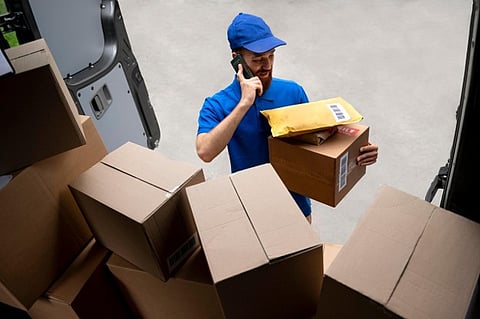
Cardboard has a weakness on a long trip. It softens in damp weather and can crush under weight. Waterproof plastic crates avoid both problems, and some Sydney removalists lend them. Next Level Removals supplies its premium stackable crates free on local moves and at half price on interstate ones, with a $5 refundable deposit per crate and 30 days to return them. Its trucks also carry mattress covers, bubble wrap and shrink wrap as standard.
Some things will not go on the truck at all. Removalists generally refuse fuel, gas bottles and other hazardous materials, along with perishable food, so the barbecue cylinder, the half-used tins of paint and the contents of the fridge each need their own plan before moving day.
The night before is for the essentials box. Kettle, mugs, phone chargers, a change of clothes, toilet paper, basic tools and the children's favourite things go into one clearly marked box that travels in the car. On an interstate move, the truck may not arrive until after the family does.
Labelling is the other job worth doing well. A room name and a short list of contents on two sides of every box saves an hour of searching at the other end. Boxes holding glass or art are marked fragile and this way up, on the top and on the sides, so whoever lifts them knows before they pick them up.
By the time the crew walks in, the wardrobe cartons should be full, the art wrapped and waiting by the door, and the crystal sitting in its crates. The kettle stays out until last.
Inspired by what you read?
Get more stories like this—plus exclusive guides and resident recommendations—delivered to your inbox. Subscribe to our exclusive newsletter
The products and experiences featured on RESIDENT™ are independently selected by our editorial team. We may receive compensation from retailers and partners when readers engage with or make purchases through certain links.