
- Locations
- Interviews
- Luxury Home
- Luxury Lifestyle
- Luxury Travel
- Luxury News
- Events
- More
- Magazine
- Contact Us

Staging has never been only about making a home look better. Its real role is to make space easier to understand. An empty room may appear bright and spacious, yet still leave basic questions unanswered. Is it a living room or a flexible area? Will a full dining table fit? Does the bedroom still feel spacious once furniture is in place?
For years, physical staging addressed these questions through furniture rental, setup coordination, and a second round of photography.
While effective, this process often adds multiple steps between the initial photo shoot and a market-ready listing. In many cases, the time, coordination, and cost involved can slow down listing preparation, especially for vacant or mid-range properties.
Today, that process is shifting toward digital listing preparation.
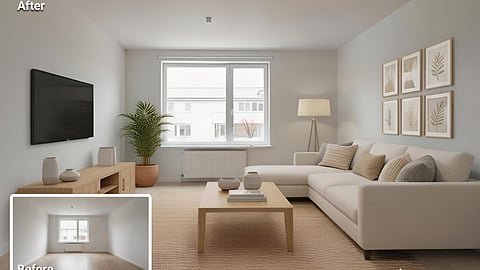
Many real estate teams use virtual staging AI to transform empty photos into furnished interiors that help buyers better interpret the space.
The purpose of staging remains the same, but the process has clearly changed. Instead of relying on logistics and on-site setup, listing presentation can now be prepared directly through image-based processes, allowing properties to reach the market more efficiently.
An empty room places a high demand on the viewer. It requires the eye to judge scale without familiar reference points and the mind to assign purpose without visual cues.
Buyers are expected to do this mental work before forming any emotional connection to the property, which often limits engagement.
Furniture provides structure to how a space is understood. A sofa suggests where people gather, a bed immediately defines function, and a desk can turn an undefined corner into a usable workspace. These visual cues help translate space into everyday living.
Without them, rooms can feel ambiguous. A listing may include square footage and dimensions, but the photos still leave buyers uncertain about how the space functions or how it might support daily life.
This is one reason AI real estate staging has become part of the broader conversation around how listings are prepared. Its value extends beyond visual appeal and supports interpretation. When a room is easier to read, buyers can more quickly understand its purpose and assess whether it fits their needs.
Physical staging continues to play an important role in real estate. In some properties, nothing fully replaces the effect of real furniture placed within a space. It can soften a vacant interior and help buyers visualize the property as a future home. Research from the National Association of Realtors supports this, showing that staging improves how buyers interpret a property.
However, the traditional staging process introduces multiple steps between photography and a market-ready listing.
After the initial photo shoot, teams often need to coordinate furniture sourcing or rental, delivery, setup, styling, and, in many cases, a second round of photography. Each stage adds time and requires coordination across different schedules and resources.
Every additional step creates potential delays. Delivery windows can shift, rooms may need adjustments, and property access may change.
While manageable for a single listing, these dependencies can slow down operations for teams handling multiple vacant homes, new developments, or model units.
This is where the core challenge emerges. Physical staging not only addresses presentation, it also introduces operational complexity. A listing often cannot move forward until several steps are completed, which can extend the time between photography and publication.
The industry has begun to reconsider how staging fits within the broader listing preparation workflow, opening the door for more streamlined, digitally supported approaches.
With the help of virtual staging AI, a property can remain physically empty while listing visuals are prepared as furnished interiors.
There is no need for staging installation, and the process can move forward directly from the original photo set.
It effectively shifts staging from a physical bottleneck into a parallel step within listing production, where multiple presentation options can be developed without delaying publication.
Instead of coordinating furniture delivery, setup, and a second photo shoot, real estate teams can work from images they already have.
A living room can be presented with defined seating and focal points. A bedroom can clearly communicate its intended use, while an unused room can be positioned as a home office, guest room, or nursery depending on the target buyer.
Teams can also explore multiple presentation directions before publication. One version may reflect a modern layout, while another presents a warmer or more traditional style.
These variations are not only aesthetic. They shape how buyers interpret the space.
The core advantage lies in workflow efficiency. Virtual staging AI shortens the path from empty photo to market-ready image by removing several coordination steps.
At the same time, it gives agents and marketers more control over how a property is presented before the listing goes live.
As a result, the listing process becomes less dependent on physical staging logistics and more integrated into the visual production process itself.
Staging shifts from a separate operational phase into a flexible, image-based step in how listings are prepared.
For a long time, staging was often treated as a decorative step. That framing no longer reflects how listings are evaluated.
Today, listing images carry much of the explanation that in-person visits once provided. Buyers assess room size, layout, lighting, and flow through photos, often before deciding whether to schedule a visit.
They evaluate whether a dining area feels functional and how spaces connect, making visual preparation a core part of listing strategy.
In this model, staging becomes less about decoration and more about reducing interpretation effort, helping buyers understand the property without requiring additional mental work.
A staged image can answer practical questions before they become points of hesitation. It can demonstrate that a narrow room supports a full seating arrangement, that an open corner functions as a dining area, or that a secondary room has a defined purpose.
In this context, real estate listing preparation extends beyond a checklist before publication. Listing photos do more than document a property. They interpret it.
When that interpretation is clear, the listing communicates more effectively and allows buyers to evaluate the space with greater confidence.
The value of virtual staging AI goes beyond what buyers see. It also reshapes how listing preparation is handled behind the scenes.
When fewer steps sit between photography and publication, the workflow becomes more direct. A property is photographed once, images are reviewed, and furnished versions are created from the same photo set.
This removes the need for furniture sourcing, scheduling installation, and coordinating additional shoots, allowing the listing package to come together with fewer dependencies.
Listing production becomes easier to scale, since visual preparation no longer depends on coordinating physical assets or schedules.
This becomes especially important for agents, broker teams, developers, and marketing groups managing multiple listings at the same time.
A more streamlined process supports faster turnaround and helps maintain consistent visual standards across properties or units.
Real estate listing preparation moves away from a sequence of physical tasks and toward a structured, image-based workflow.
Physical staging still has its place, particularly in high-end or experiential settings, but digital staging provides an alternative that aligns more closely with the speed and scale of modern listing operations.
Property presentation is entering a new phase. The traditional model relied heavily on physical setup before a listing could reach the market.
The emerging model places greater emphasis on image preparation, AI real estate staging, and faster visual decision-making within the listing workflow.
This shift does not eliminate the role of physical staging. Some properties still benefit from fully furnished, in-person presentation, particularly when the experience of the space is central to the sale.
However, the broader direction is clear. Listing images now carry more of the explanation that buyers once gathered during property visits, and the preparation process is adapting to support that shift.
Staging is becoming less about physical setup alone and more about how effectively a property is interpreted through its visuals.
Teams that can move from empty spaces to clear, market-ready presentation more efficiently are better positioned to meet buyer expectations and bring listings to market with greater speed and consistency.
An empty property can communicate structure, but it often leaves key questions unanswered. Staging helps bridge that gap by giving buyers the context they need to understand how a space functions and how it might support daily life.
For years, that clarity depended on physical setup. Today, it can also be achieved within the listing workflow. Empty photos no longer need to remain unchanged in the final presentation.
Teams can prepare market-ready visuals, explore different layout directions, and move listings forward with fewer delays.
This change reflects a broader shift in how properties are prepared for the market. AI real estate staging is becoming part of the core listing preparation process, shaping how homes are presented and how buyers interpret them from the very first interaction.
Inspired by what you read?
Get more stories like this—plus exclusive guides and resident recommendations—delivered to your inbox. Subscribe to our exclusive newsletter
The products and experiences featured on RESIDENT™ are independently selected by our editorial team. We may receive compensation from retailers and partners when readers engage with or make purchases through certain links.