
- Locations
- Interviews
- Luxury Home
- Luxury Lifestyle
- Luxury Travel
- Luxury News
- Events
- More
- Magazine
- Contact Us

Canadian winters bring more than just picturesque snowfall—they create hazardous conditions that lead to thousands of slip-and-fall injuries each year. As temperatures plummet and ice accumulates on walkways, stairs, and driveways, property owners face a persistent challenge: how to maintain safe, accessible surfaces without constant manual labor.
Heated mats have emerged as a practical solution to this seasonal problem. These electrically powered surfaces melt snow and ice on contact, eliminating dangerous buildup before it becomes a liability. From residential front steps to commercial building entrances, heated mats are being deployed across the country to address winter's most persistent safety concerns.
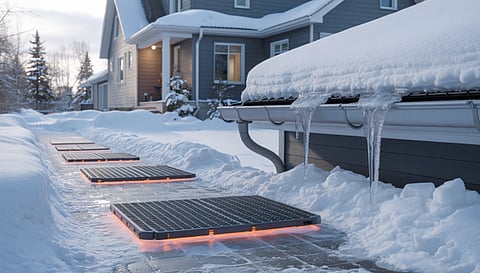
Heated mats function through embedded electric heating elements that warm the surface to temperatures sufficient to melt snow and ice immediately upon contact. Unlike chemical deicers that require time to work and can damage surfaces, these mats provide continuous thermal protection throughout winter storms.
The technology addresses a significant public health issue. According to data from the Centers for Disease Control and Prevention, falls on ice and snow result in approximately one million injuries annually in cold-climate regions. By preventing ice formation entirely, heated mats eliminate the hazard at its source rather than reacting to it after accumulation.
Most systems operate on standard electrical outlets and include built-in sensors that activate heating elements when temperatures drop below freezing. This automation removes the burden of monitoring weather conditions and manually clearing surfaces—a particularly valuable feature for elderly homeowners or businesses with limited maintenance staff.
Stairs represent one of the most dangerous surfaces during winter months. The combination of elevation change, limited visibility during snowfall, and ice accumulation creates conditions where a single misstep can result in serious injury.
Heated stair mats target this vulnerability directly. Key advantages include:
Immediate hazard reduction: Ice cannot form on heated surfaces, eliminating the primary cause of stair-related falls during winter.
Reduced liability exposure: Property owners face fewer injury claims when proactive measures prevent accidents.
Elimination of manual clearing: No need for dangerous scraping or salting on elevated surfaces.
Material compatibility: Modern mats work effectively on wood, concrete, metal, and composite stair materials.
Commercial properties with significant foot traffic—office buildings, retail centers, apartment complexes—have been early adopters. The initial investment in heated stair mats often proves less expensive than a single premises liability claim, making the safety upgrade financially prudent beyond its obvious protective benefits.
While individual mats address specific problem areas, heated walkway systems provide comprehensive coverage for longer pathways. These installations typically consist of modular sections that can be configured to match existing sidewalk dimensions and layouts.
Installation requires minimal modification to existing surfaces. Most systems lay directly atop concrete or asphalt pathways and connect to nearby electrical sources. Professional installation ensures proper drainage and secure positioning, but the process rarely involves extensive construction or surface removal.
Energy consumption remains a common concern among potential buyers. Research demonstrates that modern heated mat systems achieve effective snow melting while consuming significantly less energy than earlier generations of the technology. Improved insulation and smart sensors that activate heating only when necessary have made these systems increasingly practical for extended seasonal use.
Municipalities have begun exploring heated walkway installations in high-traffic pedestrian areas where traditional snow removal proves difficult or dangerous. Bus stops, crosswalks near schools, and accessibility ramps represent priority locations where continuous winter access serves public safety interests.
Entry points accumulate snow and ice rapidly during winter storms, creating hazards precisely where people transition between outdoor and indoor environments. Snow melting door mats address this concentrated risk area with targeted heating.
These compact systems offer several practical benefits:
Plug-and-use simplicity: Most models require only a standard electrical outlet and can be deployed within minutes.
Reduced interior tracking: By melting snow before it enters buildings, these mats minimize water damage and slip hazards inside doorways.
Aesthetic integration: Available in various sizes and styles to complement different architectural designs.
Portable seasonal storage: Unlike permanent installations, door mats can be removed and stored during warmer months.
When selecting a snow-melting doormat, measure the coverage area carefully. Effective models should extend beyond the door swing radius to capture snow from foot traffic approaching the entrance. Power requirements vary by size—larger mats may require dedicated circuits rather than shared outlets to avoid overloading household electrical systems.
Durability matters in this application. Look for mats constructed with weather-resistant materials rated for continuous outdoor exposure, including UV protection to prevent degradation during sunny winter days.
Driveways present unique challenges during winter. The combination of vehicle weight, frequent use, and large surface area makes manual snow removal labor-intensive and time-consuming. Driveway heating mats provide an automated alternative that maintains clear access throughout the season.
The advantages extend beyond convenience:
Continuous accessibility: Vehicles can enter and exit safely regardless of ongoing snowfall
Surface protection: Eliminating freeze-thaw cycles reduces cracking and deterioration of asphalt and concrete
Chemical-free operation: No salt or deicer damage to vehicles, landscaping, or groundwater
Reduced physical strain: Particularly valuable for elderly homeowners or those with mobility limitations
Installation of driveway heating systems typically requires professional assessment. Factors including driveway slope, drainage patterns, electrical capacity, and local climate conditions all influence system design. According to guidance from the U.S. Department of Energy, proper installation significantly impacts both performance and operating costs.
While the upfront investment exceeds that of smaller mat systems, driveway heating eliminates recurring costs for snow removal services and reduces long-term surface maintenance expenses. Many homeowners report that the time savings alone justify the installation within the first few winters of use.
The Canadian market offers numerous heated mat options, each designed for specific applications and conditions. Understanding the distinctions helps property owners make informed decisions aligned with their actual needs.
Consider these factors during evaluation:
Coverage requirements: Measure the total area needing protection, accounting for traffic patterns and high-risk zones
Climate severity: Systems rated for extreme cold perform better in northern regions with prolonged freezing temperatures
Electrical infrastructure: Verify that existing circuits can handle additional load, or budget for electrical upgrades
Durability specifications: Commercial-grade materials withstand heavier use and harsher conditions than residential models
Warranty coverage: Longer warranties indicate manufacturer confidence in product longevity
Companies such as KEMF have developed snow-melting and heated mat systems specifically engineered for Canadian winter conditions, incorporating features designed to withstand extreme cold, frequent freeze-thaw cycles, and heavy snowfall. Comparable manufacturers like HeatTrak and WarmlyYours also offer winter safety solutions tailored to challenging climates, with products focused on reliability, durability, and efficient snow and ice management.
Energy efficiency varies significantly between models. Look for systems with automatic sensors that activate heating only when temperatures drop below freezing and snow is actually falling. Continuous operation throughout winter, regardless of conditions, wastes electricity and increases operating costs unnecessarily.
Installation complexity should factor into decision-making. While simple door mats require no professional help, larger walkway and driveway systems benefit from expert installation to ensure proper function and longevity. Factor these service costs into total project budgets when comparing options.
The case for heated mats extends beyond immediate safety improvements. Property values in regions with harsh winters often reflect the presence of winter-management infrastructure. Homes and commercial buildings equipped with heated walkways and driveways appeal to buyers seeking reduced maintenance burdens.
Insurance considerations also come into play. Some property insurers offer premium reductions for installations that demonstrably reduce slip-and-fall risks. While not universal, these savings can offset operating costs over time. Property owners should consult with insurance providers about potential discounts before making purchase decisions.
Environmental impact deserves consideration as well. Traditional snow management relies heavily on salt and chemical deicers that damage vegetation, contaminate groundwater, and corrode vehicles and infrastructure. Research from the Environmental Protection Agency documents the widespread ecological harm caused by road salt runoff. Heated mats eliminate this chemical dependency entirely, offering a more sustainable approach to winter safety.
The technology continues evolving. Newer systems incorporate smart home integration, allowing remote monitoring and control through smartphone applications. This connectivity enables property owners to activate heating before arriving home or adjust settings based on weather forecasts, optimizing both safety and energy consumption.
Canadian winters will always present challenges, but heated mat technology has matured to the point where property owners can effectively manage ice and snow hazards without constant manual intervention. The range of available systems—from compact door mats to comprehensive driveway installations—means solutions exist for virtually any application and budget.
The decision to invest in heated mats ultimately balances upfront costs against long-term benefits: reduced injury risk, eliminated manual labor, protected surfaces, and increased property value. For many Canadian homeowners and businesses, that calculation increasingly favors proactive installation over continued reliance on reactive snow removal.
As climate patterns produce more volatile winter weather—alternating between heavy snowfall and freeze-thaw cycles—the value of automated snow melting systems will likely continue growing. Property owners evaluating winter safety improvements should consider how heated mats fit within their broader risk management and maintenance strategies.
Inspired by what you read?
Get more stories like this—plus exclusive guides and resident recommendations—delivered to your inbox. Subscribe to our exclusive newsletter
The products and experiences featured on RESIDENT™ are independently selected by our editorial team. We may receive compensation from retailers and partners when readers engage with or make purchases through certain links.