
- Locations
- Interviews
- Luxury Home
- Luxury Lifestyle
- Luxury Travel
- Luxury News
- Events
- More
- Magazine

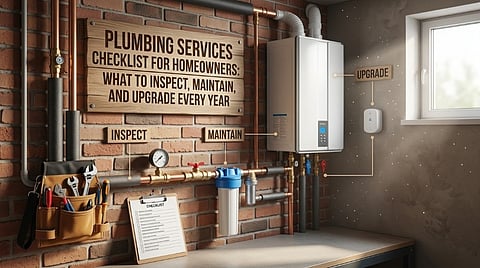
A yearly plumbing review comes down to three jobs: inspect, maintain, and upgrade. Walk through the home once a year to spot leaks, check water pressure, and test shut-off valves. Maintain the parts that wear out slowly, like the water heater, drains, and supply lines. Then decide which fixtures or pipes are old enough to replace before they fail. Done together, these steps protect the house from water damage and surprise repair bills.
Picture this: it's a cold Saturday morning, you head down to the basement for a load of laundry, and your sock lands in a puddle. The pipe behind the washer has been weeping for weeks, and the drywall is already soft. Nobody plans for that kind of morning. It's how most home plumbing problems show up, though, in slow motion until the day they aren't.
A short annual walkthrough is the easiest way to stay ahead of those surprises. Think of it as a yearly checkup for the house, a steady once-over of the fixtures, pipes, and appliances that move water in and out. A well-built plumbing services routine catches the slow leaks, the seized shut-off valves, and the aging water heaters long before they turn into emergencies.
The checklist below splits the work into three plain categories. What to inspect. What to maintain. What to upgrade. That way, you know which jobs you can handle on a weekend, and which ones deserve a phone call to a licensed pro like Tiptop Plumbing & Heating.
The inspection round is the cheapest part of the whole routine. It costs nothing but an hour of your time and a flashlight. The goal isn't to fix anything yet; it's to walk every room and find what needs attention. Bring a notepad. Write down what you spot. Tackle the repairs in batches once the walkthrough is done.
Start under every sink in the house, then move to the basement or crawl space. Look for green or white crust on copper joints, rust streaks on steel fittings, and any sign of moisture where a pipe meets a wall. Soft drywall, warped baseboards, and a musty smell all point to a slow leak somewhere upstream. Older Canadian homes built before the 1960s may still have galvanized steel or, in rare cases, lead supply lines. Both are worth flagging for a professional opinion.
Pressure that feels great in the shower can chew through your pipes from the inside. A simple screw-on gauge from any hardware store tells you the truth in about a minute. The ideal range for a Canadian home sits between 40 and 60 psi. Anything pushing past 75 psi shortens the life of every fixture in the house and is one of the most common reasons supply hoses burst behind washing machines.
Fill each sink and tub, pull the plug, and watch how the water moves. A slow swirl or gurgling noise means a partial blockage is building somewhere downstream. For toilets, drop a few drops of food colouring into the tank and wait fifteen minutes. Colour in the bowl means the flapper is leaking and wasting hundreds of litres a week without making a sound.
Every adult in the house should know where the main shut-off valve is, and that valve needs actually to turn. A seized handle is one of the worst things to discover during a burst-pipe emergency at 2 a.m. Give it a gentle quarter-turn each year to keep it from corroding shut.
A clean inspection list gives you a clear picture of what the house actually needs, which sets up the next round of work nicely.
Inspection tells you where the trouble is hiding. Maintenance is where you stop that trouble from growing. Most of these jobs take under an hour each, cost very little in parts, and add years to the life of the equipment they protect. A reliable home plumbing checklist treats them as non-negotiable.
Sediment settles at the bottom of every tank-style water heater, especially in regions of Canada with hard water, like much of the Prairies, southern Ontario, and parts of the Maritimes. That layer of grit forces the burner or element to work harder, raises the energy bill, and eventually cracks the tank lining. Once a year, connect a garden hose to the drain valve, run it to a floor drain or outside, and flush until the water runs clear. Tankless units need a vinegar descaling flush on a similar schedule.
Skip the harsh chemical drain cleaners. They eat away at older pipes and gaskets, and the savings disappear the first time you need a repair. Pour a kettle of hot water down each drain instead, follow with half a cup of baking soda and a cup of white vinegar, let it foam for fifteen minutes, then rinse with more hot water. Pull the stoppers in bathroom sinks and tubs while you're at it. The gunk that builds up there is the single most common cause of slow drains.
If the basement has a sump pit, the pump inside it is your insurance policy against a flooded floor. Pour a bucket of water into the pit and confirm the float rises, the motor kicks on, and the water clears within seconds. Test the backup battery if one is installed. A sump pump that sits idle for years often seizes the moment it's finally needed.
The braided steel hoses behind washing machines, dishwashers, and toilets are rated for about five to seven years. Mark the install date on each one with a permanent marker. Once the date creeps up, swap them out before they fail. A burst supply line can dump hundreds of litres per hour into the room behind it.
Before the first hard freeze, disconnect every garden hose, shut off the interior valve that feeds each outdoor tap, and open the outside spigot to drain whatever water is left in the line. Frozen water in a hose bib is one of the most common causes of burst pipes in Canadian homes, and the damage usually shows up indoors weeks later when the thaw arrives.
Once the routine plumbing maintenance is done, the only question left is which parts of the system have aged past the point where upkeep alone can save them.
There comes a point in every home's life when patching the same fixture for the third time costs more than replacing it. The trick is recognizing that point before the next failure makes the decision for you. Use this section as a guide to which upgrades pay back, and which can wait another season.
A standard tank water heater lasts roughly eight to twelve years in a Canadian home. Once it crosses that mark, rust on the tank exterior, rumbling sounds during a heating cycle, or rusty hot water are all signs the inside is corroding through. Replacing a heater on your schedule costs a fraction of replacing one after it has flooded the utility room. High-efficiency tankless and heat-pump models also qualify for federal and provincial rebates in many regions, which softens the upfront cost.
Toilets installed before 1995 use three to six times the water of a modern model on every flush. Showerheads and faucets from the same era are nearly as wasteful. A WaterSense-certified toilet costs a few hundred dollars and pays itself back through lower water bills within a few years for most households. The same logic applies to aerators and showerheads. Small purchases, immediate savings.
Homes built between the 1940s and 1970s often have galvanized steel supply lines that rust from the inside, slowly choking water flow. Polybutylene, common from the late 1970s through the mid-1990s, becomes brittle with age and fails without warning. Replacing a run with modern PEX or copper is disruptive for a day or two, but it removes a whole category of future emergencies from the house.
A yearly walkthrough isn't glamorous work, but it's some of the highest-leverage time a homeowner can spend. An hour of inspection, a weekend of light maintenance, and a thoughtful upgrade or two each year add up to a plumbing and heating system that does its job without drama for decades. Compare that to a single emergency call after a burst pipe at midnight, and the cost difference is hard to argue with.
Inspired by what you read?
Get more stories like this—plus exclusive guides and resident recommendations—delivered to your inbox. Subscribe to our exclusive newsletter
The products and experiences featured on RESIDENT™ are independently selected by our editorial team. We may receive compensation from retailers and partners when readers engage with or make purchases through certain links.