
- Locations
- Interviews
- Luxury Home
- Luxury Lifestyle
- Luxury Travel
- Luxury News
- Events
- More
- Magazine
- Contact Us

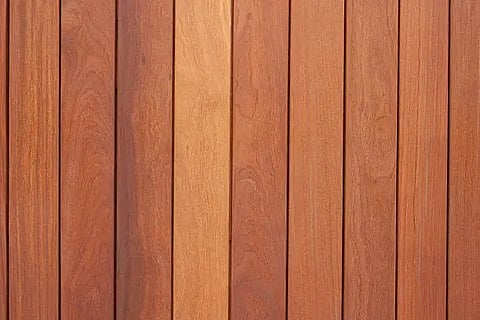
Timber cladding has emerged as a popular choice for homes and businesses in Australia, thanks to its sustainability and aesthetic appeal. Timber absorbs carbon dioxide during growth and actively removes it from the atmosphere. This helps curb climate change. Timber cladding is also a very durable material that can last for decades with proper maintenance.
Choosing the right species is vital for your project’s success when you consider timber cladding Australia. The options can seem overwhelming. You have durable Australian hardwoods like Blackbutt, Ironbark, and Jarrah. You also have various types of timber cladding suited for different applications, including Modinex cladding options for modern residential and commercial projects. I’ll walk you through the best timber species for external timber cladding in this piece. You’ll learn their pros and cons and how to select the perfect option for timber cladding houses.
External timber cladding functions as a protective skin for buildings. Overlapping boards or planks shield structures from weather conditions. This system creates a planned cavity between the cladding and the main wall. Moisture that penetrates the outer layer can evaporate or drain away rather than cause damage. Timber weatherboards have been one of the most common cladding systems in Australia.
The job of cladding extends beyond lining exterior walls and protecting interiors from wind, rain and cold. It serves as a core design feature that determines the style of homes and office buildings. Various installation methods exist. These include horizontal, vertical, or diagonal orientations with options such as weatherboard and shiplap cladding.
Species selection influences durability and maintenance requirements. It also affects how facades respond to environmental exposure. The performance characteristics of exterior timber cladding extend beyond visual contribution. They provide weather protection and contribute to thermal performance while ageing in ways that can improve architectural intent.
Wood is classified in two main categories: hardwood and softwood, according to its properties. Hardwood trees are deciduous. They include species such as Blackbutt, Spotted Gum, Merbau and Jarrah. These timbers are used when durability and strength are critical to a project. Softwood trees are evergreen and include species like Cedar and Pine. People often choose them for their aesthetic and thermal properties.
Durability is graded in classes ranging from 1 (best) to 4 (unsuitable for external use). Variations are common due to sapwood and heartwood content. Only Class 1 and 2 hardwoods should be specified for cladding applications to ensure long-term performance.
High humidity or regular rainfall can cause swelling, rot, mould and softening of fibres. This is especially problematic in Queensland, Northern NSW, coastal WA and Tasmania. Australia's high UV index causes colour fading, drying and cracking. Timber loses its appearance quickly without frequent sealing or staining.
Extreme heat leads to expansion and contraction. This causes warping or cupping and gaps between boards. Salt-laden air increases moisture absorption and surface breakdown in coastal environments. Some timber species and profiles cannot be used in certain BAL-rated zones unless specially treated. Many Australian hardwoods meet BAL 29 requirements when specified correctly.
Australian hardwoods dominate the external timber cladding market due to their exceptional durability and natural resistance to harsh conditions. Each species offers distinct characteristics suited to different project requirements.
Spotted Gum delivers Class 1 durability with resistance to decay and insects. The timber's lifespan ranges from 50 to 100 years or more. Warm browns to reddish hues showcase distinctive spotted patterns. A BAL29 fire rating suits bushfire-prone areas. The density exceeds 1000kg/m3, which makes it heavy but strong. Surface checking may develop when exposed to weather without proper end grain sealing.
Blackbutt stands out as one of Australia's fastest-growing hardwoods and provides plentiful supply. The timber ranges from rich honey browns to light creams with Class 1 above-ground durability. Fire resistance suitable for bushfire-prone areas and BAL compliance are maintained. High tannin content causes leeching when wet, and the timber shows tendencies toward surface checking and splitting.
Ironbark ranks among the hardest commercial timbers worldwide, with Janka hardness between 11.0 kN and 14.0 kN. Class 1 durability provides 50+ years lifespan above ground and 25+ years in-ground. The timber displays deep red and brown tones with BAL 29 fire resistance. Extreme density makes it difficult to nail and plane.
Jarrah grows only in southwest Western Australia and offers Class 2 durability with 15 to 40 years expected service life above ground. The heartwood ranges from deep browns to burgundy with natural termite resistance. Density of 820 kg/m3 provides excellent strength. Commercial native harvesting ended on 1 January 2024, which tightened supply.
Tallowwood exhibits Class 1 durability both above-ground (40+ years) and in-ground (25+ years). The pale to dark yellow-brown heartwood with olive green tinges has a distinctive greasy appearance. Janka hardness of 8.6 kN and natural oil content resist decay and termites. The timber is untreated equivalent to fire retardant treated timber.
Merbau achieves Class 1 hardwood rating above-ground with life expectancy exceeding 40 years. The warm red-brown tones darken over time. High tannin content causes bleeding when wet and potentially stains adjacent surfaces. Regular oiling every 3 to 6 months maintains colour and longevity.
Softwood and modified timber options provide alternatives to traditional hardwoods and offer distinct benefits for external timber cladding applications in a variety of budget ranges and performance requirements.
Western red cedar grows in British Columbia and nearby western states of the USA. The timber remains dimensionally stable under most weather conditions without proneness to shrinkage or swelling. Natural preservatives provide resistance to fungus and insect attack, and low density offers very good thermal insulation qualities. Western red cedar delivers impressive acoustic properties.
The heartwood ranges from pale brown through to richer dark brown. Sapwood appears as a paler yellowish white colour. With Class 2 durability rating, Western red cedar lasts 15 to 40 years when installed outdoors above ground. Cedar has a tendency to stain and bleed tannins despite its durability.
Vacoa uses eco-friendly Nordic knotty pine heated to temperatures greater than 190 degrees Celsius to create changes at a cellular level. The thermal modification process increases timber stability and makes it suitable for both interior and exterior applications.
Structural changes improve durability, stability and resistance to rot and termites. The process removes organic properties that cause timber to rot. Expelling moisture means insufficient conditions for fungi, mould and bacteria to fester. Thermally modified softwoods achieve H3 level durability equivalent and provide a 30 year expected service life in above-ground vertical cladding applications.
Treated pine cladding uses waterborne treatments (CCA, ACQ and copper azole) and LOSP (Light Organic Solvent Preservative). When fixing, moisture content should not exceed 15%. Clear and stain finishes require recoating after one to five years, whereas painted finishes need recoating after five to ten years.
Selecting the right timber species requires balancing multiple factors specific to your project's location, budget and long-term performance expectations.
Coastal properties face extra challenges from salt spray, high humidity and increased UV exposure that accelerate weathering. Buildings near the Australian coastline need timber species with natural durability or modified wood products treated to improve resistance to decay and insect attack. Homes in Melbourne experience changing temperatures and heavy rainfall. Brisbane and the Gold Coast face humidity and coastal moisture. Adelaide and Perth experience strong UV exposure.
Costs range from $170 to $540 per square metre for 18mm thick boards, depending on timber species. Spotted gum and ironbark cost between $140 and $280 per square metre. Softwoods like pine and cedar range from $50 to $180 per square metre. Installation adds $80 per square metre for straightforward projects.
Timber cladding needs washing every year with warm water and mild detergent or timber cleaner. Recoating exterior cladding every 12 to 18 months preserves appearance. Acrylic paint needs the least maintenance. Staining provides good longevity, and clear finishes need the most attention. Maintenance periods range between 1 and 5 years depending on timber type, application and coating used.
BAL ratings measure bushfire exposure from negligible risk through to direct flame contact. Minimum timber density of 680 kg/m3 applies at BAL-19. BAL-29 requires 750 kg/m3 at 12% moisture content. Spotted Gum, Ironbark and Blackbutt achieve BAL-29 compliance based on inherent density. BAL-40 and BAL-FZ require non-combustible materials.
Class 1 timbers like Blackbutt and Ironbark last over 40 years above ground and 25 years in-ground. Class 2 timbers such as Silvertop Ash and Western Red Cedar last 15 to 25 years above ground. Class 3 timber lasts 7 to 15 years above ground. High quality, durable timber cladding that's installed properly can last between 40 and 60 years.
Choosing the right timber species for your cladding project need not be overwhelming. Each species offers distinct advantages suited to different budgets and climates. Class 1 hardwoods like Spotted Gum and Ironbark deliver exceptional longevity, whilst softwoods and modified timber provide economical alternatives. Think about your local climate conditions, maintenance capacity, and fire rating requirements. Proper species selection and regular upkeep will protect and beautify your property for decades.
Inspired by what you read?
Get more stories like this—plus exclusive guides and resident recommendations—delivered to your inbox. Subscribe to our exclusive newsletter
The products and experiences featured on RESIDENT™ are independently selected by our editorial team. We may receive compensation from retailers and partners when readers engage with or make purchases through certain links.