
- Locations
- Interviews
- Luxury Home
- Luxury Lifestyle
- Luxury Travel
- Luxury News
- Events
- More
- Magazine

There is a particular kind of quiet that only exists near large bodies of water. Not silence, the Gulf of Mexico is never truly silent, but a slower, steadier rhythm that reshapes the way a day feels. Corpus Christi, Texas, sits right at the edge of that rhythm, a city of approximately 317,000 people where the morning commute averages under 20 minutes, the median home costs about 41 percent less than the national average, and the nearest beach is often less than 15 minutes away.
People move here for many reasons: a military assignment at Naval Air Station Corpus Christi, a role in the city's expanding energy sector, enrollment at Texas A&M University–Corpus Christi, or simply a desire to reset priorities somewhere affordable, warm, and genuinely different from the pace of Dallas or Houston. Whatever the reason, the city tends to hold onto its residents. Once people figure out how to live well here, which neighborhoods fit their routines, which climate realities require planning, Corpus Christi stops feeling like a transition and starts feeling like home.
This guide covers the substance of that transition: the real estate market, the neighborhoods worth knowing, the coastal climate challenges that few relocation guides are honest about, and the practical logistics of arriving and settling in.
The numbers make a strong opening argument. Corpus Christi's overall cost of living sits approximately 5 percent below the U.S. national average, and housing sits further below that, median home values run around $258,500, compared to a national median that consistently exceeds $400,000 (Salary.com 2026; Local Market Report, December 2025). The Regional Economic Development Corporation ranks the city fourth in the nation for purchasing power and first in Texas, a distinction that means a given salary goes meaningfully further here than in most comparably sized cities.
Texas adds another layer. The state has no personal income tax, so what you earn stays closer to what you keep. Property tax rates run around 1.58 percent effective rate, not negligible, but typical for Texas and well below the carrying costs of markets with higher home values. For families relocating from coastal California, the Pacific Northwest, or even inland metros like Austin, the financial contrast is stark.
Corpus Christi's economic identity is layered and often underestimated. The Port of Corpus Christi ranks among the top five ports in the United States by cargo tonnage, handling a significant share of the nation's crude oil exports and playing a strategic role in LNG trade. That port infrastructure anchors major employers Valero, CITGO, Flint Hills Resources, and Bay Ltd. among them, and the surrounding industrial complex attracted more than $50 billion in capital investment between 2010 and 2020 alone.
Energy dominates, but it does not define the entire employment picture. The healthcare sector is substantial, with CHRISTUS Spohn Health System and Driscoll Children's Hospital, one of the most recognized pediatric facilities in South Texas, providing both direct employment and downstream economic activity. Texas A&M University Corpus Christi, situated on its own island campus in Corpus Christi Bay, functions as both an academic institution and a research engine, particularly in coastal and marine sciences. Del Mar College, with multiple campuses in the city, trains a steady pipeline of trade and technical professionals. The labor force reached 213,700 as of April 2025, with more than 6,200 workers added year-over-year across the Coastal Bend region (Texas Economic Development Corporation).
The single largest employer in the metro area, however, is the military installation in Flour Bluff, a fact that shapes the city's demographics, its housing patterns, and its character more than many outsiders initially realize.
Corpus Christi is a geographically spread city, spanning roughly 460 square miles, and where you choose to live determines a great deal about what daily life looks like. The right neighborhood depends on whether your priorities run toward schools, commute access, coastal proximity, or suburban convenience.
Flour Bluff occupies the Encinal Peninsula, bordered on three sides by Oso Bay, Corpus Christi Bay, and the Laguna Madre. This geography gives it an unmistakably coastal character, and its proximity to Naval Air Station Corpus Christi, the largest employer in the metropolitan area, with approximately 6,200 civilian positions in addition to active-duty personnel, makes it the default landing neighborhood for incoming military families.
The Flour Bluff Independent School District carries an A rating from Niche, consistently ranking among the top school districts in the state. The Kennedy Causeway connects Flour Bluff directly to North Padre Island, meaning residents are typically 10 minutes from open Gulf beaches. The trade-off is flood risk: Flour Bluff carries an estimated 87 percent flood risk rating over the next 30 years (Redfin climate data), which makes flood insurance not optional but essential — a cost that should enter any housing budget calculation from the start.
The Southside is Corpus Christi's fastest-growing residential corridor and the first stop for buyers who want newer homes, modern retail access, and a more structured suburban environment. Master-planned communities like Rancho Vista offer parks, trails, and neighborhood lakes, and the concentration of schools, grocery stores, and medical facilities makes daily logistics genuinely straightforward. Southside also carries the city's tightest absorption rate — roughly 4.9 months — meaning inventory moves faster here than elsewhere, and buyers competing in this corridor benefit from being decisive.
Padre Island is the world's longest barrier island, stretching more than 130 miles along the Texas coast, and North Padre's residential section is where approximately 4,000 year-round residents have chosen canal-front, bay-view, or Gulf-adjacent homes. The lifestyle here is genuinely water-oriented — fishing, boating, paddle boarding, and Gulf swimming are not weekend activities but Tuesday afternoon activities. Home values on the Island run higher than Corpus Christi proper, and insurance costs reflect the coastal exposure. Buyers who choose North Padre Island typically do so with full awareness of the trade-off: the lifestyle is exceptional, and the maintenance and insurance calculus requires clear-eyed planning.
Calallen sits northwest of the city center along the Nueces River and offers the most self-contained suburban experience in the Corpus Christi area. Its 20,000 residents tend to be middle-class families with children, drawn primarily by the Calallen Independent School District — rated A-minus by Niche and regarded as one of the top districts in the region. The trade-off is convenience: Calallen requires driving into Corpus Christi proper for most retail, restaurants, and entertainment, and the commute to NAS Corpus Christi runs 15–30 minutes depending on traffic. For families willing to accept that distance in exchange for quiet streets, strong schools, and a lower crime environment, Calallen consistently earns high livability scores.
For buyers who want an established neighborhood with tree-lined streets, proximity to Corpus Christi Bay, and a more mature aesthetic than the Southside's newer developments, the Bay Area and Ocean Drive corridors offer a classic coastal Texas experience. These areas are close to downtown, the Corpus Christi seawall, and the growing concentration of restaurants and cultural venues along the waterfront. They attract retirees, professionals, and buyers who prioritize walkability and neighborhood character over brand-new construction.
This is the section most relocation guides omit, and the omission is a genuine disservice to incoming residents. The Gulf Coast's climate is beautiful and it is also aggressive, not in dramatic ways, but in slow, persistent ones that compound over time.
Corpus Christi's average annual relative humidity consistently exceeds 75 percent, a figure that the National Oceanic and Atmospheric Administration (NOAA) documents across Gulf Coast monitoring stations. When indoor relative humidity climbs and holds above 60 percent, the effects are measurable and often irreversible: mold accelerates in dark, enclosed spaces; wooden furniture and flooring expands and cups; electronics and appliances degrade at a faster rate; and drywall absorbs moisture and becomes a substrate for mildew growth. Research cited by Smart Fog's storage humidity analysis found that Gulf Coast states experience approximately 40 percent more humidity-related storage damage compared to arid interior regions. That figure is not a minor statistical footnote — it is a meaningful cost consideration for anyone moving here with furniture, electronics, documents, or collections that cannot be easily replaced.
The humidity problem is compounded by salt. Chloride ions carried by coastal air are hygroscopic, they attract and retain moisture, creating a thin electrochemical film on metal surfaces even without direct contact with water. That film enables galvanic corrosion between dissimilar metals, accelerates oxidation on steel fasteners and aluminum fins, and contributes to the failure of electronic circuit boards, HVAC components, and appliances at rates several times faster than what inland residents experience. Properties as far as 2–3 miles from the shoreline see meaningful salt-air exposure. For residents closer to the water — on Padre Island, in Flour Bluff, or along the Bay Area corridor, the corrosion timeline compresses further.
Wooden furniture warps. Leather cracks. Circuit boards pit. Photographs and archival paper degrade. These are not hypothetical concerns; they are the documented experiences of coastal homeowners who underestimated the environment.
The practical implication for anyone relocating to Corpus Christi is that belongings in transit or in temporary holding need active environmental protection — not passive storage. The decision between standard and climate-controlled storage is more consequential here than it would be in, say, Amarillo or El Paso.
For new residents who arrive before their permanent housing is ready, a common scenario whether you are a military family waiting for on-base housing confirmation, a buyer awaiting a closing date, or a renter between leases, the staging window is exactly when belongings face their highest risk. A few weeks in an unconditioned unit during a Corpus Christi summer (where outdoor temperatures regularly exceed 95°F) can cause electronics to develop internal condensation damage, wood furniture to swell and warp, and documents to yellow and curl in ways that are permanent. Many incoming residents discover this the hard way.
Facilities that maintain regulated temperature and humidity environments, typically holding units between 55°F and 85°F with controlled relative humidity, offer the kind of protection that makes genuine sense in a Gulf Coast environment. When searching for storage units in corpus christi tx, it is worth verifying that "climate-controlled" includes both temperature and humidity regulation, not just cooling, since humidity is the primary damage driver in coastal settings.
For residents managing longer-term storage, military families on deployment, homeowners renovating between sales, or professionals with seasonal equipment, the same principle applies. The Corpus Christi area offers options at varying price points, but the environment makes self storage corpus christi tx with active environmental control the more defensible choice for anything that genuinely matters.
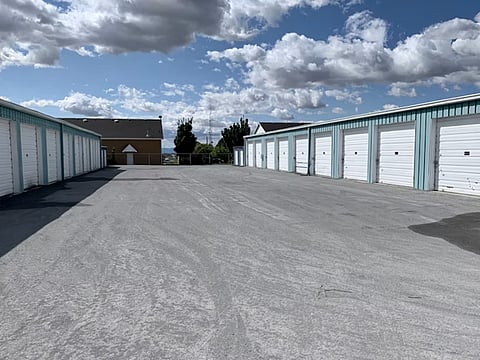
OSO Climate Storage, located at 1533 Flour Bluff Dr in Corpus Christi ; operates climate-controlled and drive-up units specifically designed for Gulf Coast conditions, with options that accommodate household storage, boat and RV parking, and business inventory needs in the Flour Bluff and Padre Island corridor.
The Corpus Christi housing market entered 2025 in genuinely buyer-friendly territory. Active listings rose approximately 39.8 percent year-over-year as of April 2025, with inventory sitting at 6.4–7.3 months of supply — a meaningful shift from the seller-dominated environment of 2021 and 2022. Homes were averaging 63–73 days to go under contract as of mid-2025, with list-to-sale ratios clustering between 97–99 percent when priced correctly (Local Market Report, 2026).
The most competitive price band remains $200,000–$300,000, where demand is concentrated and well-priced homes move quickly. Buyers in Southside, Calallen, and Flour Bluff will find pockets of urgency; buyers on the Island or in Bay Area neighborhoods typically have more room to negotiate. Hiring a local buyer's agent who understands Nueces County flood zone designations and the insurance implications of specific neighborhoods is not optional — it is the difference between buying confidently and discovering expensive surprises after closing.
Most relocations involve a gap: between leaving a previous home and occupying the new one. For military families, that gap can be several weeks, particularly when PCS orders arrive with short lead times, housing lottery assignments take time, or closing dates shift. For civilian buyers, renovation timelines and lease overlaps create similar windows. For incoming students at Texas A&M Corpus Christi, the gap between arriving in August and establishing a settled routine is real.
During these intervals, belonging management in a Gulf Coast environment requires more care than it would in a drier climate. Planning storage logistics early — securing a unit before arrival rather than after, gives incoming residents one fewer problem to solve during an already demanding transition.
Once the logistics resolve, Corpus Christi rewards its residents with a quality of life that is genuinely difficult to replicate at comparable cost anywhere on the Gulf Coast.
The Texas State Aquarium, located on North Beach, is one of the largest and most-visited aquariums in the country, anchoring a North Beach corridor that continues to develop as a cultural destination. The USS Lexington, a World War II-era Essex-class aircraft carrier permanently docked in Corpus Christi Bay, operates as both a naval museum and event venue. Whataburger Field, the downtown waterfront stadium where the Corpus Christi Hooks play, the Double-A affiliate of the Houston Astros, is one of the more appealing minor league parks in Texas.
The cultural fabric runs deeper than the headline attractions. The legacy of Selena Quintanilla-Pérez, the Grammy-winning Tejano artist who grew up and built her career in Corpus Christi, remains woven into the city's identity through the Selena Memorial on the seawall and the continuing influence of her music and story on local pride. Buc Days; the city's annual celebration of its heritage dating to 1938; draws significant crowds each April. The Texas Jazz Festival in October brings international performers to Heritage Park.
The South Texas Botanical Gardens and Nature Center, the Oso Bay Wetlands Preserve, and the Padre Island National Seashore collectively give outdoor-oriented residents an extraordinary range of accessible natural spaces. Birdwatching is a serious pursuit here; the Texas Coastal Bend is one of the premier birding corridors in North America, and the annual Birdiest Festival in America draws enthusiasts from across the country each spring. The water sports scene is equally established: kiteboarding draws specialists from across the region to the shallow, wind-driven waters of Oso Bay and Corpus Christi Bay, and the local yacht club has been racing in Corpus Christi Bay for more than 60 years.
Food follows the same pattern of honest quality over pretension. The Southside and downtown corridors offer Tex-Mex, fresh Gulf seafood, and barbecue that reflects South Texas traditions rather than trend-chasing. Water Street Oyster Bar on the waterfront, Executive Surf Club for live music and casual dining, and Brewster Street Ice House for Texas Country are among the venues that locals return to reliably.
Before and immediately after your move, these action items will reduce friction and prevent the avoidable problems that catch newcomers off-guard:
Verify flood zone designation for any property you are purchasing or renting — request FEMA Flood Map designation and confirm insurance requirements before signing
Obtain hurricane insurance and flood insurance quotes specific to your chosen neighborhood; premiums vary significantly between Flour Bluff, the Island, and inland areas
Secure storage logistics in advance if your move involves a transition gap between housing arrangements
Research school district boundaries if children's schooling drives neighborhood selection — Flour Bluff ISD and Calallen ISD operate independently of Corpus Christi ISD and serve specific geographic zones
Register your vehicle with Texas DMV within 30 days of establishing Texas residency
Update your driver's license within 90 days (required by Texas law)
Establish a relationship with a local HVAC company experienced in Gulf Coast maintenance schedules — salt air accelerates coil corrosion and reduces equipment lifespan without proactive maintenance
Connect with the Navy's Fleet and Family Support Center if arriving for a military assignment; the center's relocation programs provide housing counseling, school liaison services, and community orientation resources that accelerate settlement considerably
Download the H-E-B app — the Texas-based grocery chain is the dominant supermarket operator in Corpus Christi, and their store-brand quality and H-E-B Curbside services are genuinely exceptional and appreciated by most newcomers within the first week
Visit Padre Island National Seashore during a weekday morning before peak season — the experience of 113 miles of protected barrier island beach with essentially no other people present is one of the genuinely unrepeatable qualities of living in this city
Factor hurricane season into your annual planning calendar from June through November, particularly if you have stored belongings, a boat, or an RV that requires specific preparation before named storms approach the Gulf
Corpus Christi does not market itself aggressively. It does not need to. The city's combination of coastal access, affordable housing, economic stability, and South Texas character continues to attract people, military families, energy sector professionals, university students, and retirees who stay longer than they initially planned. Getting the practical details right at the beginning, the neighborhood, the insurance, the protection of your belongings during the transition, makes the difference between an adjustment period that stretches into years and one that resolves into genuine belonging within months.
Inspired by what you read?
Get more stories like this—plus exclusive guides and resident recommendations—delivered to your inbox. Subscribe to our exclusive newsletter
The products and experiences featured on RESIDENT™ are independently selected by our editorial team. We may receive compensation from retailers and partners when readers engage with or make purchases through certain links.