
- Locations
- Interviews
- Luxury Home
- Luxury Lifestyle
- Luxury Travel
- Luxury News
- Events
- More
- Magazine

Last-minute is the new luxury: Virtuoso's 2026 Luxe Report describes last-minute requests from affluent travelers as rampant, with many booking four to six weeks out and some within two weeks of departure.
The private residence is overtaking the hotel: HomeExchange reported more than 270,000 members and 43 percent year-over-year growth in 2025, with 3.5 million nights exchanged and 15 million overnight stays projected for 2026.
Americans are staying home by choice: an Allianz Partners survey conducted by Ipsos found 51 percent of US travelers planning domestic trips this summer, with 54 percent building travel around concerts, festivals, or performing arts.
Wellness is a destination, not an amenity: the Global Wellness Institute reports wellness tourism passed $1 trillion in 2024 and is projected to reach roughly $1.4 trillion by 2027.
The luxury trip is changing shape. For most of the past decade, a high-end vacation meant a marquee hotel, a planned itinerary, and a flight to somewhere far from home. In 2026, the most affluent American travelers are rewriting all three assumptions at once. They are booking later, often within weeks of departure. They are choosing private homes and villas over hotel suites. And they are increasingly pointing the trip inward, toward American destinations they once overlooked. The throughline across every one of these shifts is the same: control, privacy, and proximity now read as the highest form of luxury, ahead of distance and display.
This piece opens a new RESIDENT series, The New Shape of Travel. What follows is the wide-angle view of five trends defining the year, each grounded in the most credible industry data available. In the weeks ahead, each trend becomes its own reported feature, with the operators, advisors, and experts who are living it. Here is the map.
The longest-standing assumption in luxury travel, that the wealthiest clients plan furthest ahead, is breaking down. Virtuoso's 2026 Luxe Report describes last-minute requests from affluent clients as rampant, a sharp departure from the multi-year planning horizon that once defined the category. Many travelers are now booking four to six weeks out, and some arrange international trips within two weeks. Virtuoso frames the new pattern as a jar of pebbles and sand: milestone trips planned years ahead, mid-tier trips filled in within the year, and spontaneous escapes layered on top whenever the impulse and the calendar align.
Spontaneity at this level is not impulsiveness. It is the visible result of an infrastructure most travelers never see: advisors who hold standing relationships and room allocations at the best properties, private aviation on call, and concierge teams that maintain living preference profiles. The independent agency Pavlus Travel and Cruise reports a parallel surge, with a meaningful share of luxury departures now confirmed within 90 days of sailing. The demand is concentrated at the top of the market. Virtuoso projects trips over $50,000 will rise 35 percent for the 2026 to 2027 season.
Deep dive to come: The Spontaneity Premium, a feature on how the concierge ecosystem makes a Thursday phone call into a Saturday departure, with NUBA and property sources.
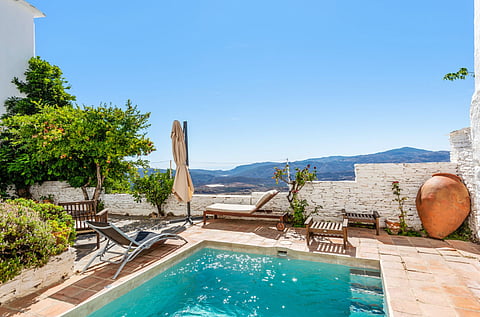
The affluent traveler increasingly wants a front door, not a front desk. Private villas and estate rentals are absorbing demand that once flowed automatically to five-star hotels, and the numbers in the strongest American markets show how far the shift has gone. In the Hamptons, peak summer rental rates climbed as much as 30 percent year over year, and the median sales price reached a record $2.34 million in the fourth quarter of 2025, up 34 percent. Prime oceanfront properties were booked by late January. In Palm Beach, closed sales jumped 23 percent year over year in December 2025, a market that has not unwound its pandemic-era surge so much as compounded it.
What the private home offers is not only space but discretion. Among the ultra-high-net-worth, privacy has become the amenity that matters most, and a staffed villa or off-market estate delivers it in a way no hotel lobby can. The luxury concierge firm NUBA reports clients replacing traditional resort stays with private homes in destinations from the Yucatan to Lanai, where the draw is stillness and confidentiality rather than amenities. The hotel is not disappearing from the luxury itinerary. It is now competing with a category that was once reserved for the few.
Deep dive to come: a reported look at the private-residence economy across the Hamptons, Palm Beach, Malibu, and the new Texas coast, framed against the hotel suite and the Airbnb Luxe tier.
A model once associated with budget travel is climbing into the premium tier. HomeExchange, the largest home-swapping platform, reported more than 270,000 members across 155 countries and 43 percent year-over-year growth in 2025, with 3.5 million nights exchanged and 15 million overnight stays projected for 2026. The appeal for the high-end traveler is not savings. It is access to genuine private residences, often in residential neighborhoods rather than resort zones, and the chance to live in a place rather than visit it.
The same instinct is driving longer stays and long-term rentals. Remote-capable professionals and retirees are booking a single residence for weeks at a time, trading the packed itinerary for the rhythm of a temporary local life. This is where the home-swap model and the villa-rental model meet: both answer a traveler who has already collected the marquee destinations and now wants depth, domesticity, and a sense of belonging that a hotel stay cannot manufacture.
Deep dive to come: how home exchange and long-term rentals are being repositioned for the luxury traveler, reported across HomeExchange Collection and the private-villa market, with executive interviews.
The luxury trip is increasingly staying on home soil, and the data frames this as a choice rather than a compromise. An Allianz Partners survey conducted by Ipsos found 51 percent of US travelers planning domestic trips this summer, and 54 percent building travel around concerts, festivals, or performing arts, with 41 percent organizing trips around sporting events. The behavior the survey measures is experience-stacking: pairing a destination with a reason to be there, whether a festival, a match, or a cultural moment. The United States 250th anniversary in July 2026 is amplifying interest in historic destinations, and the FIFA World Cup is drawing affluent domestic travel to host cities across the country.
This is the wave RESIDENT is already tracking through its Set-Jetting coverage, from Savannah to the Dallas-Fort Worth corridor. The destinations driving it are not consolation prizes for skipped European summers. They are primary trips, chosen for cultural depth, privacy, and the absence of the crowds now crushing the most photographed overseas destinations. American luxury infrastructure has matured to meet the demand, and the affluent traveler is responding by looking closer to home with fresh eyes.
Deep dive to come: an expansion of the Set-Jetting series, mapping the domestic destinations where culture, sport, and the 250th anniversary are converging in 2026.
Wellness has moved from a feature of the trip to the purpose of it. The Global Wellness Institute reports that wellness tourism passed $1 trillion in 2024 and is projected to reach roughly $1.4 trillion by 2027, part of a wellness economy that hit $6.8 trillion in 2024 and is forecast to reach $9.8 trillion by 2029. What distinguishes the category now is outcome orientation. Travelers are booking for measurable results, from sleep and stress recovery to longevity diagnostics, and allocating travel budgets the way they once allocated toward art or home improvement.
The programming has expanded accordingly, from new Caribbean wellness destinations such as Meraki on Grand Cayman to mindful-travel itineraries at properties like the Hyatt Regency Lake Tahoe. For the affluent woman who has long driven household wellness decisions, the shift toward results-based longevity travel is one she is leading. The wellness resort of 2026 is not a quieter beach hotel. It is a distinct category with its own decision criteria, and the properties leading it are booking out well in advance.
Deep dive to come: wellness as a travel investment category, reported with the operators and practitioners building results-based programming for the RESIDENT reader.
Read together, these five shifts describe a single recalibration. The luxury traveler of 2026 is trading distance for depth, the hotel for the home, and the far-flung itinerary for something more private, more spontaneous, and often closer than expected. None of this is a retreat from luxury. It is a redefinition of it, organized around control over one's time, privacy as a baseline expectation, and proximity as a feature rather than a fallback. Each of these trends rewards the traveler who books with intention and the operator who can deliver it. The series will not stop at where travelers stay. In the months ahead it will examine how they move, from the surge in private aviation and yacht charter to the small-ship expedition boom, because the means of travel is shifting as fast as the destination. Over the coming weeks, RESIDENT will take each one apart in full.
References:
Inspired by what you read?
Get more stories like this—plus exclusive guides and resident recommendations—delivered to your inbox. Subscribe to our exclusive newsletter
The products and experiences featured on RESIDENT™ are independently selected by our editorial team. We may receive compensation from retailers and partners when readers engage with or make purchases through certain links.