
- Locations
- Interviews
- Luxury Home
- Luxury Lifestyle
- Luxury Travel
- Luxury News
- Events
- More
- Magazine
- Contact Us

Owning premium property in Brisbane carries a particular kind of responsibility. The city's subtropical climate, ageing pipe infrastructure in established suburbs, and the stop-start cycle of heavy wet seasons followed by dry spells create conditions that accelerate wear on plumbing systems in ways that are rarely visible until real damage has already occurred. For homeowners who have invested significantly in a property, understanding what can quietly compromise its structural integrity is not a minor consideration. It is a fundamental part of stewardship.
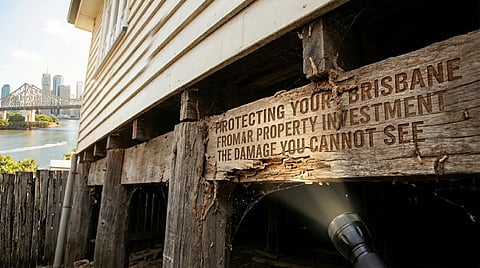
Water damage consistently ranks among the most destructive and most underestimated threats to residential property value in south-east Queensland. Unlike storm damage or subsidence, it rarely announces itself dramatically. It builds slowly, invisibly, behind walls and beneath slabs, until it manifests as staining, mould, a warped cabinet, or a water bill that no longer makes sense.
Brisbane's housing stock is unusually varied in age. Suburbs like Paddington, Woolloongabba, Ascot, and Hamilton contain homes built across multiple decades, many with original or partially upgraded plumbing. Copper pipes corrode. Older galvanised steel lines develop pinhole leaks that can run for months before showing any surface sign. Even newer constructions are not immune: slab leaks, caused by pipe movement under concrete footings, are reported across Brisbane's newer estates and can cause significant structural shifting before detection.
The city's soil profile compounds the problem. Brisbane's reactive clay soils expand and contract with moisture levels. When a slow leak saturates the ground beneath or around a slab, the resulting movement can affect footing integrity. What begins as a small plumbing fault can become a foundation issue if left unaddressed.
For homeowners in Brisbane's premium inner and riverside suburbs, the financial stakes are considerable. Property values in these areas are high, and the cost of remediation for water-damaged structures, particularly where mould has established or plasterboard has deteriorated, can run into the tens of thousands of dollars.
The critical distinction in managing water leak risk is the gap between reactive and proactive responses. Most homeowners only contact a plumber when a leak becomes undeniable: a wet patch on the ceiling, water pooling in a cupboard, or a sudden drop in pressure. By that point, the damage has already progressed well beyond the initial fault.
Proactive leak detection, particularly before purchasing a property, during a renovation, or following an unusually wet season, closes that gap substantially. Specialists use non-invasive tools including thermal imaging cameras, acoustic listening equipment, and hydrostatic pressure testing to locate faults inside walls, beneath floors, and under concrete slabs without requiring demolition. For owners of high-value homes, this approach is especially valuable because it eliminates guesswork and prevents unnecessary damage to finished interiors.
Engaging professional water leak detection in Brisbane through a qualified provider means technicians can run a suite of diagnostic tests, including static dye tests for waste lines, flood testing for tile and waterproofing integrity, and visual inspection of all accessible plumbing fixtures, to build a complete picture of the system's condition. For a property worth well over a million dollars, that diagnostic investment is trivial relative to the remediation costs it can prevent.
Part of being a diligent property owner is knowing what to look for between professional inspections. Several indicators suggest a hidden leak may already be active.
Unexplained increases in water bills are consistently the earliest signal. If consumption figures rise without any change in household habits, a concealed leak is a strong candidate. Other signs include damp or discoloured patches on walls or ceilings, musty odours in rooms without obvious moisture sources, soft spots in flooring, unusual lush growth in one section of the garden, and the faint sound of running water when all fixtures are turned off.
Any of these observations in isolation warrants a closer look. Two or more occurring together should be treated as a call to act promptly rather than monitor further.
Property owners in Queensland have a legal obligation to maintain plumbing systems in good working order, and water leaks that affect neighbouring properties or public infrastructure can carry liability implications. The Queensland Building and Construction Commission (QBCC) oversees building work standards in the state and provides guidance on homeowner rights and responsibilities when dealing with building defects, including those caused by plumbing failures. Familiarising yourself with those frameworks is worthwhile, particularly for owners of investment properties or strata titles, where shared infrastructure and responsibility boundaries require careful management.
Premium property ownership is as much about preservation as it is about acquisition. A high-end renovation or a considered interior fit-out can be undermined quickly by water damage that was preventable. The most sophisticated homeowners treat their plumbing infrastructure with the same attention they give to the property's aesthetic and structural features.
Scheduling a professional leak assessment during any significant renovation, as a pre-purchase condition, or simply as part of an annual maintenance review is a relatively low-cost measure with a disproportionately high return. In a city where property values are closely tied to condition and presentation, that kind of proactive thinking is not just good housekeeping. It is sound financial strategy.
Brisbane's property market rewards well-maintained homes. Protecting yours from the threats that are hardest to see is the most practical form of value preservation available.
Inspired by what you read?
Get more stories like this—plus exclusive guides and resident recommendations—delivered to your inbox. Subscribe to our exclusive newsletter
The products and experiences featured on RESIDENT™ are independently selected by our editorial team. We may receive compensation from retailers and partners when readers engage with or make purchases through certain links.