
- Locations
- Interviews
- Luxury Home
- Luxury Lifestyle
- Luxury Travel
- Luxury News
- Events
- More
- Magazine

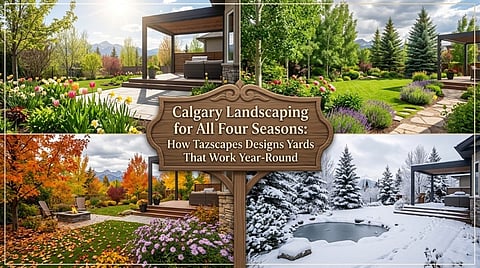
A four-season yard works because every layer is planned to perform in changing conditions. The right mix of evergreens, deciduous plants, and durable hardscape keeps the space attractive, whether the lawn is green or covered in snow. Smart drainage, thoughtful plant placement, and weather-tested materials carry the design through chinooks, frost, and summer heat without losing its polish or function.
Picture stepping outside in late January, coffee in hand, and the yard still looks intentional. Sculpted shrubs against the snow, soft path lighting, a patio that hasn't shifted an inch since you laid it down two summers ago. That kind of result comes from year round landscaping that was planned with winter in mind from day one, and it looks nothing like the average garden plan most homeowners start with.
Calgary throws a unique set of challenges at any outdoor space. One week brings a chinook that melts everything in sight, the next dumps fifteen centimetres of snow. For homeowners thinking long-term, Calgary landscaping has to account for these swings from the planning stage, not later. The yards that hold up best are built around resilience first, beauty second.
That's why the strongest properties feel deliberate every month, not just July. Plan for the worst weather, and the good days take care of themselves.
A garden that keeps its character year-round doesn't come together by chance. It comes from layering elements so the space always offers something like colour, texture, structure, or movement, regardless of the weather. A good four season landscape design gives every part of the yard a job across multiple months.
Before any plants go in the ground, the permanent features need to be sorted. Patios, walkways, retaining walls, pergolas, raised beds, decorative boulders. These carry the yard through winter, when flowers are dormant, and lawns are buried under snow. Good hardscape materials handle freeze-thaw cycles without cracking or shifting, which means proper base preparation, drainage layers, and reinforcement matter as much as the surface finish you pick.
A stone path framed by snow can look just as striking as one bordered by summer blooms. That's how you know the bones are right.
Pick plants that earn their place in more than one season. A serviceberry tree flowers in spring, fruits through summer, turns crimson in fall, and shows off architectural branches in winter. Ornamental grasses sway through the warm months and hold their golden plumes well into January.
Layering becomes simple once you think in tiers:
Anchor trees like spruce, pine, or amur maple for structure and winter form
Evergreen shrubs like juniper, mugo pine, and dwarf cedar for steady colour
Deciduous shrubs like dogwood with red winter stems, ninebark, and potentilla
Perennials like daylilies, sedum, coneflower, and ornamental grasses
Groundcovers like creeping thyme, periwinkle, and sedum mats
This is where most yards fall apart. Snow has to land somewhere, and if you haven't mapped storage zones during the design phase, it ends up crushing shrubs, blocking gates, or pooling against the foundation when it melts. A solid plan identifies snow piles before the first storm, keeps salt-sensitive plants well away from driveway edges, and gives meltwater a clear path away from the house.
Not every material survives a southern Alberta winter. The table below shows what tends to perform versus what struggles:
Getting these calls right at the design stage saves thousands in repairs and replacements over the first decade. Once the foundation is solid, the rest of the design can handle the trickier conditions Alberta sends along.
Even a well-planned yard needs ongoing attention to handle what the prairies throw at it. The freeze-thaw cycles, sudden hail, and chinook winds create stresses you won't find in milder regions, so landscaping Alberta climate conditions properly means baking a few extra layers of protection into the design.
Chinooks are a mixed gift. They warm things up in the dead of winter, but they also trick plants into thinking spring has arrived, only for temperatures to crash days later. Wrap vulnerable shrubs in burlap, mulch heavily around root zones to insulate the soil, and stick with species rated for zone 3 or colder. Avoid planting tender specimens on south-facing walls where warming spikes hit hardest.
Calgary sits in a semi-arid region, so summer water bills add up fast. Group plants by water needs, run drip irrigation through the beds, and capture roof runoff with a rain barrel or two. The City of Calgary's YardSmart program recommends grouping plants with similar water requirements and sloping beds toward thirstier species, which cuts outdoor water use considerably. Mulch five to seven centimetres deep to lock moisture in and slow evaporation.
Once daylight starts shrinking in October, a yard can feel abandoned by 5 p.m. Path lights, uplighting on trees, and a soft glow along patio edges keep the space alive through the evening. LED systems sip power and stay reliable in cold weather, so the patio remains usable through autumn dinners and into the early winter months.
Wind exposure is one of the biggest reasons plants fail around here. Strategic placement of fences, hedges, or pergolas creates microclimates where more delicate plants can thrive. Even a simple privacy screen on the western edge of a patio turns the space usable on the gusty days that come with every chinook cycle.
These adjustments are what turn a basic yard into one that works around the calendar, not just for the few warm months in between.
A yard built for every season isn't about chasing trends or stuffing the space with features. It's about thoughtful decisions made early. Materials that survive the cold. Plants that earn their keep across multiple months. A layout that accounts for snow, wind, and water before the first shovel hits the ground. Companies like Tazscapes have built their reputations on exactly this kind of careful planning, and the proof shows up through every chinook and cold snap.
When the design is right, the yard stops being a summer-only project and starts feeling like part of the home all twelve months. The result is better curb appeal, lower long-term maintenance, and the steady pleasure of looking out the window in any season and seeing something worth admiring.
Inspired by what you read?
Get more stories like this—plus exclusive guides and resident recommendations—delivered to your inbox. Subscribe to our exclusive newsletter
The products and experiences featured on RESIDENT™ are independently selected by our editorial team. We may receive compensation from retailers and partners when readers engage with or make purchases through certain links.