
- Locations
- Interviews
- Luxury Home
- Luxury Lifestyle
- Luxury Travel
- Luxury News
- Events
- More
- Magazine

Ask three luxury builders for a rough figure and you may get three different answers, all of them honest. The cost of a custom home depends less on a price list than on a chain of decisions: the block, the size, the structure and the finishes. Understanding those decisions is the most useful thing you can do before you set a budget.
Cost per square metre is a handy yardstick, but it hides a lot. Kitchens, bathrooms, ensuites and laundries carry the plumbing, waterproofing, stone and joinery, so they cost far more per square metre than a bedroom or a living area. Adding a fourth bathroom moves the budget more than adding a fourth bedroom.
That is why two homes with the same floor area can sit hundreds of thousands of dollars apart. The question to ask is not only how big the home is, but where the size goes.
Some of the biggest costs are fixed before the design begins. A sloping site needs retaining walls and more complex footings. Reactive clay or rock behaves differently from sand. A narrow lot often pushes a home up to two or three storeys, which brings more structure, a longer stair and sometimes a lift.
Coastal blocks add their own bill. Salt air is hard on metal and some finishes, so fixings, window frames and outdoor materials need to be chosen for the exposure. Riverside and heritage locations can bring planning controls that shape the design. And if there is an old house to clear first, demolition and site preparation come before anything else.
Long open spans, cantilevered upper floors, walls of glass and basements are what give many luxury homes their character. They also need steel, concrete and engineering that a conventional layout does not. None of this is a reason to avoid them, but they are worth deciding early, with an engineer involved, rather than adding to a design that was not drawn to carry them.
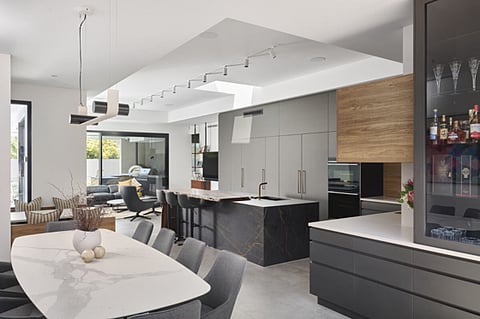
Natural stone, custom joinery, large-format tiles, oversized sliding doors and thermally broken window frames each raise the cost of a home on their own, and together they can move a budget significantly. Lighting design, integrated appliances and home automation add again.
The finishes are also where taste meets budget most directly, so it helps to know early which ones matter most to you. A kitchen bench you touch every day may deserve more of the budget than a feature wall in a room you rarely use.
When the interiors are chosen after the plans are approved, the home is often reworked to fit them: a wall moved for a larger pantry, a ceiling dropped for a lighting detail, power relocated for joinery. Every change late in the process costs more than the same decision made on paper.
Builders who bring an interior designer into the first meetings design the rooms and their contents together, so the plans already allow for the stone, the joinery and the lighting. It is one of the simplest ways to keep a luxury budget under control.
Few builders put numbers on their website, but some do, and those figures are a useful reality check. Trendsetter Homes, a Perth custom home builder, publishes a working range of $4,000 to $6,000 or more per square metre for its homes, with builds from $1.5 million to $4 million depending on scope. Those are build costs only. Land, council approvals, landscaping, service connections and furniture are priced separately.
A range like that is a starting point, not a quote. For a sense of what a luxury build involves from the first brief to handover, it is worth reading how a builder describes its process as well as its prices.
Spend on the things that are hard or impossible to change later: the structure, the orientation of the living areas, the windows and glazing, insulation, and the runs for plumbing and electrical services. These decide how the home performs and how it feels for decades.
Be more flexible with the things that can be upgraded later. Loose furniture, some light fittings, and even some landscaping can wait a year or two without compromising the home.
Ask for a detailed pricing breakdown rather than a single total, and check which items are provisional sums or prime cost allowances, because those are estimates that can rise. Compare quotes on the same specification, ask what each one leaves out, and keep a contingency for the decisions you have not made yet.
A luxury home will never be cheap. But it can be predictable, and that comes from making the big decisions early and knowing exactly what each one costs.
Inspired by what you read?
Get more stories like this—plus exclusive guides and resident recommendations—delivered to your inbox. Subscribe to our exclusive newsletter
The products and experiences featured on RESIDENT™ are independently selected by our editorial team. We may receive compensation from retailers and partners when readers engage with or make purchases through certain links.