
- Locations
- Interviews
- Luxury Home
- Luxury Lifestyle
- Luxury Travel
- Luxury News
- Events
- More
- Magazine

Advanced Cardiovascular Life Support (ACLS) certification is a course that helps you learn how to handle cardiovascular emergencies. With this course, you can learn the skills to stabilize patients who experience life-threatening events. However, you must also renew the certificate every two years to ensure you stay updated with the latest practices. ACLS recertification requires you to demonstrate specific skills to confirm your proficiency in emergency care. Let us discuss these skills that are tested during the recertification process.
A study conducted in 2023 showed consistently better patient outcomes due to advanced ACLS training, including improved post-discharge survival by up to 30 days among adult patients who experienced cardiac arrests. This highlights the importance of ACLS certification in enhancing life-saving skills. Recertification is also important because it helps you maintain proficiency in critical response techniques.
Here is a list of skills tested during the ACLS recertification process.
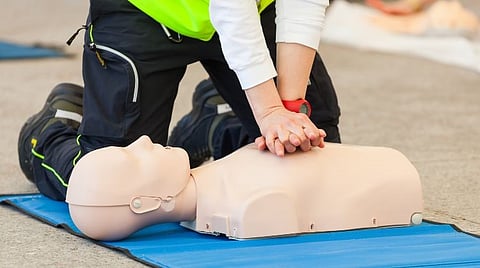
This skill involves knowing basic and advanced cardiopulmonary resuscitation (CPR) techniques to help patients in distress. You must know how to perform chest compressions and ensure proper breathing by providing adequate ventilation. It also involves understanding the compression rate, depth, and chest recoil processes.
An AED delivers an electric shock to the patient through the chest to the heart. With this defibrillator, you must know how to detect abnormal heart rhythms and how to restore normal rhythms once the patient becomes conscious.
You must also demonstrate the correct placement of AED pads and follow prompts effectively while reviving patients in emergencies. Authorities may further ask you how to coordinate AEDs with other resuscitation efforts during the recertification process.
ACLS training also covers advanced airway management techniques to help victims in emergencies. These techniques involve knowledge of techniques like endotracheal intubation and the use of supraglottic airways.
During the recertification process, you must demonstrate proficiency in securing and managing airways, including proper insertion of endotracheal tubes into a patient’s trachea to ensure a secure airway.
As an ACLS participant, you must know how to recognize and manage respiratory arrest, including administering ventilation measures and appropriate oxygenation. Here, authorities evaluate your competency by asking you to apply various cardiac arrest algorithms.
You must also know how to work collaboratively with teams to use medications and defibrillation effectively to save patients.
ACLS certification teaches you to recognize and manage cardiac arrest in patients. For this, you must be able to apply algorithms and advanced life support interventions.
Common examples include high-quality CPR, defibrillation, and administering medications like epinephrine and amiodarone. These actions help restore blood circulation in patients and improve their chances of survival.
These algorithms guide a systematic approach to all kinds of cardiovascular emergencies. You must understand all ACLS algorithms across various scenarios and know how to apply the correct algorithm based on the specific clinical situation a patient may face.
ACLS training also covers administering medications to patients if necessary. You must know the common uses of medicines like epinephrine, amiodarone, and vasopressin. This demonstrates during recertification that you know how to manage sudden cardiac arrests and arrhythmias.
You must demonstrate knowledge of indications, accurate dosing, and proper administration techniques for providing ACLS support.
Effective teamwork and communication are essential across all ACLS scenarios. You must understand your role within a resuscitation team and communicate efficiently.
This evaluation process often includes teamwork exercises where you coordinate roles and communicate effectively. You must also learn how to adapt to changing circumstances during simulated emergencies.
As part of your ACLS training, you must also know how to provide post-resuscitation care, including managing post-cardiac arrest syndrome. The recertification procedure will assess your ability to initiate post-resuscitation care and manage other complications during emergencies, analyzing your transition to ongoing patient care.
The ACLS training does not require much time, and you can easily gain the skills within a short period. However, you must keep yourself updated with the knowledge acquired during the training. This also involves knowing the latest techniques to help save victims’ lives in emergencies. That is why it is necessary to undergo the ACLS recertification process every two years. Make sure you know the skills that will be tested during this time to ensure you regain your certificate without any issues.
Inspired by what you read?
Get more stories like this—plus exclusive guides and resident recommendations—delivered to your inbox. Subscribe to our exclusive newsletter
The products and experiences featured on RESIDENT™ are independently selected by our editorial team. We may receive compensation from retailers and partners when readers engage with or make purchases through certain links.