
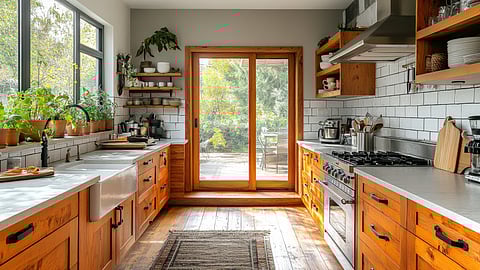
Turning a Galley Kitchen Into a Light-Filled Family Gathering Space: Lessons from an Arlington Remodel

In many older homes—especially in neighborhoods like Arlington, Del Ray, Falls Church, and Northwest DC—the kitchen was never meant to be the center of family life. Narrow galley layouts, limited natural light, and closed-off floorplans often make cooking, hosting, and gathering feel tight and disconnected.
That was the challenge facing one Arlington family. Their galley kitchen worked “well enough,” but it didn’t support the way they wanted to live: cooking together, hosting friends, and gathering during the holidays. Rather than simply updating finishes, they needed a kitchen that felt open, connected, and full of natural light.
What follows is not just their story—but a set of practical lessons for any homeowner planning to transform a cramped kitchen into a functional, welcoming hub.
1. Start with Lifestyle, Not Layout
Before talking cabinetry or paint colors, the homeowners defined how they wanted to use the space:
A kitchen open enough for multiple people to cook at once
Better flow between the kitchen, dining room, and living area
More natural light and better sightlines
A welcoming environment for family gatherings
A design that preserved elements of the home’s original character
This is a crucial step many homeowners skip. The best kitchen remodels don’t begin with measurements—they begin with moments.
2. Understand Your Real-World Constraints (Especially in Established Neighborhoods)
In Arlington, VA and similar communities, homeowners often face zoning and structural limitations that shape what’s possible.
In this remodel, the challenges included:
Tight setback limits
Setbacks are the minimum distance your home must sit from your property lines.
Because this home sat close to the lot lines, major expansion would have triggered lengthy special-permit processes.
A small, well-designed addition was the smarter move.
Existing architectural conditions:
A chimney that needed to be incorporated
A refrigerator placement that disrupted flow
Older cabinetry the homeowners hoped to partially reuse
Neighbor and utility coordination
Working in tighter neighborhoods sometimes requires:
Neighbor signatures
Temporary utility adjustments
Meticulous planning to minimize disruption
The key lesson?
A good remodel isn’t just about designing a beautiful space—it’s about designing within real boundaries.
3. A Small, Targeted 22' x 10' Addition Made a Big Impact
Instead of a full home extension, the homeowners opted for a modest side bump-out.
Just 22 feet by 10 feet—but it transformed how the entire first floor functioned.
Inside the reimagined kitchen:
A larger, more open cooking zone
Blended cabinetry (both reused and new) for visual continuity
A better-placed refrigerator to smooth the workflow
A reconfigured island with more workspace and seating
Expanded windows that brought in natural light
New hardwood floors tying the new and old spaces together
A small addition can unlock major improvements when paired with thoughtful design.
4. A Clear Goal Can Drive the Entire Schedule
The homeowners were candid about their hope:
“We’d love to host Thanksgiving in the new kitchen.”
Clear milestones help guide decisions around:
Schedule
Lead times
Material choices
Sequencing of work
With careful planning—and close coordination—the remodel finished ahead of schedule, giving the family their first holiday in a kitchen that finally fit the way they lived.
Their favorite detail?
The seamless blend of old and new cabinetry, which created a cohesive look without unnecessary cost.
5 Questions to Ask Before Expanding a Galley Kitchen
(Adapted from this remodel’s biggest lessons)
Do you need a major addition—or just a small bump-out?
Many homes need only 50–200 extra square feet to transform flow.
How do you want the kitchen to feel when people gather there?
Light-filled? Open? Connected? Calm? This guides layout choices.
What are your setback limits and permitting requirements?
A quick check can save months of redesign.
Can you blend old and new elements to stay on budget?
Reused cabinets + new cabinets can work beautifully.
Do you have a meaningful deadline or milestone?
Holidays and family events help clarify priorities.
Small Changes, Big Impact
This Arlington remodel shows what’s possible when thoughtful design meets real-world constraints. A kitchen that once felt tight, dark, and disconnected now serves as a bright, welcoming hub—ready for cooking, gathering, and celebrating for years to come.
Whether you live in an Arlington rambler, an Alexandria row home, or a Falls Church colonial, the same principles apply:
Understand how you want to live
Respect the structure you already have
Use space wisely
Blend old and new
Let your lifestyle lead the way
When those pieces come together, even the smallest addition can completely transform the heart of your home.
Inspired by what you read?
Get more stories like this—plus exclusive guides and resident recommendations—delivered to your inbox. Subscribe to our exclusive newsletter
Resident may include affiliate links or sponsored content in our features. These partnerships support our publication and allow us to continue sharing stories and recommendations with our readers.