
- Locations
- Interviews
- Luxury Home
- Luxury Lifestyle
- Luxury Travel
- Luxury News
- Events
- More
- Magazine
- Contact Us

Truck accidents occur in many different forms, and each type brings its own risks, causes, and legal challenges. Understanding the Types of Truck Accidents is crucial because it helps victims, drivers, and families recognize what went wrong, who may be responsible, and how legal claims should be handled. These collisions often involve huge commercial vehicles that can cause severe injuries and long-lasting consequences.
Knowing the nature of the accident allows investigators, lawyers, and experts to analyze evidence more effectively and build a strong case. This guide breaks down the most common and dangerous truck accidents and explains why knowing their types matters for safety and legal justice.
Not all truck accidents are the same, and the way a crash happens influences everything from the injuries involved to the legal process that follows. Each type of accident is associated with different causes, responsible parties, and evidence requirements. Understanding these differences helps victims know what steps to take after a collision and ensures that their rights are fully protected. It also allows trucking companies and drivers to recognize risk factors and prevent future incidents.
Truck accidents involve larger vehicles, heavier loads, and strict industry regulations. Because of this, identifying the exact type of accident is essential in determining liability. Lawyers use this information to examine driver logs, maintenance records, black box data, and road conditions. Each detail contributes to building a strong legal claim.
Jackknife accidents occur when a truck's trailer swings out sharply, forming an L-shape with the cab. These accidents often lead to multi-lane blockages and severe damage. They typically occur due to sudden braking or loss of traction. Jackknife crashes can involve multiple vehicles and require detailed investigation.
Sudden or harsh braking
Slippery or wet road surfaces
Trailer imbalance or shifting cargo
Driver speeding or loss of control
Poor traction during curves or turns
Rear-end crashes happen when a truck strikes the back of a smaller vehicle. Due to the truck’s massive size and long stopping distance, even low-speed collisions can be dangerous. These accidents often result in severe injuries such as whiplash, fractures, or spinal damage.
Driver fatigue and delayed reaction time
Distracted driving (phone use, eating, etc.)
Speeding or tailgating
Faulty or poorly maintained brakes
Heavy traffic causing sudden stops
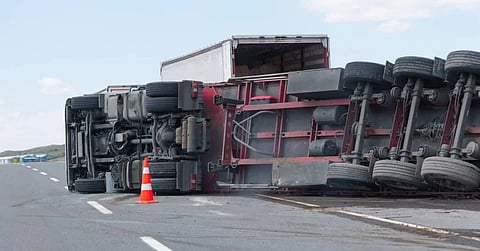
A rollover occurs when a truck tips onto its side or completely flips over. These accidents are extremely dangerous and often involve cargo spills, fires, or road blockages. Rollovers usually occur due to speed, imbalance, or poor maneuvering.
Excessive speed on curves
Improper or uneven cargo loading
Tire blowouts or mechanical failure
Sudden steering corrections
Strong crosswinds affecting trailer stability
Underride accidents happen when a smaller vehicle slides underneath a truck’s trailer. These crashes are often deadly because the car’s upper section can be crushed. Poor visibility and sudden braking are major contributors to underride incidents.
Poor truck visibility at night
Sudden braking by the truck driver
Lack of proper underride guards
Dim or nonfunctional rear lights
Cars following too closely
Trucks have large blind spots known as “no-zones,” where smaller vehicles can disappear from the driver’s view. Blind spot accidents happen during lane changes, merging, or turns and often lead to significant side-impact damage.
Vehicles lingering in truck no-zones
Improper mirror checking by truck drivers
Unsafe or sudden lane changes
Driver distraction or reduced awareness
Limited visibility in bad weather
Wide-turn accidents occur when truck drivers misjudge the space needed to turn, especially right turns. A truck may swing wide and trap or crush nearby vehicles. These accidents often happen in busy intersections or narrow streets.
Misjudging turn space or angle
Failure to check surrounding vehicles
Narrow or crowded intersections
Poor visibility or blind spots
Lack of proper turn signals
Head-on collisions are among the most severe and life-threatening types of truck accidents. These occur when a truck enters the wrong lane, loses control, or veers into oncoming traffic. The impact force is extremely high and often results in catastrophic injuries.
Driver fatigue or falling asleep
Impaired driving or distraction
Loss of control during curves
Crossing into opposite lanes
Mechanical failures like brake problems
Knowing the accident type helps determine liability and the legal strategy needed to pursue compensation. Different crash types require unique evidence, from black box data to cargo records. Lawyers use this information to identify responsible parties such as drivers, trucking companies, cargo loaders, or maintenance providers.
Black box data
Driver logbooks
Maintenance records
Skid marks and road conditions
Cargo weight and load distribution reports
Eyewitness statements
Why does the type of truck accident matter legally?
Because each type involves different causes and responsible parties, it affects how your claim is built and what compensation you may receive.
Which truck accidents are the most dangerous?
Head-on crashes, underride accidents, and rollovers are among the most severe due to their high-impact nature.
Do I need a lawyer for every truck accident?
Truck accident claims are complex; having a lawyer helps protect your rights and ensures proper evidence handling.
What evidence is most important?
Black box data, cargo records, maintenance logs, and accident scene photographs are key sources of evidence.
Understanding the Types of Truck Accidents is essential for recognizing causes, preventing future crashes, and building strong legal claims. Each accident type whether a jackknife, underride, rollover, or head-on collision reveals important details about what went wrong and who may be responsible. This knowledge strengthens investigations, helps attorneys pursue fair compensation, and ensures victims receive the justice they deserve. By identifying the type of crash and its contributing factors, you are better equipped to protect your rights and make informed decisions after a truck accident.
Inspired by what you read?
Get more stories like this—plus exclusive guides and resident recommendations—delivered to your inbox. Subscribe to our exclusive newsletter
The products and experiences featured on RESIDENT™ are independently selected by our editorial team. We may receive compensation from retailers and partners when readers engage with or make purchases through certain links.