
- Locations
- Interviews
- Luxury Home
- Luxury Lifestyle
- Luxury Travel
- Luxury News
- Events
- More
- Magazine

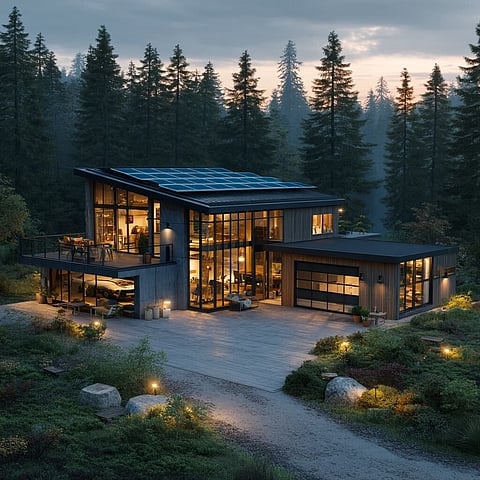
Imagine powering your entire home with energy from the sun, completely independent from utility companies - this is the promise of off grid solar power systems: a way to live with reliable electricity even in the most remote locations. In recent years, interest in going “off-grid” has surged as technology improves and energy independence becomes a priority for many homeowners. In this comprehensive guide, we’ll explain what off-grid solar entails, how it works, and what you need to know to plan your own system in 2026. By the end, you’ll understand the benefits, challenges, costs, and even see some top product recommendations to kickstart your off-grid solar journey.
Off grid solar power systems (also called off-grid solar electric systems) are setups that generate electricity from solar panels and store it in batteries, with no connection to the public power grid. In other words, an off-grid solar system is a self-sufficient energy solution for your home. Because it’s not tied to any utility lines, it must produce all the power you need and have backup energy stored for nights and cloudy days.
These systems are often just referred to as off grid solar systems for short. (Some people even use phrases like “grid off solar system” or “off grid connected solar system” to describe the same concept - though in technical terms, “grid-connected” means the opposite. In Spanish, you might hear sistem solar off grid, showing that this idea of independent solar energy is popular worldwide.) No matter the name, the concept is the same: you get a solar-based electric setup that operates independently, giving you electricity without any utility company.
An off-grid setup should not be confused with a standard grid-tied solar system. On a grid-tied system, your solar panels work alongside the grid - meaning you still rely on the local utility at night or when solar production is low. With an off-grid system, by contrast, you have no backup from the grid at all.
Your home’s power needs are entirely met by your solar panels, battery bank, and possibly a generator for emergencies. This makes off-grid systems larger and more complex than typical home solar installations, since they must be sized to cover 100% of your energy usage. Still, modern off grid solar power systems are more achievable than ever thanks to improvements in batteries and solar equipment. Homeowners today have a viable path to true energy independence using readily available technology.
Why do people choose to install off grid solar power systems? The benefits are compelling; however, going off-grid isn’t without its challenges. First and foremost is energy independence: you produce your own electricity and aren’t affected by grid outages or rising utility rates; if the power goes out in your area due to a storm or blackout, your lights and appliances stay on as usual. You also won’t receive any electricity bills - once your system is set up, the energy from the sun is free.
Many off-grid homeowners enjoy the peace of mind that comes from knowing they have a reliable power supply under their control. Additionally, off-grid solar is a clean, renewable energy solution that uses only renewable sources; by using solar panels and batteries, you’re reducing reliance on fossil fuels and shrinking your carbon footprint. This makes off-grid living an attractive choice for those with environmental values or for properties where extending power lines would be prohibitively disruptive or expensive.
However, going fully off-grid does come with challenges. The biggest consideration is the upfront cost and design complexity. Because an off-grid solar power system must supply all your power, it usually requires a large solar array and a substantial battery bank. This can be expensive - often tens of thousands of dollars for a whole-house system.
(Indeed, a complete off-grid setup for an average home might cost roughly double what a grid-tied solar installation would, due to the batteries and extra equipment needed for stand-alone operation.) Careful sizing and planning are essential; you’ll need to assess your energy usage and local sun conditions in detail when designing the system. There is also the maintenance factor: off-grid systems require you to maintain batteries (especially if using traditional lead-acid types), periodically check equipment, and ensure your backup generator is ready when needed.
Living off-grid can mean adjusting your lifestyle to some degree - for instance, being mindful of electricity use during extended cloudy weather or scheduling heavy appliance use for sunny periods - and another challenge is ensuring year-round reliability. You must design for the worst-case scenarios: in winter or during long stretches of rain, solar production drops, so your system needs to be robust enough (or have generator support) to carry you through.
While modern systems make this easier with automation and monitoring, it’s still a different mindset than relying on unlimited grid power. In short, the freedom that off-grid solar provides comes with a great deal of responsibility: you essentially become your own power company, which necessitates significant investment as well as careful management of your energy consumption.
Every off grid solar power system relies on a set of core components to function. To demystify how these systems work, let’s break down the primary parts of a typical off-grid solar setup:
Solar Panels (PV Modules): These are the panels - usually mounted on your roof or on ground racks - that capture sunlight and convert it into electricity. Off-grid systems typically use photovoltaic solar panels just like grid-tied systems do. The panels produce DC (direct current) power when the sun shines. Using high-efficiency monocrystalline panels can maximize your energy generation, which is especially important for off-grid homes where every watt counts.
Solar Charge Controller: This device sits between the solar panels and the battery bank. Its job is to regulate the DC power coming from the panels to safely charge the batteries. A charge controller prevents overcharging (which could damage batteries) and optimizes the charging process. There are two main types of charge controllers: PWM (Pulse Width Modulation) and MPPT (Maximum Power Point Tracking). An MPPT charge controller is generally preferred for off-grid solar systems because it extracts more power from the panels under varying conditions, improving charging efficiency. (PWM controllers are simpler and cheaper, but they are less efficient in most cases.)
Battery Bank (Energy Storage): The battery bank is the heart of every off grid solar power system. These batteries store the excess solar energy generated during the day so you can have electricity at night or during cloudy times. Most modern off-grid systems use deep-cycle batteries that can be discharged and recharged regularly. Traditional lead-acid batteries (like AGM or flooded deep-cycle batteries) have been common, but increasingly homeowners are opting for lithium-ion batteries - especially Lithium Iron Phosphate (LiFePO4) - for their long lifespan and zero-maintenance design. Having enough battery capacity is critical: it determines how long you can keep things running when there’s little sun. For example, a battery bank might be sized to provide one or two days of backup power for your home, depending on your needs and climate. It’s important to install batteries in a suitable location (protected from extreme temperatures and well-ventilated if they are lead-acid) to ensure safety and longevity.
Solar Inverter (Inverter/Charger): Your solar panels and batteries operate with DC power, but your home’s appliances use AC (alternating current) power - the form that comes out of standard wall outlets. The inverter’s role is to convert the DC electricity from the batteries into standard AC electricity to run your refrigerator, lights, TV, and other household devices. In off-grid systems, a special type of inverter called an inverter/charger is often used. This device not only inverts DC to AC for your loads, but can also work in reverse to charge the batteries from another source (like a generator) if needed. A quality pure sine wave inverter is recommended so that sensitive electronics run smoothly. The inverter must be sized to handle the total wattage of appliances you might run simultaneously (plus some surge capacity for motor-driven appliances). For instance, if you need to supply up to 5 kW at once, you might use a 6 or 7 kW inverter to have a safety margin.
Backup Generator (Optional): Many off-grid setups include a gas or propane generator as a backup power source. While not used all the time, a generator can be a lifesaver during long periods of bad weather or unusually high power demand. It can be integrated to automatically kick in when the battery level gets low or manually started as needed. Typically, the generator connects through the inverter/charger or a transfer switch to charge the battery bank and/or power the home’s loads. Having a backup generator adds redundancy and peace of mind, ensuring you’re not left without power if sunlight is insufficient for several days. Some off-grid homeowners also keep a supply of fuel and perform regular generator maintenance, just as a precaution.
Balance-of-System Components and Monitoring: In addition to the major devices above, an off grid solar power system requires various other components - often called “balance-of-system” equipment - to safely connect and protect everything. This includes mounting racks for the panels, proper wiring and cabling, fuses and circuit breakers, disconnect switches, grounding equipment, and meters or monitors. All the cables, connectors, and safety devices ensure the system is reliable and meets electrical code requirements. Modern systems also include monitoring hardware or software (sometimes built into the inverter or charge controller). With a good monitoring setup, you can track your power production, battery state of charge, and electricity usage in real time. This helps you stay informed and manage your system smartly. All these components work together as a unified system to keep your home powered.
During the day, your solar panels charge the batteries (via the charge controller) and simultaneously power your appliances if there’s demand. Once the sun goes down, the batteries take over and provide electricity, with the inverter converting it to AC for your home. If the batteries start running low after several sunless days, that’s when the backup generator can be used to recharge them. A well-designed off-grid solar power system will juggle these tasks seamlessly to keep your home’s electricity running 24/7. It really is like having your own miniature power plant - effectively, a personal electric utility that you control.
Designing an off grid solar power system properly is critical to success. You’ll need to size your system so that it can meet your household’s energy needs even in the least favorable conditions. Here’s how to approach the process step by step:
Start by calculating how much electricity you use (or plan to use) in a typical day. Look at your current power consumption - you can examine past utility bills to find your average daily kilowatt-hour (kWh) usage, or you can tabulate the usage of individual appliances. In an off-grid scenario, it’s wise to be thorough: list all the devices you need to power (lights, refrigerator, well pump, electronics, etc.), note their wattage, and estimate how many hours per day each runs. This will give you a baseline of how many kWh per day your system must supply.
For example, a small energy-efficient home might use only 5-10 kWh per day, whereas a larger home with more appliances or an air conditioning system could require 20-30 kWh per day off-grid. It’s also a good idea to identify opportunities to reduce your usage through efficiency improvements (such as LED lighting, Energy Star appliances, or smarter energy habits), since cutting demand allows you to install a smaller and less expensive system.
When doing this load analysis, remember to consider surge power requirements. Certain appliances - especially those with electric motors or compressors like refrigerators, pumps, and power tools - draw significantly more power when they first start up (a surge) than when running steadily. Your inverter and battery must handle these short surges.
For instance, a refrigerator might only need 200 watts to run but could draw 600-800 watts for a second when the compressor kicks on. Therefore, ensure you account for these peaks by choosing an inverter with sufficient surge capacity and a battery bank that can deliver high current briefly. Additionally, consider seasonal variations in usage. You may use more electricity in winter (longer lighting hours, maybe electric heating elements) or in summer (fans or AC). Plan your system with a margin so that even during your highest usage days, you have enough power.
Next, figure out how many solar panels - and what total wattage of solar - you will need to generate that daily energy. This depends on your location’s sunshine levels. Different regions receive different amounts of solar radiation per day (often expressed in “peak sun hours”). For example, a home in Arizona might receive around 6-7 peak sun hours per day on average, while a home in a northern climate or a very cloudy area might receive only 3-4 hours.
Using historical solar data or tools like NREL’s PVWatts calculator can help estimate this for your site. Once you know the sun hours, you can size the solar array. Suppose your target is about 20 kWh per day and you get 5 good sun hours per day - you would need roughly a 4 kW solar array (because 4 kW × 5 hours ≈ 20 kWh, accounting for some system inefficiencies). In practice, you might oversize a bit to cover losses and days of poor weather.
The number of panels required equals the total array wattage divided by the wattage of each panel. For instance, if you determine you need ~5,000 watts of solar and you plan to use 400 W panels, you’d need about 12-13 panels (5000 / 400 ≈ 12.5). It’s usually wise to round up, so maybe 13 panels in that case. Also consider the physical space and placement: do you have enough roof area with good sun exposure, or will you mount panels on the ground? Panels should ideally face south (in the Northern Hemisphere) at an optimal tilt angle for your latitude to capture maximum energy.
You’ll want to avoid shading from trees, chimneys, or other obstructions - even partial shade on one panel can greatly reduce a solar array’s output. In an off-grid scenario, maximizing solar input is crucial, so sometimes people install a seasonal tilt adjust or additional panels oriented for winter sun to ensure adequate charging year-round.
The battery bank needs to be large enough to supply your home’s power when the sun isn’t shining. We consider two key factors here: daily capacity and desired days of autonomy. Daily capacity means having enough stored energy (in kWh) to cover your typical nightly usage. Days of autonomy refers to how many days you could run the house on batteries with no new solar input (for example, during an extended storm). Many off-grid designs aim for at least 1-3 days of autonomy, depending on how critical uninterrupted power is and how often long cloudy periods occur in your area.
Let’s say you use 10 kWh per day and you want 2 days of autonomy; that’s 20 kWh of usable storage required. Now, if you’re using traditional lead-acid batteries, you typically wouldn’t discharge them more than ~50% to prolong their life, so to get 20 kWh usable you’d need about 40 kWh of total battery capacity.
With lithium batteries, you can use a larger portion of their capacity (often 80% or more), so you might get by with ~25 kWh total for 20 kWh usable. These numbers can translate to a certain number of battery units - for instance, if one lithium battery module provides 5 kWh, you might use 5 or 6 of them in parallel to reach your target. If using golf-cart style lead-acid batteries (roughly 1.2 kWh each), you’d need a lot of them strung together to reach tens of kWh.
It’s also vital to choose the system voltage (usually 12V, 24V, or 48V) early in the design. Most whole-house off-grid systems opt for 48V because it allows you to transmit power with lower currents (which means thinner wires and less loss) and it is well-supported by many inverters/chargers. The battery bank will be configured to that voltage (e.g., multiple 12V batteries in series to make 48V, or directly using higher-voltage lithium modules). Ensure all your components (inverter, charge controller, etc.) are rated for the chosen voltage.
Another consideration is the battery’s discharge rate and performance. Different battery chemistries handle high load currents differently. Lithium batteries generally maintain voltage better under heavy load and charge faster, which can be a big advantage. When sizing the bank, check that it can deliver the instantaneous power your peak loads demand. Often this means having enough battery modules in parallel to supply high amperage without voltage drop. Proper battery sizing and configuration will prevent lights from dimming and inverters from tripping off when big appliances start up.
Your inverter and charge controller also need to be sized appropriately. For the inverter, consider both the continuous power rating and the surge rating. As mentioned, add up the wattage of all devices you might run at the same time. If that comes to, say, 4 kW, you’d likely select an inverter in the 5-6 kW range for a little overhead. Also ensure the inverter’s surge rating (the short-term power it can provide for a few seconds) covers the highest surge among your appliances (often refrigerator or pump motors).
Many good off-grid inverters can surge to 1.5-2 times their continuous rating for a short duration. Inverter/chargers also have charging capabilities - for example, a 5 kW inverter/charger might charge your batteries at up to 100 A from a generator or grid input. Make sure that charge rate aligns with your battery bank size (too high a charge current can damage smaller battery banks).
The solar charge controller must handle the current coming from your solar array. Controllers are typically rated in amps (e.g., a 60A controller). To know if that’s enough, divide your array’s wattage by your battery voltage. For a 48V system with a 3000 W array, 3000 W / 48 V ≈ 62.5 A, so a 60A controller would be slightly undersized whereas an 80A controller would be comfortable.
You can also use multiple charge controllers if you have a very large array - for instance, two 60A controllers for a 6000 W array at 48V. Also pay attention to the controller’s maximum input voltage (some can handle panels wired up to e.g. 150V or 200V). This affects how you wire your panels (how many in series) and must not be exceeded, even in the cold when panels output higher voltage. An MPPT controller is highly recommended for off-grid systems because it will optimize the power extraction from the solar panels, especially during cloudy or cold conditions when the panel voltage may vary. MPPT technology can significantly boost the effective charge current to the batteries compared to a simple PWM controller.
An off-grid design should always consider the least favorable scenarios so you aren’t caught without power. Look at the solar radiation data for the darkest month of the year in your location - often December or January - and ensure your solar array can still put in enough charge on those short days. Sometimes this leads to installing more panels than you’d need in summer, just to cover winter needs. Alternatively, some off-grid users plan to run a generator a few times in winter rather than oversizing the entire solar array for that season. It’s a trade-off decision based on cost and convenience.
Think about other contingencies: Will you have more people or loads in the future? It might be wise to build a system that can be expanded. For example, choose an inverter that can be paralleled with a second unit later if needed, or leave physical space in your setup for additional batteries down the road. If you’re using a generator, consider getting an inverter/charger that has generator auto-start functionality or at least a transfer switch input, to make integrating that generator simpler. And always design with safety in mind - include the necessary disconnects, surge protectors, proper wire sizing, and follow all appropriate electrical codes for off-grid installations.
Cost is a major factor in any solar project, especially off-grid where you are essentially buying a complete independent power system. For a small cabin using just a few panels and batteries, you might spend under $10,000, but for a typical American household aiming to go fully off-grid, it’s not uncommon to invest $30,000-$60,000 or more. In fact, an average whole-home off-grid system often falls in the $40,000-$60,000 range - roughly double the cost of an equivalent grid-tied solar setup - due to the extensive battery storage and additional equipment (like high-capacity inverters, controllers, and backup generators) required for standalone operation.
What contributes to these costs? The solar panels themselves are one portion (for example, a 5 kW array might cost on the order of $5,000-$10,000 for good panels). Then the batteries are a significant expense: a large lithium battery bank for a whole home could be $10,000-$20,000 or more, whereas a bank of lower-cost lead-acid batteries might be less up-front but require more frequent replacement. Off-grid inverters, which are heavy-duty and often combined with chargers, can range from a couple thousand dollars for a smaller unit to $5,000+ for top-of-the-line systems. Add to that the charge controllers, mounting hardware, wiring, safety equipment, and labor if you hire installers, and you reach the figures mentioned.
Fortunately, there are incentives available that can defray some of the cost. In the U.S., the federal government offers a 30% tax credit on the cost of solar installations (including batteries) through 2032. This is officially known as the Residential Clean Energy Credit. If your off-grid system costs $50,000, you could potentially get a $15,000 credit against your federal taxes, which is significant savings. Systems installed in 2026 qualify for the full 30% credit. (This credit is slated to step down to 26% in 2033, but for now it’s at 30%.) Keep documentation of your equipment purchases and installation costs, and consult a tax professional or IRS guidelines to ensure you claim it correctly. Essentially, the government is subsidizing a portion of your move to renewable energy, so it’s wise to take advantage - there’s no sense leaving free money on the table if you qualify.
Beyond the federal credit, many states, counties, or utilities offer additional incentives. These can include state tax credits, rebates for solar panels or batteries, property tax exemptions, or sales tax waivers on solar equipment. The availability and generosity of these programs vary widely depending on where you live. For example, some states might offer an additional 10% credit or a cash rebate per kW of solar installed. Even though you won’t be connected to the grid, some off-grid homeowners can still benefit from renewable energy incentive programs or grants aimed at rural electrification. It’s worth researching your state’s energy office or databases of incentives (such as the DSIRE database) to see what’s available in your area in 2026.
It’s also important to compare the off-grid investment to the alternatives. If you’re building on a remote property, find out the cost of bringing utility power to the site. In some cases, running power lines to a distant home can be astronomically expensive - in the range of tens of thousands of dollars per mile. According to the U.S. Department of Energy, extending a power line to the grid can cost $15,000 to $50,000 per mile. If you’re half a mile or more from the nearest pole, going off-grid with solar may actually be the more economical choice. Even for homes nearer to the grid, some people choose off-grid to avoid ongoing utility bills, which over the decades will add up. While off-grid solar requires a large upfront investment, remember that once it’s in place, your monthly “fuel” (sunshine) is free. Over 10-20 years, the system can pay for itself versus what you would have paid the utility company, especially as grid electricity rates continue to rise. Additionally, off-grid systems can add value to your property for future sale, particularly in areas where self-sufficiency is viewed as a plus.
Thanks to the growing market, there are now many excellent products available to build a reliable off-grid solar setup. Below are some recommended components and solutions popular in 2026. These examples can help you choose quality equipment for your own project:
Renogy Off-Grid Solar Kits: Renogy is a well-known brand offering complete off-grid solar kits suitable for cabins, RVs, and homes. For instance, Renogy’s packaged kits include multiple solar panels (100W modules or larger), an MPPT charge controller, appropriately sized inverter, and even battery options in some bundles - essentially an all-in-one starter set. These kits are praised for being user-friendly for DIY installation and reasonably priced. They’re a great way to get all the basic components in one go, ensuring compatibility between the parts.
Tesla Powerwall 2 Battery: The Tesla Powerwall 2 is a high-capacity lithium-ion home battery (13.5 kWh usable capacity per unit) that has become very popular for both grid-tied and off-grid systems. It’s a sleek, wall-mounted battery with built-in battery management and an inverter interface. In an off-grid application, Powerwalls can provide a robust storage solution with a long lifespan and minimal maintenance. Many off-grid homeowners choose Tesla Powerwalls for their proven reliability and the convenience of monitoring via Tesla’s mobile app. They can deliver a lot of power quickly, which is great for handling surge loads. You might use two or more Powerwalls for a typical off-grid house, depending on your storage needs. While they are an investment, they come backed by a strong warranty and support.
Victron Energy Inverter/Chargers: Victron Energy is highly respected in the off-grid and marine solar world for its reliable power electronics. Victron’s MultiPlus and Quattro series inverter/chargers offer excellent performance for off-grid systems. For example, the Victron MultiPlus-II 48/3000 is a 3,000W (48V) unit that acts as both an inverter and a charger (for when a generator or other AC source is available). Victron inverters produce a very clean sine wave output and have sophisticated features like power assist (which can combine generator power with battery power for extra surge capacity) and remote monitoring capabilities. They are also stackable - if you need more than one, they can work in parallel or even split-phase configuration for 240V. The Victron product ecosystem (which includes charge controllers, battery monitors, etc.) can all be integrated for a smart off-grid power center. While Victron gear tends to be premium in cost, it’s often the go-to choice for those who want a “set it and forget it” system that will run for many years.
MidNite Solar Charge Controllers: A high-quality charge controller is key to maximizing your solar input, and MidNite Solar makes some of the best. The MidNite Classic 150, for instance, is an MPPT charge controller widely used in off-grid installations. It can handle up to 96 amps charging current and supports battery systems up to 72V, making it versatile for various system sizes. The Classic has an informative display and extensive programming options, allowing you to tailor charging profiles to your battery type (including custom absorption times, float voltages, etc.). MidNite Solar also produces reputable combiner boxes, surge protectors, and other balance-of-system components. Using a robust controller like this helps ensure your batteries get charged efficiently and safely, prolonging their life. The Classic controllers also include Ethernet/Modbus connectivity, which can be used for remote monitoring and integration into your system’s control scheme.
EcoFlow DELTA Pro (Portable Power Station): Not every off-grid power solution has to be built from scratch. In recent years, powerful all-in-one solar generators have emerged. The EcoFlow DELTA Pro is a leading example - essentially a large portable power station that can function as a mini off-grid system. It boasts a 3.6 kWh lithium battery and a 3,600W inverter (surge up to 7,200W), all in one unit with wheels. You can connect solar panels directly to it (it has an MPPT controller built-in), and it can also be charged from AC power or even EV charging stations. For someone looking to power an off-grid cabin or as a backup for home, the DELTA Pro offers a plug-and-play simplicity. You can even link multiple units for more capacity or integrate it with home circuits using an optional transfer switch panel. While a device like this is not a traditional permanent installation, it shows how off-grid tech is becoming more modular. It’s a great solution for those who want a flexible system that can be used for home backup, emergency power, or taken on the go.
When selecting products for your own off grid solar power system, always ensure they are appropriately sized for your needs and compatible with each other. The examples above are all reputable options; there are certainly other brands and products on the market as well. Other noteworthy mentions include OutBack Power (known for robust off-grid inverters and charge controllers), Schneider Electric/Xantrex off-grid systems, Battle Born Batteries (a popular maker of drop-in LiFePO4 batteries), and solar panels from manufacturers like SunPower, LG (NeON series) or Canadian Solar for high efficiency. It’s often wise to stick with established manufacturers that offer solid warranties and customer support. Off-grid power systems can be quite bespoke, so doing thorough research or working with a knowledgeable system integrator can help in picking the optimal components for your situation.
Setting up an off grid solar power system is a substantial project, but with the right planning and knowledge it can be done safely and effectively. One of the first decisions is whether to hire professionals or take the DIY route. If you have a good understanding of electrical systems (and possibly prior experience with solar or inverter installations), you might handle a small system yourself. However, for a full home system, many people at least consult with a professional installer or electrician.
Safety and code compliance are paramount: you’ll be dealing with high DC currents from the batteries and potentially hazardous voltages from the solar array. All wiring should be done with the correct gauge wires, proper insulation, and using components like circuit breakers and fuses to protect against short circuits or overloads. It’s often required (and always a good idea) to include a DC disconnect switch between the battery bank and the inverter, as well as a means to disconnect the solar panels (like a PV combiner with breakers) for servicing.
If you’re installing equipment yourself, take the time to read the manuals and follow all instructions for each component. Mount equipment securely - for instance, bolt down your inverter and charge controller on a non-combustible surface (some are heavy and also need space around them for cooling). Batteries should be placed in a stable rack or enclosure. Keep in mind ventilation: lead-acid batteries give off hydrogen gas when charging, so they must be vented outdoors to prevent buildup of explosive gas.
Even “sealed” AGM batteries should have some ventilation as a precaution. Lithium batteries don’t vent gas, but they still should be in a location where temperatures are moderate. Extremely high or low temperatures can reduce battery performance and lifespan, so some people install batteries in an insulated box or inside the living space to keep them temperate.
All electrical connections must be tight and free of corrosion. Use proper lugs and crimping tools for battery cables - a loose connection on a high-current line can generate heat and potentially start a fire. It’s recommended to follow the National Electrical Code (NEC) standards even if you’re in a remote area with no inspections, because those standards are there to keep systems safe. This includes using proper grounding for your system (grounding the solar array frames, the equipment chassis, and having a good earth ground or grounding rod). Lightning protection is also a consideration in some areas: off-grid installations can be vulnerable to lightning strikes, so installing surge protectors or lightning arrestors on your PV array inputs and at other points can save your equipment during storms.
Once your off-grid solar power system is up and running, the work isn’t completely over - you’ll want to perform regular maintenance checks. Fortunately, solar panels themselves need very little upkeep. It’s good to inspect the panels a few times a year and clean them if you notice dirt, dust, bird droppings or snow covering them significantly. Often rain will naturally clean panels, but if not, a gentle wash with water (and a soft brush if needed) during a cool part of the day will do the trick. Avoid spraying very cold water on hot panels to prevent thermal shock - cleaning in the morning or evening is best.
The batteries are the component that usually require the most attention. For flooded lead-acid batteries, you’ll need to check the electrolyte levels regularly (generally once a month) and top up with distilled water as necessary. Also, those batteries benefit from an equalization charge (a controlled overcharge) every so often to prevent sulfate buildup - many charge controllers or inverter/chargers have an equalization mode you can enable periodically.
If you’re using AGM or gel batteries, they are sealed and largely maintenance-free, but you still want to monitor their charge voltages and temperatures occasionally. Lithium batteries are very low maintenance - just keep them in a good environment. They have internal battery management systems that prevent overcharge or over-discharge, so typically they either work or they don’t, with little user intervention. Nonetheless, keep an eye on any error indicators through your battery monitor or app.
Your system’s electronics (inverter, charge controller) might have cooling fans and vents that can accumulate dust - it’s wise to gently blow those out or vacuum them periodically so they stay cool and efficient. Also check all visible wiring for any signs of damage from pests (mice sometimes chew cables) or weather. If your array is ground-mounted, ensure no vegetation is shading it or growing onto it; keep grass trimmed around it to allow good airflow and sun exposure.
Having a monitoring system is extremely helpful. If your inverter or charge controller comes with a monitoring display or an internet-based system, use it to regularly check on your power input/output. You’ll be able to see, for example, if your battery is not charging fully or if your panels are producing less power than usual (perhaps indicating a dirty panel or a failing module).
By catching any issues early, you can address them before they lead to a loss of power. Off-grid living encourages a proactive mindset - unlike on-grid folks who might not think about power until a blackout happens, you’ll be in tune with your system’s status. Many people find this engagement rewarding; you’ll develop a keen sense of how weather and habits affect your energy reserves, and you might adjust accordingly (for instance, running the generator to top up if several cloudy days are forecast, or doing laundry on a sunny day when excess solar power is available).
Lastly, always have a backup plan. Even with a well-designed off grid solar power system, unforeseen events can occur. Maybe an inverter fails or a stretch of extreme weather pushes your system to its limits. It’s good to have a backup generator in place and tested, as mentioned before. Keep some spare fuses, an extra cable or two, perhaps even a spare charge controller if your system is in a very remote location where shipping a replacement could take time. Some off-grid homeowners maintain a small portable generator or a battery jump pack as a secondary backup for emergencies. The goal is to ensure that critical needs (like refrigeration, heating systems, or communications) are always covered. By being prepared and attentive, you’ll ensure that your home never goes dark unexpectedly.
Off-grid solar power systems have evolved from a niche experiment into a practical reality for many people. In 2026, with solar equipment costs relatively low and battery technology more advanced than ever, going off-grid is an attainable goal for those who truly desire it. The key ingredients for success are solid planning, the right components, and an understanding of your own power needs.
Throughout this guide, we’ve defined off-grid systems, weighed their pros and cons, examined technical components, and covered how to design for robustness and efficiency; we also discussed costs and how current incentives can support your project, and highlighted some top product recommendations and practical tips.
By now, it should be clear that while off-grid living requires an investment and some dedication, the rewards are significant. You gain the ability to produce your own clean power and to insulate yourself from many of the vulnerabilities of the conventional grid. Homeowners across the country are increasingly drawn to the idea of powering their lives on their own terms - whether it’s to live sustainably, to ensure energy access in a remote location, or to have resilience in the face of outages.
Modern solar technology has empowered individuals to take energy generation into their own hands - literally making it possible to live comfortably “off the grid” with your own off grid solar power system. By implementing best practices and using quality equipment, you’ll be well on your way to enjoying a self-sustaining, solar-powered home for many years to come.
Inspired by what you read?
Get more stories like this—plus exclusive guides and resident recommendations—delivered to your inbox. Subscribe to our exclusive newsletter
The products and experiences featured on RESIDENT™ are independently selected by our editorial team. We may receive compensation from retailers and partners when readers engage with or make purchases through certain links.