
- Locations
- Interviews
- Luxury Home
- Luxury Lifestyle
- Luxury Travel
- Luxury News
- Events
- More
- Magazine

Living rooms now pull double duty in most homes. They serve as offices, media centers, storage hubs, and relaxation zones—often all in the same day. This reality has exposed the limits of traditional furniture. Pieces designed for a single purpose struggle to keep pace with how people actually live.
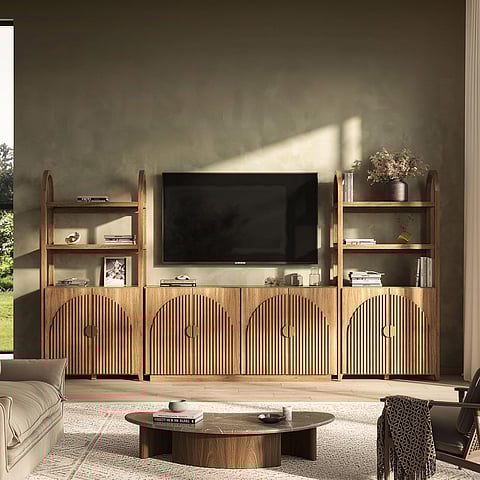
Modular cabinets and modular entertainment centers offer a different approach. These systems adapt to your routines rather than forcing your routines to adapt to them. The shift represents a fundamental change in how living rooms come together.
Traditional living room setups assumed one clear function. A sofa faced a TV. A coffee table anchored the middle. Everything stayed put for years.
That formula made sense for rooms with a single job. But today's living rooms rarely work that way. You might take video calls from your couch in the morning, then clear the floor for yoga in the afternoon. By evening, the same space transforms into a movie theater.
Fixed furniture struggles with these transitions. Pieces end up serving multiple purposes poorly rather than one purpose well. The result is often clutter, compromise, or both.
Design thinking has responded by prioritizing flexibility over permanence. Rooms need to shift shape throughout the day. Furniture that can evolve alongside those shifts has become essential for spaces that truly work.
Open floor plans changed everything about how homes look and feel. Walls came down. Sightlines opened up. But all that openness created a practical challenge: visible storage matters now more than ever.
Smaller urban apartments have intensified this pressure. Square footage is limited, so every inch counts. Storage can no longer hide in closets or spare rooms that may not exist.
Poor storage planning shows immediately in open layouts. Even a well-designed space feels chaotic when remotes pile up on surfaces and cables snake across floors. Visual noise undermines the calm that good design should create.
Modular storage systems address this by growing and shrinking with your needs. Add a shelf when your book collection expands. Remove a cabinet after you downsize. Your storage can adapt without requiring a complete room overhaul. This flexibility proves valuable because life changes constantly—and your storage needs change with it.
Screens, speakers, and streaming devices now define how most living rooms function. The average home juggles multiple gaming consoles, soundbars, and streaming boxes. All this equipment needs somewhere to live.
Traditional TV stands were built for simpler times. They assumed one screen, one cable box, and maybe a DVD player. Today's setups are far more demanding. A 55-inch TV might become a 65-inch model in a few years. Wall-mounting trends shift. Projectors are entering mainstream living rooms.
Fixed media furniture struggles to accommodate these changes. A stand designed for yesterday's technology often fails tomorrow's.
Modular media systems take a different approach. Shelves adjust for new equipment heights. Components rearrange as devices come and go. Cable management adapts to new configurations. The goal is not perfection today—it is flexibility over time. Your media setup will evolve, and your furniture can evolve with it.
One room often needs to handle work, entertainment, storage, and relaxation. Each activity has different requirements. Work needs clear surfaces. Play needs open floor space. Entertainment needs comfortable seating and easy media access.
Traditional furniture forces you to prioritize one function over others. The room might work beautifully for movie nights but poorly for afternoon homework sessions.
Modular systems change this equation. Instead of choosing a primary purpose, you can create zones that shift throughout the day. A shelving unit might hold office supplies during work hours, then display plants and books when guests arrive. Components add, remove, or rearrange as priorities change.
This approach treats furniture as a connected system rather than a collection of separate pieces. A new baby might mean more toy storage. A teenager might need space for gaming gear. An empty nest might mean scaling back. Modular setups accommodate these life transitions without requiring you to start from scratch.
A common concern with modular furniture is visual fragmentation. If everything can be rearranged, will the room still feel cohesive?
Well-designed modular systems address this through material and finish consistency. The pieces share proportions. Colors coordinate. Hardware matches throughout.
This creates visual rhythm even as configurations change. A modular wall unit might look different in two homes, but both arrangements feel intentional and calm.
Neutral finishes like oak, walnut, or soft white help modular pieces blend rather than compete for attention. Bold accents can come through accessories—throw pillows, artwork, plants—rather than being built into the furniture itself. The result is flexibility without chaos. Your room adapts to your life while maintaining its sense of balance and calm.
Most design advice focuses on creating the ideal room. Find perfect pieces. Arrange them just right. Enjoy the result for years.
Real life rarely cooperates with this vision.
You might move to an apartment with completely different dimensions. Your family might grow or shrink. Remote work might become permanent, or it might disappear entirely. Each transition affects how your living room needs to function.
Designing for adaptability means accepting that change is inevitable. Rather than seeking a permanent solution, you plan for evolution.
Modular furniture supports this mindset naturally. Components reconfigure for new layouts. Units split between rooms after a move. Pieces add on as needs expand. This approach also reduces waste—instead of replacing furniture that no longer fits, you adjust what you already own. The financial and environmental benefits accumulate over time.
The role of living rooms has fundamentally shifted. Spaces that once had a single purpose now serve many. Technology, remote work, and changing home sizes have all contributed to this transformation.
Design has responded by prioritizing systems over isolated pieces. Modular furniture fits this moment because it treats change as expected rather than disruptive.
Your living room will not stay the same forever. Your furniture should acknowledge this reality. The spaces that work best over time are the ones that can evolve alongside the people who use them—adapting to new routines, new technologies, and new chapters of life as they unfold.
Inspired by what you read?
Get more stories like this—plus exclusive guides and resident recommendations—delivered to your inbox. Subscribe to our exclusive newsletter
The products and experiences featured on RESIDENT™ are independently selected by our editorial team. We may receive compensation from retailers and partners when readers engage with or make purchases through certain links.