
- Locations
- Interviews
- Luxury Home
- Luxury Lifestyle
- Luxury Travel
- Luxury News
- Events
- More
- Magazine
- Contact Us

It's Friday night, you've landed at your destination, and you have a plan.
You have all the tours booked, and everything is timed down to the minute. You'll take a walk through the historic center, stop for a few selfies, go to one museum, then the other, then lunch at an 'authentic' restaurant, selfies again, then back to the hotel room.
Man, aren't you efficient?
But if you're visiting a historic city, doing it this way is a huge mistake.
You can't go crazy over a schedule because history doesn't work in neat loops and logical sequences. Streets double back because it made sense centuries ago, and neighborhoods change tone within a few steps. You'll miss this and a whole lot more if you rush through it.
Old cities don't like speed; they want attention.
And if you treat them as nothing more than a weekend destination, you'll not only miss things, you'll also misunderstand them.
When people plan travelling, they often plan routes, plan where they'll be in the morning, what they'll do in the afternoon, where they'll have dinner, etc., etc. It's all exciting, and it's also a bit pointless.
Not pointless per se, but it's not exactly you that sets the pace of your trip – it's the city you're visiting. And regardless of how meticulous your planning and organizational skills are, there's bound to be changes once you actually get there.
When you enter a huge city, or a historic city, you're practically entering a system that has its own rhythm, not a curated scene.
This rhythm is everywhere.
A café isn't there to turn tables quickly and cater to tourists, but because locals stop by every day and stay a bit longer than they should. Sidewalks aren't wide because nobody was supposed to rush on them. Small shops open and close around habits that formed decades ago.
Take a look at Rome or Istanbul.
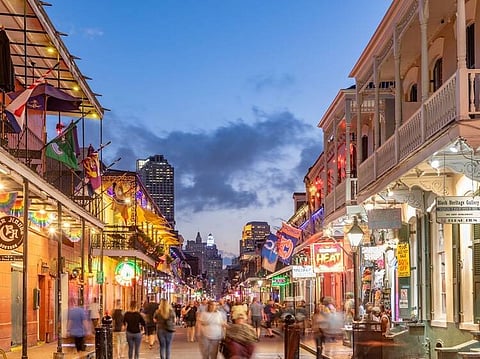
In Rome, daily life can be seen on the streets, and movement becomes slower because people expect to run into each other. In Istanbul, neighborhoods are almost like little villages, where everything you need is close by.
Or if you go even further to Israel and look at how real estate in Jerusalem reflects patterns that are centuries old. You see homes made from stone, you have dense neighborhoods, you see very walkable layouts which are fully shaped by tradition and by the daily life of the locals, rather than modernization and efficiency.
These places aren't backdrops, they're living environments. In order to truly appreciate them, you'll have to slow down and pay attention, and before you know it, it will all start to make sense.
The city sets the pace, and your job is to notice it.
Sometimes when you try to do 'everything' you end up doing nothing.
You're always checking the time, the map, what's next, who's around you, and old cities don't respond well to that.
In historic cities, slow doesn't mean inefficient; it means normal.
People walk at a pace that allows you to stop, talk, change plans, daydream, whatever. Shops don't rush you because they don't have to.
Meals take longer because they're not meant to be something you squeeze in between landmarks, but rather something where you actually take your time to chew every bit a dozen times while gazing and absorbing everything around you (e.g., the language, the architecture, the people, the decoration, the sights, the landmarks in the distance, the terrain, etc.) – everything.
If you go to a city that’s packed with history (e.g., Rome, Athens, Istanbul, Prague, Jerusalem, Damascus, Kyoto, etc.), there’s no doubt that you could spend weeks seeing all the historical landmarks. But because of this, people often overlook the people who live in the city.
Think about it for a moment – these people ACTUALLY live here. You went out of your way to visit this place at least once in your lifetime. For a day, for a few days. These people were born here, and they will live here for the rest of their lives. Isn’t that amazing?
When you rush from point A to point B to point C, you really don't get a chance to breathe in the culture and what the people are like, which basically means that you DO get to see the city, but you completely miss its core/foundation (the people).
And with how expensive travel has gotten, can you really afford to miss this opportunity?
Some things don't happen unless you've been around long enough to be familiar. Once you're no longer just another tourist, a visit to the café can turn into a routine, and a visit to a little kiosk can become a conversation.
If all you’re focusing on is taking pictures and selfies, then you’ll miss what’s happening in front of you – things you only notice when you take a breather, you pause for that little moment. THEN you start noticing what's REALLY happening around you.
Don’t just rush. Enjoy.
One stay or a single walk won't make you better know the city you're in.
This is something you learn only through routines and repetition. You get lost a little, and you realize that you get around by recognizing streets, not using Google Maps.
If you try to move too fast, you'll miss more than you catch. That's it.
Once you're back home, you'll be sorry that it all went by so quickly and all you have of it are some selfies. The irony is that the moment you try to 'do' the city, it starts giving something back.
Nothing dramatic happens, but that's the point.
You basically go from just experiencing moments to having them – nothing wrong with that.
Inspired by what you read?
Get more stories like this—plus exclusive guides and resident recommendations—delivered to your inbox. Subscribe to our exclusive newsletter
The products and experiences featured on RESIDENT™ are independently selected by our editorial team. We may receive compensation from retailers and partners when readers engage with or make purchases through certain links.