
Creativity in the age of AI: Who works harder—humans or machines?

Author: Michael Thompson
Today, it’s no longer enough for brands to simply “exist” on social media. To truly engage and grow an audience, businesses must stand out, surprise, and spark genuine interest. That takes bold ideas and creative experimentation. In the age of artificial intelligence—when algorithms can write copy, generate visuals, and even analyze audience behavior—the role of the creative producer becomes more fascinating than ever.
Where does the machine’s work end and human creativity begin? How are technologies reshaping brand promotion? And why is creativity still the ultimate competitive edge?
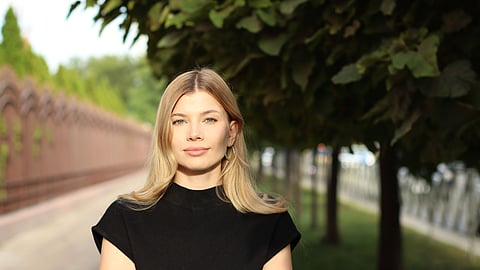
We spoke with Ekaterina Emelianchikova, a creative producer and content strategist currently based in Dubai. At Million Miles UAE, a premium service specializing in sourcing and delivering exclusive cars, Ekaterina leads the development of social media concepts, coordinates production teams, and integrates AI tools into marketing workflows. In this interview, she shares her take on how AI is rewriting the rules of digital promotion—and what the future holds for the creative industry.
Ekaterina, does AI help you in your work—or does it hinder true creativity?
I see AI as a tool—a right hand, not a replacement for creativity. It’s a technological breakthrough that allows us to delegate repetitive tasks and focus on big-picture ideas and strategy.
In my projects, I still rely on brainstorming sessions. And so far, no idea generated by ChatGPT has outperformed a human-born concept.
To be creative, content creators need something many rarely have: free time. We’re usually consumed by day-to-day tasks, not thinking about how to make the next viral video. So if I can delegate reporting, data analysis, or summaries—I absolutely will.
AI also helps us explore new markets that were previously out of reach. I can now research competitors in any country and language in just 10 minutes, extract key insights, analyze methods, and go beyond my usual frameworks. All thanks to new technologies.
What AI tools do you use in content production and strategy?
We automate personal brand content, voiceovers, and AI avatars—especially for entrepreneurs who understand the value of their presence but don’t have time for regular filming. We also analyze content performance and competitor strategies across platforms, create interim reports, and manage data in spreadsheets.
If I need to understand visual trends—say, color palettes for a new market—AI helps me quickly find relevant studies, articles, and examples. It doesn’t replace hands-on knowledge or experience, but it helps me execute faster and more efficiently.
So what matters more today: having ideas or knowing how to prompt an AI?
It’s about understanding what to ask and why. What will strengthen the process? Where can I dig deeper? Let’s say I have a creative challenge. I’m not starting from zero, nor do I just prompt “give me a creative idea.” I ask:
What can amplify this concept?
What feels off or ambiguous?
What adjacent areas should I explore?
That makes brainstorming faster and more accessible—but still requires strategic thinking. Too often people say “here’s a task, give me the answer,” and the result is exactly what you'd expect from AI in 5 seconds: generic and short-sighted.
Has visual content creation become faster—but less soulful?
It’s a great solution for startups. In Dubai, we used AI to create a full branding concept when the business was just getting off the ground. Now that we’ve grown, we’re working with a design bureau.
But I see many AI-driven accounts. You can spot them by the visuals, layout, even the writing. As a specialist, I notice it instantly—and I trust them less. Not because of the content itself, but the lack of personal presence.
Regular users are only beginning to recognize this pattern. I believe we’ll eventually reach a balance.
What risks do you see in handing over creativity to machines?
First: the loss of humanity in content. AI can’t empathize, deliver humor appropriately, or understand cultural nuance like people do. The result is often generic, lifeless posts—and more people are starting to notice.
Second: sameness. AI tends to offer average solutions, no matter the prompt. If everyone uses the same tools—ChatGPT, Midjourney, etc.—the content will start to look and feel the same. True creativity is about something unexpected, a new angle. And AI isn’t there yet.
Third: trend misfires. AI can misinterpret memes, sarcasm, or tone-of-voice, which are critical to brand identity. Humor and nuance still need a human touch.
And fourth: the erosion of authorship. Rely too much on AI, and you risk losing your unique voice and mission.
Have you taken any specific courses to master AI tools?
Yes—and I continue to do so. AI is being adopted across industries: from sales to design. Sometimes I discover a process can be automated only because someone on the team already did it.
That’s why I study not only my own field, but also adjacent and even distant domains. When I see how something works in an unfamiliar industry, it often sparks new ideas I can adapt to my own work.
Do you have personal rules for when to use AI and when to rely on your own brain?
Absolutely. I believe in challenging the brain daily—through new info, research, and conscious effort. Sometimes it’s easier to ask ChatGPT, but I choose to engage my own thinking. I don’t believe in shortcuts. If we could all get in shape without training, we would—but that kind of AI doesn’t exist (yet).
So when I lack information or need help processing data, I use AI. But when there’s an opportunity to learn something meaningful, I trust my own brain (and maybe a little help from AI—laughs).
How do you think the role of creative producers will evolve in the next five years?
Producers are already becoming conductors—orchestrating both people and AI tools. They manage the flow between text/image/video generators and human strategists or creators.
AI will give producers “superpowers”: trend forecasting, emotional resonance analysis, and more. Basic copywriting, templates, first drafts—all will be handled by AI. I’m already seeing the early signs.
The true value of a producer will shift toward emotional intelligence, strategic vision, critical thinking, and creative experimentation. Producers will also become arbiters of transparency and copyright ethics.
From a business perspective, I understand why companies want to scale AI use. But as a creative, I still believe in the power of original content. The only question is: what are your real goals as a brand?
Inspired by what you read?
Get more stories like this—plus exclusive guides and resident recommendations—delivered to your inbox. Subscribe to our exclusive newsletter
Resident may include affiliate links or sponsored content in our features. These partnerships support our publication and allow us to continue sharing stories and recommendations with our readers.