
- Locations
- Interviews
- Luxury Home
- Luxury Lifestyle
- Luxury Travel
- Luxury News
- Events
- More
- Magazine
- Contact Us

The interior design industry is undergoing a quiet but profound transformation.
Artificial intelligence and automation are no longer experimental tools reserved for tech-forward studios—they are becoming core components of how spaces are imagined, planned, and experienced.
From data-informed layouts to adaptive living environments, AI is reshaping interiors in ways that prioritize personalization, efficiency, and emotional comfort without stripping away creativity.
As homes evolve into multifunctional spaces—offices, wellness zones, and social hubs—designers and brands are increasingly relying on intelligent systems to understand how people live, move, and feel inside their environments.
Interior design has traditionally relied on experience, taste, and visual intuition. While those elements remain essential, AI is introducing a new layer of insight. Data now informs how spaces are structured, how light flows through rooms, and how furniture supports daily routines.
JZ Tay, founder of WFH Alert, captures this shift clearly:
“I’ve seen AI-powered design tools make interior design more data-driven and personal by analyzing user behavior, lighting preferences, and room usage to suggest layouts that balance function with emotion.”
Instead of generic layouts, designers can now simulate real-life usage patterns—how often a space is occupied, how light changes throughout the day, and how movement flows between zones. This allows interiors to feel more intentional and responsive, especially in homes designed for remote work and hybrid living.
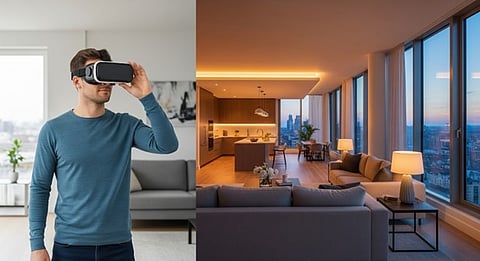
One of the most visible impacts of AI in interior design is visualization. Clients no longer need to imagine how a space might feel. AI-driven platforms allow them to experience it virtually before committing to a single purchase.
JZ Tay notes how this has changed decision-making for remote professionals:
“In my community of remote professionals, many use AI visualization platforms to simulate workspace comfort, sound balance, and lighting before buying a single piece of furniture.”
These tools reduce uncertainty and improve satisfaction. Clients can test configurations, experiment with materials, and understand ergonomic impact long before installation. For designers and brands, this leads to fewer revisions, more confident buyers, and better alignment between expectations and outcomes.
While AI is often associated with modern minimalism, it is also being used to preserve and reinterpret traditional design elements. Fedoua Cherqaoui, Founder of Loomsouk, sees AI as a bridge between heritage and innovation.
She explains, “AI allows us to analyze patterns, textures, and cultural motifs at scale, helping designers reimagine traditional craftsmanship in contemporary interiors without losing authenticity.”
By studying historical designs and material behaviors, AI can support designers in creating spaces that honor cultural identity while adapting to modern lifestyles. This balance is especially important in global design markets, where clients seek both meaning and modernity.
Unlike visual AI tools, automation often works quietly in the background. Smart lighting, climate control, and adaptive systems are increasingly integrated into interiors without dominating the aesthetic.
JZ Tay describes this shift succinctly:
“Automation has become a quiet design layer, where smart lighting, adaptive climate systems, and responsive materials adjust seamlessly to daily rhythms, creating homes that feel both intuitive and alive.”
These systems respond to presence, time of day, and personal habits. Lights dim automatically in the evening, temperatures adjust based on occupancy, and sound environments adapt to activity. The result is a space that supports well-being without constant manual input.
Luxury interior design is no longer defined solely by expensive materials or visual opulence. Intelligence, adaptability, and restraint are becoming the new markers of high-end spaces.
According to JZ Tay, “Luxury no longer means more things—it means more intelligence per square foot, where automation supports human comfort without overwhelming it.”
High-end interiors now prioritize seamless experiences. Automation is hidden, interfaces are minimal, and technology serves the user rather than demanding attention. This shift aligns with a broader desire for calm, clarity, and emotional balance in living environments.
AI and automation are influencing not just finished interiors, but how they are built. Andrew Reichek, CEO of Bode Builders, highlights how intelligent planning tools are improving collaboration between designers, builders, and clients.
He notes, “AI-driven planning tools help us anticipate design conflicts early, streamline material choices, and deliver spaces that are both technically sound and emotionally aligned with client expectations.”
By reducing guesswork and inefficiencies, AI supports better execution. Builders can coordinate timelines, predict costs more accurately, and ensure that design intent translates smoothly into reality.
AI-driven environments are also changing how people work within designed spaces. Mark McShane, Owner & Managing Director of SSSTS Course, sees automation playing a role in safety, training, and operational efficiency.
He explains, “As workspaces become smarter, automation helps create safer and more compliant environments by monitoring usage patterns and supporting better design decisions for training and productivity.”
This is particularly relevant in commercial interiors, where safety standards, workflow efficiency, and adaptability must coexist. AI enables spaces to evolve alongside the people who use them.
Despite its benefits, AI introduces important ethical questions. Designers must ensure that automation enhances human experience rather than flattening individuality.
JZ Tay addresses this concern directly:
“The biggest design challenge I see is ethical: maintaining authentic human creativity while AI handles optimization, ensuring homes still reflect who people are, not just what algorithms predict they should want.”
Over-reliance on data risks producing spaces that feel efficient but impersonal. The future of interior design depends on keeping humans at the center—using AI as a collaborator, not a replacement for creative judgment.
Looking ahead, AI and automation will become less visible but more influential. Design tools will grow smarter, systems more intuitive, and personalization more precise. The most successful designers and brands will be those who blend intelligence with empathy.
Expect continued growth in:
AI-assisted personalization and layout planning
Seamless, low-profile automation systems
Ethical frameworks guiding AI use in creative fields
Greater collaboration between designers, technologists, and builders
AI is not redefining interior design by replacing creativity—it is redefining it by expanding what is possible. When used thoughtfully, AI and automation help create spaces that are not only functional and beautiful, but deeply human.
Inspired by what you read?
Get more stories like this—plus exclusive guides and resident recommendations—delivered to your inbox. Subscribe to our exclusive newsletter
The products and experiences featured on RESIDENT™ are independently selected by our editorial team. We may receive compensation from retailers and partners when readers engage with or make purchases through certain links.