
- Locations
- Interviews
- Luxury Home
- Luxury Lifestyle
- Luxury Travel
- Luxury News
- Events
- More
- Magazine

Hair loss is one of those conditions people often live with quietly for years before deciding to act. For some, it starts with a slowly receding hairline; for others, thinning at the crown becomes more noticeable with time. What eventually brings most people to consider a hair transplant is not vanity alone, but the desire for consistency—looking in the mirror and recognizing the person staring back.
Over the past decade, hair transplantation has shifted from being a niche cosmetic procedure to a widely accepted medical solution. At the same time, the way patients access this treatment has changed dramatically. Medical tourism, particularly in countries like Turkey, has reshaped expectations around cost, technique, and outcomes.
At its core, a hair transplant is about redistributing existing hair in a way that respects natural growth patterns. Techniques such as FUE and DHI have largely replaced older strip methods, offering more precise extraction, reduced scarring, and faster recovery times.
Yet technique alone does not determine success. Planning, graft distribution, donor area management, and long-term density forecasting are equally critical. This is where outcomes begin to differ between clinics—not because of equipment, but because of how the procedure is approached.
Many patients researching how much is a hair transplant in Turkey quickly realize that price variations often reflect differences in planning depth rather than medical safety. A lower cost does not automatically mean lower quality, but it does raise important questions about how each graft is used.
Turkey’s position in medical tourism did not happen overnight. The country combines a large pool of specialized physicians with healthcare infrastructure designed to treat international patients efficiently. Istanbul, in particular, has become a focal point due to its accessibility, hospital standards, and experience with cross-border healthcare.
Lower operational costs and favorable exchange rates explain much of the price difference compared to Western Europe or North America. However, the real advantage lies in experience volume. Clinics performing thousands of procedures annually refine not only surgical skills, but also planning systems and post-operative protocols.
This is why patients comparing the best turkey hair transplant cost in istanbul often find that the discussion goes beyond numbers and shifts toward graft strategy, donor preservation, and realistic density expectations.
Most modern clinics can perform FUE or DHI competently. The real distinction lies in how these techniques are adapted to individual patients. Some approaches focus primarily on graft count, while others prioritize long-term donor sustainability and natural progression of hair loss.
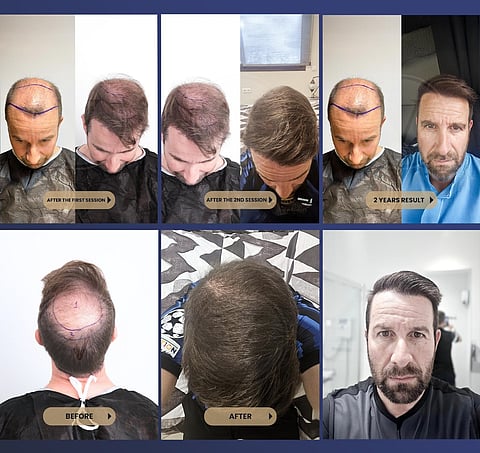
In recent years, planning-based systems such as the Vita Technique have gained attention because they attempt to visualize the transplant before a single graft is extracted. Rather than treating the scalp as a flat surface, this method evaluates donor capacity, recipient area needs, and future hair loss patterns together.
When compared to conventional approaches, the difference is not in how grafts are implanted, but in how decisions are made beforehand. Traditional methods often rely on experience and estimation, whereas planning-focused techniques aim to balance density with preservation. This becomes especially relevant for younger patients or those with progressive hair loss.
Discussing Hair transplant with vita technique in this context is less about branding and more about methodology—an attempt to reduce guesswork and increase predictability.
Price remains one of the most sensitive topics in hair transplantation. In many countries, the procedure is priced per graft, while in Turkey, package-based models are more common. Both systems have advantages and drawbacks.
What matters most is transparency: understanding what is included, who performs each step, and how graft numbers are determined. Lower prices are sustainable in Turkey largely because of structural factors, not because corners are cut by default. That said, not all clinics operate at the same standard, making research essential.
Patients who approach the process with realistic expectations—rather than chasing the lowest offer—tend to report higher satisfaction in the long term.
Medical tourism is not only about the procedure itself. Traveling for treatment introduces factors such as recovery environment, privacy, and mental comfort. For many patients, being away from daily routines allows them to focus on healing without external pressure.
Turkey’s experience with international patients has led to streamlined systems for transfers, accommodation coordination, and follow-up communication. While these elements are not medical in nature, they influence overall experience and stress levels during recovery.
Anonymity is another understated benefit. Some patients prefer undergoing visible procedures away from their social and professional circles, returning home once the initial healing phase is complete.
Hair transplantation is not an impulsive decision, nor should it be framed as a quick transformation. It is a medical process with long-term implications, particularly for donor area management. Approaches that emphasize planning and restraint often age better than aggressive strategies focused solely on immediate density.
Turkey’s role in this field reflects a broader shift in healthcare accessibility. When experience, cost efficiency, and planning discipline intersect, patients gain options that were once limited to a small demographic.
The key is not where the procedure is done, but how thoughtfully it is planned.
Affordable hair transplantation and medical quality are no longer opposing concepts. As medical tourism continues to mature, patients are becoming more informed, asking better questions, and prioritizing sustainability over speed.
In that sense, modern hair transplantation—especially in established destinations like Turkey—has moved beyond trends. It has become a structured medical decision, where outcomes depend less on promises and more on planning, experience, and long-term vision.
Inspired by what you read?
Get more stories like this—plus exclusive guides and resident recommendations—delivered to your inbox. Subscribe to our exclusive newsletter
The products and experiences featured on RESIDENT™ are independently selected by our editorial team. We may receive compensation from retailers and partners when readers engage with or make purchases through certain links.