
- Locations
- Interviews
- Luxury Home
- Luxury Lifestyle
- Luxury Travel
- Luxury News
- Events
- More
- Magazine

New York City’s reputation as a performing arts capital is well-earned. But knowing where to look? That’s what separates casual attendees from the truly devoted.
The city offers thousands of performances every week. Yet finding the really exceptional stuff takes more than just scrolling through big venue calendars or trusting tourist guides.
Serious arts enthusiasts in New York City find high-quality live performances by exploring landmark institutions like Carnegie Hall and Lincoln Center, using specialized platforms to discover emerging artists, attending elevated opera productions, and seeking out seasonal outdoor performances that showcase world-class talent. These approaches go way beyond the obvious Broadway shows and mainstream concerts you see in every visitor’s guide.
If you want to know where dedicated arts fans actually spend their time and money, you’ll end up with a totally different map of the city’s cultural landscape. The venues and resources that consistently deliver exceptional performances often fly under the radar, and it takes a bit of insider knowledge - and maybe a little trial and error - to find them.
New York’s most established performance venues have earned their reputations through decades of artistic excellence and history. Broadway theaters deliver polished, commercial productions, Lincoln Center houses multiple world-class companies, and the Apollo Theater keeps its legacy alive as a launching pad for transformative artists.
The Theater District has 41 official Broadway theaters, each with 500 seats or more. These venues host large-scale productions with professional casts, elaborate sets, and high technical standards.
The Shubert, Booth, and Belasco theaters are among the most prestigious Broadway houses. Typically, you’ll get eight performances a week during a show’s run, with Wednesday and Saturday matinees as the norm.
Broadway shows go through extensive preview periods before opening night. This gives creative teams a chance to tweak things based on real audience reactions - sometimes those previews are actually the best time to go.
Key Broadway Theaters:
Shubert Theatre: 1,502 seats, home to long-running hits
Booth Theatre: 766 seats, intimate drama venue
Belasco Theatre: 1,018 seats, known for dramatic productions
Ticket prices usually range from $89 to $299 for orchestra seats. If you’re on a budget, rush tickets and lotteries can sometimes get you in for a fraction of that.
Production quality is reliably high thanks to union standards, skilled crews, and big financial investment in each show. There’s a reason Broadway is still the gold standard for live theater.
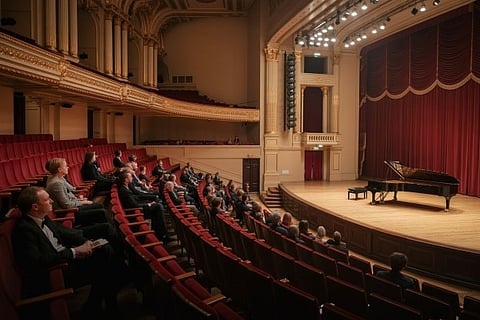
Lincoln Center is a 16-acre complex with 11 resident organizations. The Metropolitan Opera, New York Philharmonic, and New York City Ballet all call this place home.
David Geffen Hall seats 2,200 for orchestral performances, and its acoustics were totally redesigned in 2022. The Metropolitan Opera House can fit 3,800 people and stages around 27 different operas each season.
The David H. Koch Theater hosts New York City Ballet performances and seats 2,586, specifically designed so you can actually see the dancers’ feet - no small thing for ballet fans.
Lincoln Center also has smaller venues like the Mitzi E. Newhouse Theater and the Claire Tow Theater for drama. Jazz at Lincoln Center lives just a few blocks away in the Time Warner Center.
Programming runs the gamut: classical music, opera, ballet, contemporary dance, theater, even film screenings. There’s always something happening, and it’s rarely disappointing.
The Apollo Theater has been a Harlem mainstay since 1934. This 1,506-seat venue launched the likes of Ella Fitzgerald, James Brown, and Lauryn Hill - mostly through its legendary Amateur Night competition.
Amateur Night is still every Wednesday, keeping the same format it’s had for almost a century. Performers face a live audience that decides their fate with applause - or, if things go south, the “executioner.”
The Apollo puts on about 200 performances a year, including music, dance, and theater. Its programming centers African American cultural contributions and contemporary Black artistic voices.
They also run educational programs and artist development initiatives. The Apollo’s influence definitely stretches well beyond the stage.
Performatist is a specialized calendar platform for serious performing arts across New York City. Unlike generic event apps that toss in comedy clubs and stadium concerts, this one sticks to classical music, opera, jazz, dance, and theater.
The platform aggregates live performances across New York City from more than 60 venues. You can scroll through upcoming events at places like Carnegie Hall or stumble on a chamber ensemble in a tiny performance hall you’ve never heard of.
Key features include:
Venue-specific browsing for tracking programming at certain theaters or concert halls
Genre filtering - classical, jazz, opera, dance, theater
Performance date calendars that let you look weeks or months ahead
Direct links to official ticketing pages (a real time saver, honestly)
The platform’s great if you already know what kind of art you’re after. If you’re into contemporary dance or baroque music, you don’t have to wade through listings for comedy nights or cover bands.
New York City’s opera scene is a lot broader than just the Met. There are institutions that have prioritized accessibility and intimacy from the very beginning, and they offer some pretty unique experiences.
New York City Opera was called “the people’s opera” for a reason. Mayor Fiorello LaGuardia pushed for its creation in 1943 to make opera accessible for everyday New Yorkers, with ticket prices that were way lower than the competition.
The company introduced English-language performances and featured up-and-coming American talent. You could actually see opera without breaking the bank or dressing to the nines.
NYCO premiered American works and gave early opportunities to singers who later became international stars. The whole idea was that opera shouldn’t require wealth or status - just curiosity and a willingness to listen.
After going bankrupt in 2013, New York City Opera relaunched in 2016 with new leadership. They don’t have a permanent home now; instead, they stage productions all over the city.
Performances pop up at places like the Rose Theater at Jazz at Lincoln Center and other cultural venues. This flexible model means they can match the space to the show, which honestly makes a lot of sense.
These days, the company produces fewer shows than before but puts a lot of focus on quality. Ticket prices are still more accessible than the Met, and the performances are consistently professional.
There are plenty of smaller venues in New York where you can see live opera up close. The Schimmel Center at Pace University hosts chamber opera that puts you just feet from the action.
National Sawdust in Williamsburg programs experimental opera and contemporary classical. With just 200 seats and flexible staging, you’re basically in the middle of it all. You notice details - vocal technique, dramatic nuance - that get lost in giant halls.
Both Manhattan School of Music and Juilliard put on full opera productions with advanced students and emerging pros. These performances are technically solid, and tickets are usually very affordable - sometimes even free.
Pop-up opera happens everywhere in this city - parks, galleries, and public spaces. LoftOpera is known for staging productions in warehouses and rooftops, sometimes with food and drinks thrown in.
You might stumble across opera in a Brooklyn warehouse or catch an outdoor summer show in a park that’s not Central Park. These productions often rework classics or experiment with shorter, punchier pieces.
The vibe is way more relaxed than at traditional opera houses. You can show up in jeans and still get an incredible experience, maybe even standing or grabbing a seat wherever you like. It’s spontaneous and, honestly, kind of addictive.
Summer outdoor performances in New York are a treat for serious arts fans. You’ll find professionally curated programming in unexpected places, from midtown lawns to upstate venues that help define the region’s cultural calendar.
Bryant Park Picnic Performances, backed by Bank of America, turn the midtown lawn into a stage every summer. The lineup is curated - music, dance, and theater pulled from the city’s top cultural institutions, not just random acts.
You can catch professional-level performances for free, right in the middle of Manhattan. Events are usually scheduled for early evening, which is perfect if you’re squeezing in a show after work.
The crowds tend to be knowledgeable and genuinely interested in the artists. The park’s central location and zero admission fee make it a great way to see companies you’d otherwise pay a lot to watch indoors.
Arrive early for the best spots - lawn space fills up fast, and you’ll want a good view.
The Saratoga Performing Arts Center (SPAC) in upstate New York is a major summer destination for the New York City Philharmonic and New York City Ballet. It sets a high bar for performances that ripple through the metropolitan area's summer arts scene.
Both groups keep their artistic standards sharp during their summer residencies. They bring full-scale productions to SPAC's open-air amphitheater, which is a bit of a change from the city.
SPAC's lineup isn't just about its resident companies. It also features chamber music, jazz, and contemporary acts.
The venue draws New York City arts fans who don't mind making the three-hour trip north. For many, it's worth it to experience Lincoln Center-level productions under the sky.
Inspired by what you read?
Get more stories like this—plus exclusive guides and resident recommendations—delivered to your inbox. Subscribe to our exclusive newsletter
The products and experiences featured on RESIDENT™ are independently selected by our editorial team. We may receive compensation from retailers and partners when readers engage with or make purchases through certain links.