
- Locations
- Interviews
- Luxury Home
- Luxury Lifestyle
- Luxury Travel
- Luxury News
- Events
- More
- Magazine

Legacy travel means something different now than it did a decade ago. The question isn't just "where should I go?" but "what impact will my trip leave behind?"
The Masai Mara has become ground zero for this shift. A new generation of ultra-luxury camps operates entirely on solar power, employs almost exclusively from local Maasai communities, and channels significant portions of their revenue directly into conservation. For travelers seeking the best African safari destinations that align with their values, this matters.
The Mara ecosystem faces mounting pressure. There are currently 49 camps inside the main reserve and over 150 outside it. Vehicle congestion at popular sightings has become a genuine problem – in peak season, you might count 30 vehicles surrounding a single lion pride.
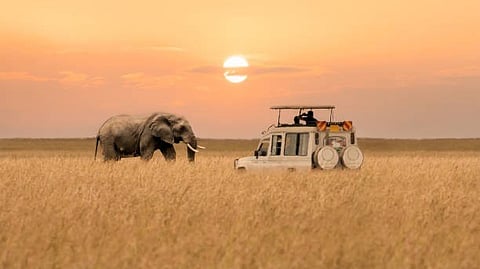
The response from the luxury segment has been decisive. Private conservancies now operate on strict vehicle limits. Some cap total guests at 24 across an entire 13,500-hectare area. The math works out to roughly one guest per 560 hectares.
Robert Ogema, a KPSGA-licensed guide with over a decade in the Mara, put it simply during a recent game drive: protecting the experience requires protecting the land.
The Masai Mara National Reserve proper draws the largest visitor numbers. Conservancies surrounding it offer something fundamentally different.
This 13,500-hectare conservancy allows only five camps to operate within its boundaries. Total guest capacity across the entire area stays under 100 people at any given time. Compare that to hundreds of vehicles entering the main reserve daily during peak migration.
Mahali Mzuri – owned by Richard Branson's Virgin Limited Edition – operates 12 tented suites here. The camp runs on 100% solar power, harvests rainwater, and grows produce in an on-site organic garden. More than 80% of staff come from surrounding Maasai villages. Guest stays fund the Inua Jamii program supporting local schools and health initiatives.
Guests at Naboisho consistently report entire game drives without encountering another vehicle. The conservancy limits tourism density severely to protect wildlife behavior patterns. Night drives and walking safaris are permitted here – activities banned in the main reserve.
This conservancy borders the reserve directly. Wildlife moves freely between them since there are no fences. The difference is human density. Fewer camps, fewer vehicles, more space. One traveler described watching a leopard descend from a tree and hunt for nearly an hour without a single other vehicle appearing.
For curated Masai Mara expeditions that prioritize these conservancies, the wildlife experience transforms entirely.
Let's talk actual numbers for 2026.
Masai Mara Reserve Entry: USD 200 per adult per 12-hour period during peak season (July through October). Low season drops to USD 100. Conservancy fees run separate – typically USD 80-150 per person per night, paid directly to landowners.
Ultra-Luxury Accommodation: Camps like Angama Mara, Mahali Mzuri, and Mara Plains range from USD 1,200 to USD 2,500 per person per night. These rates typically include accommodation, all meals, house drinks, two game drives daily, and conservancy fees.
The Ritz-Carlton Masai Mara: Opened in 2025, this property charges upward of USD 5,000 per night. It includes private plunge pools, butler service, and photography studios with professional camera equipment.
Nairobi Connection: Most travelers overnight in Nairobi before flying to the Mara. A Nairobi National Park safari – remarkably, just 7 kilometers from the city center – only costs USD 330 per adult via Kenya Wildlife Service. A half-day visit offers genuine wildlife sighting including lions, with skyscrapers forming an incongruous backdrop.
Internal flights from Wilson Airport to the Mara run USD 200-350 each way depending on the airstrip. Road transfers take 5-6 hours.
Not every camp marketing itself as "eco-friendly" actually is. Some properties install a few solar panels and call it conservation. The smell of diesel generators running through the night tells a different story at budget operations.
Questions worth asking your operator: What percentage of staff comes from local communities? Where specifically do conservation fees go? Does the camp hold Ecotourism Kenya certification? What's the carbon footprint per guest night?
A lawsuit filed in August 2025 alleges that the Ritz-Carlton's location on the Sand River obstructs a critical migration corridor. Maasai elders claim wildebeest have turned back rather than cross near the property. The case remains ongoing.
The broader tension is real: does high-end tourism genuinely support conservation, or does it contribute to the problem by fragmenting habitat with permanent infrastructure? Industry experts disagree. What's clear is that 49 camps inside the reserve and 153 outside represents significant pressure on the ecosystem.
The Mara sits at 1,500 meters elevation. Early morning game drives in July and August start at temperatures around 10-12°C – cold enough that the smell of woodsmoke from camp fires hangs in the air long after breakfast. Pack layers regardless of what the weather app suggests.
Migration timing varies year to year. The herds follow rain patterns, not tourist calendars. Booking specifically for river crossings means accepting the possibility they won't happen during your visit.
Nothing prepares you for the sound of a million wildebeest grazing at dawn. It's not loud exactly – more like a continuous rustle punctuated by grunts and the occasional bellow. The acacia-scented air carries dust and something organic, earthy. At the conservancy camps, you might hear lions throughout the night – close enough that sleep comes in patches the first time.
The conservancy system has genuinely reversed habitat degradation in some areas. Land that suffered from cattle overgrazing five years ago now supports resident wildlife populations. Maasai landowners receive guaranteed income whether tourists arrive or not – a critical distinction from models that only pay when guests book.
For travelers who want bespoke Kenya safari planning that leaves a positive footprint, the private conservancy model represents the most credible option currently available.
Book 12-18 months ahead for peak migration season at premium conservancy camps. Properties near prime crossing points sell out fastest.
The best time to visit Masai Mara depends on priorities. July through October offers migration drama and the highest crowds. November through June provides excellent resident wildlife viewing with significantly fewer visitors and lower rates.
Masaimarasafari.travel specializes in conservation-focused itineraries across the Mara ecosystem.
Is ultra-luxury safari worth the premium?
If conservation impact and crowd avoidance matter to you, yes. The conservancy model only functions because luxury rates generate enough revenue to make land protection economically viable for Maasai landowners.
How do I verify a camp's conservation claims?
Ask for specifics. Genuine conservation camps can tell you exactly how many community members they employ and what percentage of revenue goes to conservation. Vague marketing without numbers is a warning sign.
Can families book these properties?
Most welcome children aged 8 and older. Some have dedicated family tents.
Inspired by what you read?
Get more stories like this—plus exclusive guides and resident recommendations—delivered to your inbox. Subscribe to our exclusive newsletter
The products and experiences featured on RESIDENT™ are independently selected by our editorial team. We may receive compensation from retailers and partners when readers engage with or make purchases through certain links.