
- Locations
- Interviews
- Luxury Home
- Luxury Lifestyle
- Luxury Travel
- Luxury News
- Events
- More
- Magazine
- Contact Us

Digital beauty tools have grown rapidly in recent years. What once required a stylist, makeup artist, or professional consultation can now be done within seconds using artificial intelligence. Among the most searched tools in this space are the detect face shape and the pretty scale. These tools promise to analyze your facial structure and provide insights about proportions, symmetry, and overall balance.
But what do these tools actually do? Are they accurate? And how can they truly benefit individuals in practical ways? This article explores face shape detectors and pretty scales in depth, explaining what they are, how to use them correctly, and how they can support personal styling and self-awareness.
Artificial intelligence has transformed many industries, including fashion, beauty, and personal branding. Facial recognition systems can now map detailed points across a person’s face and calculate distances with impressive speed and precision. This technology is the foundation of both face shape detectors and pretty scale analyzers.
These tools rely on computer vision, which allows software to “see” and interpret facial features from an image. By studying patterns from large datasets, machine learning models can classify face shapes or evaluate symmetry using measurable standards. The result is instant feedback that previously required manual analysis.
A face shape detector is an AI-driven tool designed to determine the geometric structure of your face. Instead of judging attractiveness, it focuses purely on proportions and measurements.
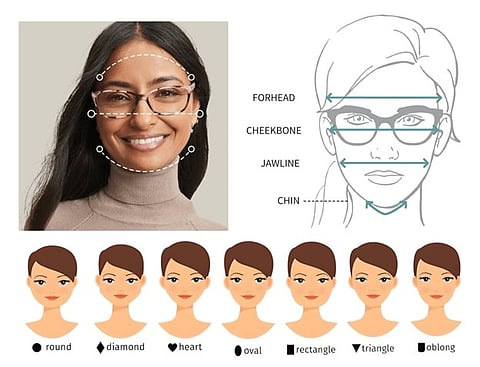
Human faces are typically grouped into common shape categories such as oval, round, square, heart, diamond, or oblong. Each category is defined by specific relationships between facial features. For example, some faces are longer than they are wide, while others have strong jawlines or wider cheekbones.
The detector analyzes structural elements such as the width of the forehead, the prominence of cheekbones, the curve of the jawline, and the length of the face. Based on these measurements, it matches your proportions to the closest face shape category.
The purpose of this tool is practical rather than evaluative. It helps individuals understand their natural structure so they can make better decisions about styling and grooming.
A pretty scale is a digital tool that analyzes facial symmetry and proportion to generate a beauty score. Unlike a face shape detector, which classifies structure, a pretty scale attempts to measure aesthetic balance.
Most pretty scale tools use mathematical concepts such as symmetry and the golden ratio. The golden ratio is a proportion found in art, architecture, and nature that is often associated with visual harmony. Some beauty analysis systems compare facial measurements to this ratio to determine how balanced the features appear.
The pretty scale typically evaluates alignment of the eyes, spacing between features, proportional balance between the upper, middle, and lower thirds of the face, and the symmetry of the jawline and nose. The final output is usually a numerical score that represents structural harmony.
It is important to understand that this score reflects mathematical analysis, not personal value or universal beauty. Beauty standards vary across cultures and individuals, and no algorithm can fully define attractiveness.
The process begins when a user uploads a photo. The system identifies key facial landmarks, which are specific points on the face such as the corners of the eyes, edges of the lips, tip of the nose, and outline of the jaw.
Once these landmarks are mapped, the tool measures distances between them. It calculates ratios such as face length to face width, forehead width to jaw width, and cheekbone prominence. These measurements are compared to stored models that represent different face shapes.
The classification is based on pattern recognition. The algorithm selects the category that most closely matches your facial proportions. More advanced systems may even display a percentage breakdown showing how closely your face matches multiple shapes.
Clear lighting, a front-facing position, and minimal distortion are essential for accurate results.
Pretty scale tools follow a similar technical process but focus more heavily on symmetry. After detecting facial landmarks, the system compares the left and right sides of the face. It measures how evenly features are aligned and whether proportions between facial thirds are balanced.
For example, it evaluates whether the eyes are evenly spaced, whether the nose sits centrally between the cheeks, and whether the lips align proportionally with the chin and jaw. Some tools also assess feature definition and contour clarity.
The algorithm assigns a score based on how closely the facial measurements align with predefined harmony standards. The higher the symmetry and proportional balance, the higher the score.
To achieve reliable results, preparation is important. Start by selecting a high-resolution photo where your face is clearly visible. Your head should be upright and facing directly toward the camera. Avoid tilting or turning your face at an angle.
Lighting should be soft and even. Strong shadows can interfere with landmark detection. Pull hair away from the forehead and jawline if possible, as hidden contours may affect measurement accuracy.
After uploading the image, the system processes it within seconds and displays your face shape result. Some tools provide additional recommendations tailored to your structure, such as hairstyle suggestions or frame styles for glasses.
When using a pretty scale tool, choose a neutral expression. A relaxed face allows the system to measure symmetry more accurately. Excessive smiling or exaggerated expressions can distort proportions.
Upload a well-lit, front-facing photo without heavy filters. Once submitted, the tool scans your features and calculates proportional alignment. The result is typically presented as a score along with brief comments about symmetry.
It is helpful to treat the result as informational rather than definitive. The score reflects structural measurements, not personality, confidence, or emotional expression.
One of the most significant advantages of a face shape detector is improved styling accuracy. Knowing your face shape allows you to choose hairstyles that enhance balance. For example, certain shapes benefit from added height, while others look better with volume at the sides.
Eyewear selection becomes more strategic when you understand your proportions. Frames that contrast your face shape often create visual harmony. This knowledge saves time and reduces uncertainty when shopping.
Makeup application also improves with structural awareness. Contouring techniques are based on facial geometry. Understanding your shape allows you to apply makeup in a way that enhances natural proportions rather than masking them.
For men, beard shaping can dramatically alter appearance. A beard can elongate a round face or soften angular features. A face shape detector provides helpful guidance for selecting styles that complement natural structure.
Beyond styling, these tools can increase self-awareness. When individuals understand their facial proportions, they often feel more confident experimenting with their look. Clarity reduces guesswork and builds assurance in personal presentation.
Pretty scale tools can also help individuals identify their most balanced photo angles. This is particularly useful for social media, professional headshots, and personal branding.
However, it is important to maintain perspective. Confidence and authenticity have a stronger impact on how others perceive attractiveness than numerical symmetry.
Despite their sophistication, these tools are not flawless. Image quality significantly affects accuracy. Distorted camera lenses or uneven lighting can alter measurements.
There is also the issue of dataset bias. AI systems learn from training data, and if that data lacks diversity, results may not be equally accurate across different ethnicities and facial variations.
Most importantly, beauty cannot be fully measured by numbers. Cultural context, personality, and expression play major roles in perception. These tools should be used as guides, not judgments.
Face shape detectors and pretty scale tools represent the growing intersection of technology and personal image analysis. A face shape detector categorizes facial structure based on measurable proportions, helping individuals make informed decisions about hairstyles, eyewear, makeup, and grooming. A pretty scale evaluates symmetry and balance, offering insight into structural harmony.
When used responsibly, these tools can enhance self-awareness, simplify styling choices, and support personal confidence. However, they should always be viewed as informational resources rather than definitive evaluations.
Technology can measure geometry, but it cannot define beauty. True attractiveness lies not only in symmetry but also in confidence, personality, and individuality—qualities that no algorithm can fully calculate.
Inspired by what you read?
Get more stories like this—plus exclusive guides and resident recommendations—delivered to your inbox. Subscribe to our exclusive newsletter
The products and experiences featured on RESIDENT™ are independently selected by our editorial team. We may receive compensation from retailers and partners when readers engage with or make purchases through certain links.