
- Locations
- Interviews
- Luxury Home
- Luxury Lifestyle
- Luxury Travel
- Luxury News
- Events
- More
- Magazine
- Contact Us

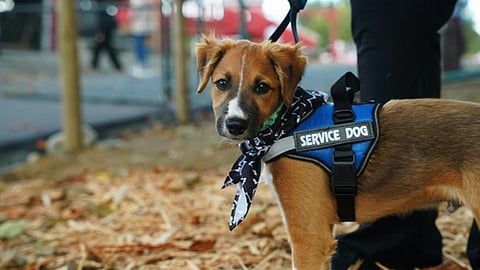
Here's something a lot of people get wrong: a service dog isn't defined by whether it's wearing a vest or has some official-looking badge. Under the Americans with Disabilities Act, what characterizes a service dog is specific, individualized training. These dogs learn to perform tasks that directly relate to someone's disability.
That distinction matters. We're not talking about emotional support animals or therapy dogs. Service dogs are trained professionals. Their skills provide actual medical, physical, or psychiatric support in daily life.
And because of that, they have legal access to public spaces. Restaurants, workplaces, hospitals, retail stores. These rights exist for a reason. Service dogs aren't nice-to-have. They're essential tools that allow people to live with real safety and autonomy.
Sure, the bond between a handler and their service dog is beautiful. But what actually defines that relationship is function. A service dog is a working partner woven into the structure of someone's daily life. Their presence is purposeful and intentional. Every behavior has been trained.
Savanna Tolley, a professional dog trainer at The Dog Wizard, explains: "Training isn't about teaching dogs our language… It's about learning theirs." That philosophy becomes even more critical in service work. Precision and mutual understanding aren't just nice ideas. They're the foundation of everything.
Mental wellness gets talked about in vague, abstract ways. But service dogs provide something concrete. Something measurable. Psychiatric service dogs are trained to interrupt panic attacks, create physical space in overwhelming environments, and apply deep pressure during anxiety episodes or PTSD flashbacks. These aren't spontaneous acts of love. They're rehearsed, deliberate behaviors designed to reduce physiological stress.
The research backs this up consistently. Structured interaction with dogs can reduce cortisol levels and increase oxytocin production. For people managing depression or trauma-related conditions, the daily rhythm of caring for and working with a service dog creates routine. Predictability. And that stability? It can be genuinely life-changing.
Independence and mental health are deeply connected. When you feel capable of moving through your day without constant fear, your confidence grows. Service dogs restore that sense of control in ways technology just can't match.
Savanna shares her personal experience with her Doberman medical alert dog: "My Doberman has alerted me many times before I felt symptoms myself and that level of trust and connection is something that is unmatched."
Think about what that means. Early detection transforms uncertainty into preparedness. Instead of reacting to a medical episode after it's already started, you can respond proactively. Over time, that reassurance reduces anxiety. It builds resilience.
Not every dog can do this work. Temperament, intelligence, and emotional stability are non-negotiable.
Labrador Retrievers and Golden Retrievers show up constantly in service work because they combine trainability with gentle, social temperaments. They're eager to please, which makes them adaptable even in high-distraction environments.
Poodles get selected often for medical detection roles. Their intelligence is advanced, and they excel at complex scent work. German Shepherds bring focus, discipline, and loyalty that work exceptionally well for mobility and psychiatric tasks.
Dobermans are less common, but they can be powerful partners when properly trained. Savanna describes them as deeply driven to protect and support their humans. Those traits translate beautifully into medical alert work.
The path to getting a service dog is deliberate. It's structured. Many people start by working with accredited organizations that breed, raise, and train service dogs before placement. This route involves careful evaluation to make sure the handler and dog are actually compatible.
Others go the custom training route with professional trainers. This usually means selecting a dog with the right temperament and investing serious time into structured obedience and task-specific conditioning.
Working with experienced professionals ensures that foundational obedience gets mastered before you layer in advanced skills. Reliable service dogs aren't created through shortcuts. They're developed through repetition, clarity, and consistency.
Service dogs are legally permitted in most public spaces. But access comes with accountability. A service dog must remain calm, responsive, and unobtrusive. This takes extensive socialization and proofing in real-world settings.
Strong obedience commands like heel, place, and recall aren't just formalities. They're safety tools that protect both the handler and the public. And ongoing reinforcement is essential to maintain these standards over time.
Service dogs work in incredibly diverse capacities depending on what needs they're addressing.
Guide dogs help people who are blind or visually impaired by navigating obstacles and stopping at curbs. Hearing dogs alert their handlers to alarms, doorbells, and spoken cues. Mobility assistance dogs retrieve objects, open doors, and provide balance support.
Psychiatric service dogs intervene during flashbacks or anxiety episodes. Medical alert dogs detect changes in blood sugar, heart rate, or seizure activity. Autism assistance dogs offer calming pressure, prevent wandering, and ease sensory overload in public environments.
Each role is specialized. But all of them share a common foundation: task-based training directly tied to a disability.
Every successful service dog starts with structured obedience. Clear communication builds confidence. Dogs who understand what's expected of them are better equipped to perform under stress.
Medical alert dogs go through scent conditioning exercises. They learn to pair specific biological changes with alert behaviors. Psychiatric service dogs rehearse interruption techniques in controlled environments before they apply them in real-world scenarios.
Savanna emphasizes clarity throughout the training process. Dogs need to understand precisely what's being asked of them. Structure reduces confusion. And that ultimately increases reliability.
Choosing the right training partner has a real impact on long-term success. Organizations like The Dog Wizard provide structured, customized programs tailored to each dog and handler's needs. They work with a balanced training philosophy and maintain a nationwide network of certified professionals. The focus is on building durable skills that extend beyond the classroom.
For families seeking advanced evaluations or structured public engagement opportunities, their therapy dog training program offers a pathway to further refine composure, confidence, and reliability in diverse environments. Therapy dogs and service dogs serve different roles. But structured specialty training enhances any dog's ability to remain calm and focused in community settings.
Savanna has worked with countless families navigating complex behavioral and medical challenges. She's seen firsthand how service dogs restore independence and dignity. Clients who once avoided crowded spaces regain the ability to attend events. Parents of children with autism describe smoother outings and reduced stress.
At the core of these transformations? Communication. When handlers learn to read subtle canine cues, and dogs understand consistent expectations, trust flourishes. That trust becomes the backbone of every successful service team.
Service dogs represent more than assistance. They represent partnership. In an age where wellness gets commodified and packaged and sold, a service dog offers something grounded. Something tangible. They provide stability during uncertainty, reassurance during vulnerability, and support during the moments that matter most.
Their work is quiet but profound. A gentle nudge before a panic attack escalates. A persistent alert before blood sugar drops dangerously low. A steady presence in overwhelming environments.
That's not just companionship. That's life-changing support built on discipline, expertise, and deep connection.
Service dogs redefine what independence looks like for people living with disabilities. Through structured training, precise task conditioning, and professional guidance, they become trusted partners in health and safety.
The result? Elevated mental wellness, renewed confidence, and the freedom to engage fully with everyday life. For handlers and their service dogs, that partnership is built on clarity, communication, and long-term commitment.
Inspired by what you read?
Get more stories like this—plus exclusive guides and resident recommendations—delivered to your inbox. Subscribe to our exclusive newsletter
The products and experiences featured on RESIDENT™ are independently selected by our editorial team. We may receive compensation from retailers and partners when readers engage with or make purchases through certain links.