
- Locations
- Interviews
- Luxury Home
- Luxury Lifestyle
- Luxury Travel
- Luxury News
- Events
- More
- Magazine

In the upper echelons of urban living, the concept of a "gym" has undergone a significant transformation. No longer relegated to fluorescent-lit basements, the most focused training spaces are now architectural statements. They are environments where engineering meets curated interior design, catering to a demographic that values privacy, visual order, and the integration of wellness into a sophisticated lifestyle.
From the vertical glass towers of Manhattan to the historic facades of London, these sanctuaries share a common philosophy: every element must earn its place through both aesthetic merit and functional precision. For the resident who balances high-stakes decision-making with physical activity, the environment is as important as the routine itself. The goal is to build a lifestyle where the surroundings support a sense of disciplined order.
Dogpound has become associated with a specific kind of focused grit. With its flagship locations in SoHo and West Hollywood, it helped define the "Industrial Chic" movement in fitness. The palette is strictly monochromatic—matte blacks, deep charcoals, and exposed steel. This environment is designed to minimize visual distraction and maintain internal focus.
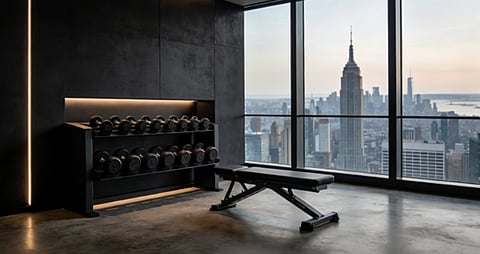
Bringing this atmosphere into a private residence requires a commitment to visual minimalism. It is about selecting tools that mirror that material strength without the accompanying clutter. Modern home offices or suites often adopt this same dark, focused palette, requiring equipment that exists as an extension of the room's design rather than a temporary intrusion.
In Marylebone, BXR London presents another facet of high-end fitness: "Luxury Athleticism." Here, the interior design leans into rich textures—hand-stitched leather, polished concrete, and custom lighting. It feels more like an exclusive private club than a typical workout facility.
The design at BXR suggests that the texture of tools matters. When a piece of equipment feels refined to the touch, the psychological barrier to starting a session is often lowered. For those looking to mirror this tactile focus in their own space, the choice of materials is paramount. They seek out finishes that sit comfortably alongside high-end stone floors and custom cabinetry, ensuring that activity occurs in a space of absolute refinement.
Dubai’s Embody Fitness represents a focus on data and precision. The space is noted for its cleanliness and organized layout. In such an environment, the presence of loose items or cluttered racks would interfere with the design's intent.
This demand for visual purity is why many high-density living spaces move away from traditional sprawling sets in favor of streamlined setups. The logic of an adjustable dumbbells system fits into this category. By consolidating multiple levels of resistance into a single unit, it is possible to maintain a clean aesthetic. It allows for a full training session without the visual noise of numerous iron plates. This approach is about having the utility of a gym floor condensed into a footprint that respects the room’s boundaries.
Third Space is known for creating an "Urban Oasis" in the heart of London’s densest neighborhoods. Their design focuses on air quality, soft lighting, and acoustic stealth. In a luxury apartment building, noise is a primary concern. A residence should remain a place of quiet contemplation, even when a training session is in progress.
This acoustic requirement has influenced home equipment choices. Many modern spaces prioritize quieter materials over traditional iron that can clatter. A setup utilizing an eco-friendly PE material coating, for example, helps dampen sound. This ensures that a resident can maintain their peak physical state at any hour without disturbing the tranquility of the household or the peace of nearby neighbors.
The Equinox at Hudson Yards is an example of fitness as a lifestyle anchor. It is part of a multi-dimensional ecosystem that includes high-end retail, Michelin-starred dining, and penthouse living. When residents here plan a home gym, they aren't looking to fill a spare room; they are looking to curate a wellness corner that matches the standard of their real estate.
In high-rise developments, space is a primary consideration. The demand is for equipment that offers utility within a minimal footprint. For these owners, the ability of a setup to be tucked away when not in use is a practical requirement. They often select gear that can fit into a narrow alcove or be placed behind a designer screen, ensuring that the primary identity of the home remains focused on leisure and hospitality.
Replicating the feeling of these global sanctuaries doesn't require vast square footage. It requires an adherence to the same design principles: visual order, material quality, and spatial efficiency.
The FED Fitness equipment is designed for these exact urban constraints. By utilizing a system that occupies about 0.2 square meters of floor space, it allows the resident to enjoy a variety of movements without sacrificing the home's aesthetic flow. This 0.2m² area acts as a small, consistent anchor for a daily routine. When the equipment is as considered as the furniture surrounding it, the home gym area stops being a compromise and starts being a consistent part of the living environment.
The common thread among the world’s most elite fitness sanctuaries is an absolute respect for the space and the people within it. They understand that consistency is often a byproduct of the environment.
Practical luxury in fitness is the ability to train in a space that feels intentional, using tools that respect the home. By choosing equipment that is silent, compact, and compatible with modern interiors, you are curating a private wellness area. Whether in a penthouse overlooking a city or a quiet suburban villa, the goal remains the same: a home that supports both physical health and visual peace. The tools placed within a residence are a reflection of that standard, contributing to a space that is as functional as it is calm.
Inspired by what you read?
Get more stories like this—plus exclusive guides and resident recommendations—delivered to your inbox. Subscribe to our exclusive newsletter
The products and experiences featured on RESIDENT™ are independently selected by our editorial team. We may receive compensation from retailers and partners when readers engage with or make purchases through certain links.