
- Locations
- Interviews
- Luxury Home
- Luxury Lifestyle
- Luxury Travel
- Luxury News
- Events
- More
- Magazine

The future of commercial real estate in 2025 will shift from a correction to a recovery. This change will be marked by increased investment activity, driven by anticipated interest rate cuts and a better economic outlook. Class B office spaces will continue to face challenges, as shown by commercial real estate trends for 2025. However, growth will also come from industrial properties and sought-after niche markets like data centers and student housing. This difference creates specific investment opportunities for agile real estate investors. Although high interest rates, supply constraints, and changing office demands continue to pose difficulties for the sector, investor interest is returning. Industrial and multifamily properties remain strong, and the outlook for commercial property in 2025 suggests the potential for selective growth amid adjustments across asset classes.
The real estate market predictions for 2025 highlight some exciting opportunities for savvy investors across various asset classes, including data centers and multifamily housing, even amid economic uncertainty. The Federal Reserve's decisions on interest rates will play a crucial role in shaping market direction. Investors and developers must navigate these challenges while seeking high-quality assets and prime locations to minimize risk.
Despite the obstacles, there are clear signs of optimism, especially with indications of stabilizing economic activity and a loosening of tight monetary policy. This landscape, filled with risks and potential rewards, shows why real estate investors should adopt disciplined investment strategies supported by expert analysis. Use the detailed market insights and real estate data from Paramount Real Estate Company to build a robust investment strategy.
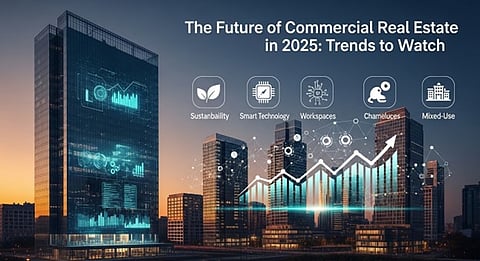
Emerging trends in commercial real estate development are moving towards sustainability, technology integration, and the adaptation of existing buildings. Developers now focus on creating high-quality, flexible spaces that can respond to the changing needs of tenants and investors. The growth in e-commerce and the emergence of hybrid work models are transforming both the industrial and office sectors. Additionally, there is a clear shift towards mixed-use developments and the repurposing of existing properties to meet new market demands.
Sustainable practices are at the forefront, with a strong focus on green building certifications and energy-efficient designs. Developers are increasingly using renewable energy sources and smart building systems to reduce carbon footprints. These changes not only support environmental responsibility but also improve operational efficiency and tenant satisfaction.
Green Building Certifications: Developers seek certifications such as LEED and BREEAM to ensure their buildings meet high environmental standards, thereby raising property value and meeting the expectations of tenants and investors.
Smart Building Systems: By using IoT devices and smart building management systems, energy consumption is optimized, and tenant comfort is improved, making properties more attractive to today’s renters.
Adaptive reuse involves revitalizing existing buildings, providing a sustainable alternative to new construction. This approach helps preserve historical structures while addressing modern market needs. Mixed-use developments, which combine residential, commercial, and retail spaces, are growing in popularity as they create lively, walkable communities.
Real estate market predictions for 2025 indicate a gradual recovery as the market adjusts. Construction remains slow due to high costs and higher interest rates, and lending has become less aggressive. However, expected falling rates and population growth could lead to renewed investment activity. While private investors dominate purchasing activity, institutional capital is diversifying geographically. Paramount Real Estate Company has noted that disciplined acquisition strategies and data-driven decisions will be crucial for success in 2025.
The commercial real estate market in 2025 has changed significantly due to a range of economic, technological, and social factors. New market trends, shifting investor priorities, and a greater focus on sustainable and innovative development strategies are shaping the future of this sector. By staying aware of these trends, stakeholders can navigate the changing real estate market more effectively and take advantage of new opportunities as they come up.
Economic conditions play a crucial role in shaping the health and direction of the commercial real estate market. Several key factors in this area have significant implications:
Interest Rate Trends
The Bank of Canada's monetary policy directly affects borrowing costs for investors and developers. When interest rates are low, investment activity can surge because loans become more affordable. Conversely, higher rates may slow development projects, especially in sectors that require substantial upfront capital.
Inflationary Pressures
Rising inflation can affect operating costs and construction expenses, which in turn influence property values and rental rates. Investors may find it challenging to balance rent increases with tenants' ability to pay, particularly amid rising inflation.
Overall Economic Growth
Strong economic growth results in increased demand for commercial properties as businesses expand and require more space. The pace of recovery from the pandemic will differ across regions, leading to localized variations in demand.
Changes in demographics will also significantly impact the commercial real estate landscape:
Population Growth
Canada’s population is expected to grow, driven by immigration and natural increases, sustaining demand for housing and commercial services. A diverse population brings different needs to neighbourhoods, such as more family-friendly facilities, student housing, and age-restricted developments.
Urbanization Trends
Ongoing urbanization influences where commercial real estate investments are directed, with urban centers experiencing a rise in demand. Mixed-use developments in suburban and urban areas are becoming increasingly popular, catering to the desire for live-work-play environments.
Aging Population
As our population ages, there are new opportunities in areas such as senior living facilities, healthcare services, and designs that prioritize accessibility.
By understanding how older adults spend their money, businesses can adjust their retail strategies and services to meet their needs better.
New technologies are changing the landscape of commercial real estate:
Smart Building Technologies
With IoT devices, we can monitor energy use, climate control, and security in real-time. This supports sustainability efforts.
Smart technology also improves tenant experiences by providing more comfort and personalized control over their environments.
Automation in Operations
Property management software and AI tools are simplifying tasks like tenant screening, lease management, and maintenance requests.
We might see robotics and drones handling inspections, increasing efficiency and reducing costs.
Virtual Reality and Augmented Reality
These technologies are transforming how properties are marketed and experienced. They allow potential buyers or tenants to take virtual tours before visiting a space.
AR and VR can enhance presentations for investors and clients, providing immersive experiences that showcase a property’s potential.
The way consumers think and act is changing the landscape of commercial real estate.
Shift Towards Experience-Driven Retail
Shoppers are now seeking memorable experiences rather than just making traditional purchases. To keep up, retailers need to be creative by hosting events, providing entertainment, or offering services that attract crowds and build customer loyalty.
Flexible Use Spaces
With more people working remotely, there’s a growing need for adaptable office spaces that combine remote and in-person work. Spaces that can serve multiple purposes, like co-working hubs, creative studios, and event venues, will meet a wide range of tenant needs.
Preference for Eco-Friendly Spaces
Consumers are increasingly choosing businesses and commercial properties that focus on sustainability. Buildings with green certifications, such as LEED (Leadership in Energy and Environmental Design), are becoming increasingly appealing to tenants and customers alike. Retailers who adopt sustainable practices, such as sourcing materials locally, minimizing waste, and using renewable energy, tend to connect better with eco-conscious shoppers.
Social Responsibility Initiatives
Companies that integrate social responsibility into their operations, such as engaging with the community and supporting local causes, are likely to build stronger consumer loyalty. Being transparent about ethical supply chains and fair labour practices can also influence consumer choices, encouraging a shift toward businesses that uphold these values.
As more people pay attention to health and wellness, demand for spaces that enhance well-being is growing. This change is encouraging the design of commercial areas that include ample natural light, green spaces, and features that support both physical activity and mental health.
Businesses that address health issues by ensuring safe shopping environments, offering healthy products, or creating wellness-oriented experiences will have a competitive edge.
The rise in online shopping has changed what consumers expect regarding delivery speed and convenience. Today, companies face pressure to provide smooth experiences that connect online and offline services effectively.
Commercial spaces need to adapt to support click-and-collect and curbside pickup options, as well as efficient logistics solutions, to meet these demands.
By monitoring these trends, those in the commercial real estate sector can adjust their strategies to align with consumers' shifting preferences. This not only improves tenant satisfaction but also increases long-term value for investors and developers.
The commercial real estate trends for 2025 indicate a stabilized, selective market now that most of the year has passed. Elevated interest rates continue to slow new development. Institutional investors are shifting toward sectors they believe can withstand volatility, such as data centers, student housing, and industrial sectors. The conversion of vacant and occupied office space into residential areas is gaining traction in major cities, showing flexibility during these challenging times. Developers are focusing on sustainability, thoughtful design, and long-term resilience amid economic uncertainty.
As we near the end of the year, the commercial property outlook for 2025 is cautious yet optimistic, as the market enters a rebalancing phase. The industrial and retail sectors show solid fundamentals, while the office market is adapting through conversions and growth in suburban areas. Vacancy rates are stabilizing as new supply slows and demand adjusts to new work patterns after the pandemic. With careful underwriting and strategic partnerships, developers can position themselves for growth across various asset classes, even amid economic challenges.
As we finish 2025, the insights and trends we've seen this year will significantly influence the commercial real estate landscape as we enter 2026. With ongoing economic pressures, changing consumer preferences, and rapid technological advances, stakeholders need to remain proactive and flexible. By accepting these shifts now, investors and developers can prepare to take advantage of new opportunities that the next year will offer.
Inspired by what you read?
Get more stories like this—plus exclusive guides and resident recommendations—delivered to your inbox. Subscribe to our exclusive newsletter
The products and experiences featured on RESIDENT™ are independently selected by our editorial team. We may receive compensation from retailers and partners when readers engage with or make purchases through certain links.