
- Locations
- Interviews
- Luxury Home
- Luxury Lifestyle
- Luxury Travel
- Luxury News
- Events
- More
- Magazine
- Contact Us

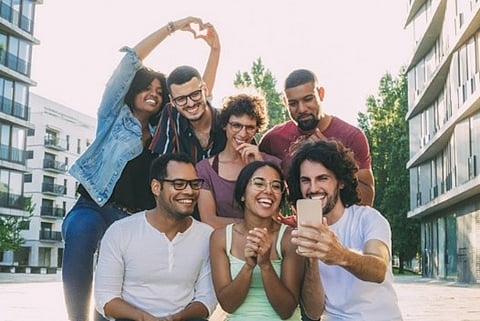
Creating a circle of friends and mentors is one of the most important steps of leading a healthy mental lifestyle, especially among young people who are exposed to the issue of complex identities. A group of so-called trusted people can play the role of guidance, encouragement, and a sense of belonging that is extremely important at the teenage level in the case of 2SLGBTQI+ youth. The network helps individuals to manage the challenges, make prudent decisions, and gain strengths to withstand the social forces or discrimination.
The support networks are not just a matter of having someone to communicate with but are more of creating a community in which understanding and acceptance is central. Mentors and friends can provide some guidance that can make people feel valued. In the situation with 2SLGBTQI + youth, to have the sense of self-esteem and emotional well-being, it is particularly important to identify individuals who would be supportive and acknowledging of their identity.
Friends are very important in defining emotional stability and life experiences. The friendship circle is able to support the person and make him feel less isolated, as they will always be there to offer encouragement and understanding during times of difficulty. Youths are usually under strain concerning school, family and social pressures and the presence of peers who listen and provide an understanding can help them cope with the pressures.
Social learning and coping strategies are also available with friendship. By communicating with positive role models, the youth may get the opportunity to learn how to manage stress, deal with others, and overcome interpersonal issues. Such experiences cultivate confidence and a sense of belonging which is very important in the development of the mind and personal growth.
Mentors offer advice that is more than on the job. They provide wisdom based on personal experience, enabling the youth to make objectives, make tough choices, and acquire independence skills. In the case of 2SLGBTQI+ young people, any mentor familiar with issues of identity or with whom they can relate can be particularly helpful when it comes to reassurance and advice.
Mentorship is also a personal developmental tool as it helps to imitate positive behaviors and problem solving techniques. The help of a mentor may increase confidence levels, offer motivation, and even allow one to discuss it in a safe environment. In case young people observe the role models being resilient and successful, chances are high that they will acquire tools that will help them to confront their own challenges in the most effective way.
Developing a network is not a thing that should be rushed. One should find friends and mentors who are emphatic, respectful and reliable. Confidence and security are necessary especially in participants within the 2SLGBTQI + community who might face misinterpretation or discrimination in the larger social settings.
Honest communication and support is also promoted in a safe network. Also, the act of talking to non judgmental people regularly helps build emotional security. Young individuals would be able to discuss their experiences, ask questions and get their emotions confirmed. This platform allows avoiding isolation and contributes to maintaining mental health via positive communication and positive guidance.
Resilience and emotional stability have a direct influence on the presence of a strong support network. Stress, anxiety, and even loneliness can be alleviated using the help of friends and mentors who offer support and confirmation. Being supported helps young people to act in ways that relate well to their health and make healthy choices among others.
Moreover, a good network assists in strengthening the sense of identity and belonging. In the case of 2SLGBTQI+ youth, having knowledge of people who accept and affirm them is a way of relieving the pressure of being socially acceptable or experiencing internalized stigma. Such support leads to the general satisfaction in life, as well as to the confidence to achieve the future with challenges.
A support system promotes adventure and self-exploration. The friends and mentors are able to bring new ideas, experiences and a new view which will help the young people to broaden their comprehension of themselves and the world. Such direction fosters personal development and problem resolution.
Support networks also give the incentive to achieve objectives and skills. Mentors may assist in creating goals that are attainable in terms of ambitions, whereas friends may provide support and responsibility. Such relationships, particularly among the youth, especially the 2SLGBTQI+ community, are priceless in terms of independence, confidence, and long-term emotional stability.
The establishment of the support system of friends and mentors as the foundation of emotional wellness and personal growth is an essential process. Such a network may help them through support, mentorship and confirmation and this may help the youth to get out of difficulties and become resilient. The case of 2SLGBTQI+ young people is particularly applicable to the aspects of reliable friends and mentors who should be identified to guarantee self-esteem and well-being.
Through taking time and effort to establish meaningful connections, the youth develop a safety net which will help them in dealing with their daily lives along with future growth. A positive support system does not only build mental strength but also leads to personal development, self-confidence, and greater belonging to the world.
Inspired by what you read?
Get more stories like this—plus exclusive guides and resident recommendations—delivered to your inbox. Subscribe to our exclusive newsletter
The products and experiences featured on RESIDENT™ are independently selected by our editorial team. We may receive compensation from retailers and partners when readers engage with or make purchases through certain links.