
- Locations
- Interviews
- Luxury Home
- Luxury Lifestyle
- Luxury Travel
- Luxury News
- Events
- More
- Magazine
- Contact Us

Small rooms have a habit of pretending they’re bigger than they are — until they aren’t. One minute you’re standing in a cozy corner, the next the walls seem to creep in like they have their own agenda. That’s where mirrors sneak in. They’re simple, cheap, and weirdly persuasive. A mirror doesn’t add space. It just convinces your brain that space exists where it technically doesn’t.
Understanding how mirrors make rooms look bigger isn’t about decorating or following trends. It’s about perception. Mirrors bounce light, echo shapes, and create dept sometimes where none exists. Designers spend a lot of time figuring out how to use mirrors to make a room look bigger, usually by trial and error, coffee in hand, muttering under their breath about sightlines and reflections nobody else notices. And somehow, it works.
Mirrors are liars. But the nice kind. They take a small corner, a short hallway, a cramped bedroom, and say: "Look over here, this is actually a palace". Your brain believes it. Which is why understanding how mirrors make rooms look bigger starts with the brain and not the wall.
Mirrors reflect natural and artificial light. More light means fewer shadows, fewer shadows mean the room feels open, open feels bigger. Simple. Sometimes a lamp alone makes the room feel more expensive. Add a mirror and suddenly you have sunlight at midnight.
Mirrors create depth. They repeat the room. The brain interprets this as "more space". No matter that physically the room didn’t change. This is an illusion, and illusion is powerful.
Mirrors rescue dark corners. When shadows gather like they own the place, mirrors redirect light right where they are. Suddenly, the shadows leave. A mirror visually doubles space. When it reflects a window or open wall it gives the eye a suggestion: there’s more room here than actually exists. And the brain nods politely.
This is why designers constantly tinker with how to use mirrors to make a room look bigger. Sometimes the simplest tools produce the most convincing magic.
Mirrors are picky. They work only if placed thoughtfully. A mirror in the wrong spot might as well be wallpaper. Good mirror placement to make room look larger often follows logic and chaos simultaneously:
Opposite windows: It’s simple. The mirror catches sunlight and flings it around the room. The space brightens and magically feels wider.
Behind furniture: A sofa, a console table, a bed — it doesn’t matter. Mirrors behind furniture add depth, but subtly. They don’t scream for attention.
On empty walls: Blank walls are like forgotten floors in your brain. Hang a large mirror there and suddenly the room has another side.
In narrow hallways: Mirrors in hallways act like stretching exercises for the eye. The corridor appears wider, longer, less oppressive.
Designers often move a mirror three, four, maybe five times before it feels right. Sometimes a tiny shift turns a reflection into a mini-world. It’s weird. But it works.
Mirror choice matters as much as placement. The wrong mirror in the right spot is still wrong. The right mirror in a weirdly illogical spot can change the room entirely:
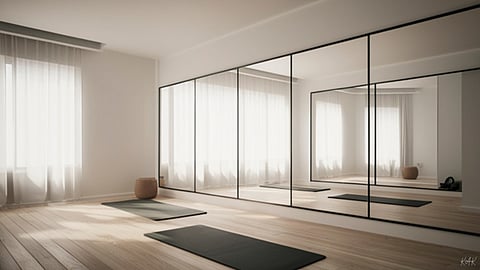
Large wall mirrors: Cover a big part of the wall and suddenly the room is twice as big, at least in your perception.
Floor-length mirrors: They draw the eye up. Ceilings feel higher, rooms less cramped, and sometimes people even stand straighter.
Frameless mirrors: Minimalist, clean, like the mirror isn’t even there. Good for tricking the brain into thinking the wall just keeps going.
Decorative mirror panels: Multiple panels can create fragmented reflections that somehow still convince the eye of more space. It’s confusing but effective.
Custom mirrors are a gamble worth taking. There's one reliable glass & mirror shop in New York that can fabricate mirrors to fit your walls perfectly. So perfect that you’ll swear the room grew overnight.
Mirrors aren’t just practical. They’re slightly theatrical. They can be art, furniture, or lighting accessories:
Mirror gallery walls: Multiple mirrors in different shapes and frames. Looks intentional. Feels larger. Your guests notice but can’t quite explain why.
Mirrored furniture: Coffee tables, dressers, panels. Reflect just enough to make the floor plan feel generous.
Mirrors with lights: Place them near lamps or sconces. Suddenly the room has three sources of light instead of one.
Mirrors reflecting artwork or plants: Makes the room feel richer, more layered, almost luxurious in a tiny space.
Mirrors quietly repeat what’s already there, which sometimes feels like cheating — but who’s counting?
Mirrors misbehave when treated carelessly. Small room illusions go wrong in predictable ways:
Reflecting clutter: Mirrors double the mess. Sometimes it’s too much for the mind to handle.
Choosing mirrors that are too small: Tiny mirrors barely register. They whisper, instead of expanding the space
Using too many mirrors: Chaos. Funhouse. Not what we’re going for.
Placing mirrors in dark areas: No light to reflect? No magic happens. You have a mirror. It’s lonely.
Sometimes the top mirror is no mirror at all. Designers know this instinctively.
Mirrors are deceptively simple. They reflect, they expand, they light up small spaces in ways that floor plans cannot.
Learning how to use mirrors to make a room look bigger is part science, part intuition, part sheer luck. The walls stay where they are. The room stays the same size. And yet, your brain insists: it’s bigger.
Sometimes that’s enough.
They reflect light and elements in the room, creating depth and convincing your brain there’s more space than there is.
Opposite windows, on large blank walls, behind furniture, or in hallways. Anywhere they can reflect light and stretch the eye.
They do. More mirrors equals stronger spatial illusion. Size matters.
Large wall mirrors, floor-length mirrors, frameless mirrors, decorative panels. Anything that reflects a lot without overcomplicating the view.
Yes. They scatter natural and artificial light, soften shadows, and make small spaces feel brighter.
Inspired by what you read?
Get more stories like this—plus exclusive guides and resident recommendations—delivered to your inbox. Subscribe to our exclusive newsletter
The products and experiences featured on RESIDENT™ are independently selected by our editorial team. We may receive compensation from retailers and partners when readers engage with or make purchases through certain links.