
- Locations
- Interviews
- Luxury Home
- Luxury Lifestyle
- Luxury Travel
- Luxury News
- Events
- More
- Magazine

Walk into any high-end metal art studio today, and you’ll notice something subtle but telling: fewer burn marks, sharper transitions, and surfaces that feel intentionally controlled rather than mechanically processed.
This shift isn’t just aesthetic—it reflects a deeper change in how artists and studios approach material. Increasingly, the conversation is no longer about “how to engrave,” but about how to preserve the integrity of the material while shaping its visual language.
That’s where the rise of the uv laser engraving machine begins to make sense.
For years, finishing metal artwork meant compromise.
You could polish for smoothness, but lose detail.
You could etch for contrast, but introduce heat marks.
You could clean aggressively, but risk altering the material itself.
Most studios learned to live within these trade-offs.
But as custom metal work moves further into luxury, architectural, and collectible markets, those compromises are becoming harder to accept. Surface quality is no longer just a technical outcome—it’s part of the piece’s identity.
The problem isn’t that traditional methods don’t work. It’s that they don’t scale well when expectations rise.
In many studios, a common issue appears:
The design is precise
The execution is controlled
But the surface still feels “off”
Sometimes it’s subtle discoloration. Sometimes it’s softened edges. Sometimes it’s just inconsistency between pieces.
For artists, this is often the most frustrating point—not because something failed, but because it almost worked.
Instead of asking how to remove material faster or deeper, more studios are asking a different question:
How can we affect the surface without disturbing what matters?
This is where UV-based systems have started to change the conversation.
A uv laser engraver doesn’t rely on heavy thermal interaction. Instead, it works at a level where surface change can be controlled with far more precision—often without introducing visible stress to the material.
The result isn’t just cleaner engraving. It’s a shift in how much control the artist actually has.
In high-end custom work, precision is not just technical—it’s expressive.
Studios working with UV systems are able to:
Maintain sharper edge definition
Preserve intentional textures
Control contrast without over-processing
This matters especially in:
Limited edition pieces
High-value commissions
Architectural metal installations
Because in these contexts, surface inconsistency isn’t just a flaw—it’s a reduction in perceived value.
As workflows evolve, the role of engraving tools is changing as well.
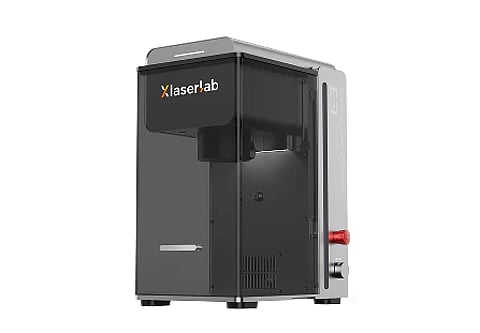
Systems like the Xlaserlab E3 UV Laser Engraver are increasingly being used not as standalone machines, but as integrated parts of the creative process.
Rather than sitting at the end of production, they are used:
During refinement stages
For localized corrections
As part of iterative design
This reflects a broader shift—from tools that execute, to tools that support decision-making in real time.
What’s interesting is not just adoption, but standardization.
More studios are beginning to treat UV engraving not as an optional technique, but as a consistent part of their workflow.
The reason is simple:
Consistency is what allows creativity to scale.
Without reliable surface outcomes:
Each piece becomes a new risk
Each iteration requires adjustment
Each result depends too much on experience
With controlled systems in place, that variability starts to disappear.
This shift has implications beyond the workshop.
Studios that achieve consistent surface quality can:
Deliver more predictable results
Reduce rework and material loss
Maintain stronger client trust
Over time, this translates into something more important:
The ability to operate at a higher tier of the market
Because in premium segments, quality isn’t judged by capability—it’s judged by consistency.
As expectations continue to rise, the baseline for what is considered “acceptable” surface quality is changing.
UV laser engraving is part of that shift—not because it replaces traditional methods, but because it allows artists and studios to work with fewer compromises.
Solutions like the Xlaserlab E3 UV Laser Engraver illustrate how precision tools are becoming part of the creative language itself, enabling a level of control that aligns with both artistic intent and commercial demand.
In custom metal artwork, the smallest details often carry the greatest weight.
As studios move toward more refined, high-value production, the ability to control those details consistently becomes essential.
UV laser engraving is not just another technique—it represents a move toward greater control, fewer compromises, and a more reliable path from design to finished piece.
Inspired by what you read?
Get more stories like this—plus exclusive guides and resident recommendations—delivered to your inbox. Subscribe to our exclusive newsletter
The products and experiences featured on RESIDENT™ are independently selected by our editorial team. We may receive compensation from retailers and partners when readers engage with or make purchases through certain links.