
- Locations
- Interviews
- Luxury Home
- Luxury Lifestyle
- Luxury Travel
- Luxury News
- Events
- More
- Magazine

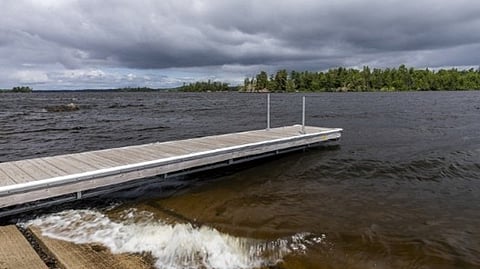
Reconstruction of a dock on the lake consists of more than just changing boards or making it more decorative. Every change may have an impact on the entire safety and stability of the building. The stability of the dock can be tested at every stage of renovation to make sure that the possible weaknesses are revealed at an early stage. This would help to avoid the minor problems that may become significant safety risks in the long run.
The constant testing also inspires confidence in the functionality of the dock. When adding a new section, or moving to a hydraulic boat lift, or when preparing a kayak launch dock, it is necessary to be aware that the dock will support the loads that are intended, without moving or sagging. Stability testing serves as a safeguard to users and investments.
Even the well-calculated renovations may cause instability in case they are not followed attentively. The introduction of new material or the modification of support structures will unintentionally lead to points of stress that undermine balance. Stability of the dock should be tested at the end of every phase to identify these weak areas and prevent occurrence of the problem.
The safety is applicable to all the dock users. The families, guests or neighbors might not know recent changes and might use the construction that is not completely safe. The possibility of accidents or injuries is minimized by early detection of unstable regions.
A dock performance revolves around structural integrity. Hardware, pilings and boards are supposed to work in unison in order to evenly distribute weight. The interaction of these components may change with every renovation stage, and therefore, it should be checked regularly.
Diagnostic tests must involve physical examination and test runs. The use of pressure in new boards, walking along the dock, and examination of the excessive movement are simple techniques that expose the problems that are hidden. To guarantee the safety and durability of the dock, it is important to ensure that the dock can withstand daily operations.
Many people do not realize that the environmental factors influence dock stability. The structure is subjected to continuous pressure of wind, waves and unpredictable water level. A dock which seems to be firm after being renovated might act in a different manner once it is exposed to these natural forces.
Post-phase testing enables the means of adjusting the stress of weather. When a kayak launch dock or a space around a hydraulic boat lift undergoes unplanned motions, one can fix it before it is fully utilized. This is a proactive method of sustaining structural integrity.
Re-purposed docks can include more facilities or increased weight bearing operations. An example of this is a hydraulic boat lift which introduces concentrated weight on one section. This is done through testing whereby it is established that the support system could safely handle these loads.
A kayak launch dock must have a stable length in it. Any disproportion may render the process of launching or recovering watercraft risky. When you monitor load distribution each time you undertake a renovation, the chances of structural failure are minimized and enhance confidence on the part of the user.
The lack of tracking the dock stability may lead to the acceleration of wear or unseen damage. Movement before it is noticed can stress the fasteners, pilings or warp boards. What can be a small issue in the end turns out to be expensive to fix or even unsafe.
Evaluation of each stage reduces the damage in the long-term by pointing out areas that require reinforcement. Regular assessments also increase the life of the dock and secure investments in dock modifications such as hydraulic boat lifts or new decking material.
Dock safety standards are not merely rules and regulations, but they are best practice to whomever operates the water front structures. Periodical testing is useful in upholding these standards and is used to ensure that the renovations are safe.
The maintenance is also captured through monitoring stability. Recording findings at every stage of renovation facilitates check ups in the future and giving testimonies that the care was done accordingly. This is particularly when it comes to commercial or shared-use docks.
The step of testing the dock stability at the end of every renovation stage is an important issue that must not be left aside. It protects users, structural integrity, and makes sure that such additional work as kayak launch docks or hydraulic boat lifts work as expected.
Dock owners will be able to have a secure and tranquil stay by taking time and ensuring that the testing is done carefully and in stages. A steady dock will increase the enjoyment of the waterfront and minimize the chances of having expensive repairs or accidents.
Inspired by what you read?
Get more stories like this—plus exclusive guides and resident recommendations—delivered to your inbox. Subscribe to our exclusive newsletter
The products and experiences featured on RESIDENT™ are independently selected by our editorial team. We may receive compensation from retailers and partners when readers engage with or make purchases through certain links.