
- Locations
- Interviews
- Luxury Home
- Luxury Lifestyle
- Luxury Travel
- Luxury News
- Events
- More
- Magazine

If you’ve ever sat in your Toyota Tundra and thought, “This screen feels outdated,” you’re definitely not alone. The Tundra is known for its reliability, power, and rugged appeal but let’s be honest, the factory infotainment system doesn’t always keep up with modern expectations.
That’s where the Tesla-style screen upgrade comes in. It’s not just about looks it’s about transforming how you interact with your truck every single day.
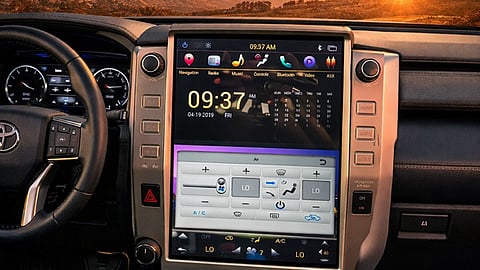
Picture this: instead of a small, cluttered display with limited functionality, you get a large, vertical touchscreen that feels more like a tablet built into your dashboard. Navigation becomes smoother, music control becomes intuitive, and everything feels… well, smarter.
Many drivers are now turning to the tesla screen for toyota tundra from Mergescreens because it combines cutting-edge tech with a design that actually fits the rugged personality of the truck. It’s not a gimmick it’s a practical upgrade that makes driving more enjoyable and efficient.
Let’s break this down in a way that actually matters when you’re behind the wheel.
Most factory systems in older Tundras were designed for basic functionality radio, Bluetooth, maybe some limited navigation. But modern drivers expect more. You want seamless smartphone integration, responsive controls, and a layout that doesn’t feel like it’s from 2012.
A Tesla-style screen changes the game in several key ways:
Bigger display, better visibility
The vertical layout gives you more room for maps, apps, and controls without feeling cramped.
Touch-first interface
Instead of digging through menus with buttons, everything is accessible with simple taps and swipes.
Smartphone-level performance
Faster processors and modern software mean less lag and more responsiveness.
All-in-one control hub
Climate control, media, navigation everything is centralized.
It’s basically like upgrading from an old flip phone to a modern smartphone but for your truck.
Changing the screen on your car not only makes it seem better, but it also alters how you use it.
Factory navigation systems can feel clunky and outdated. With a Tesla-style screen, you get smoother maps, better routing, and real-time updates (depending on your setup). It’s the kind of system that keeps up with your daily driving, whether you’re commuting or heading out on a road trip.
This is a big one. Instead of juggling your phone while driving (which we all know isn’t ideal), you can:
Send messages hands-free
Use your Siri or Google Assistant as a voice assistant.
Access Spotify, Waze, Google Maps, and more
Everything integrates directly into the screen, making your drive safer and more convenient.
Music just feels better when you have full control at your fingertips. Whether you're adjusting EQ settings or switching playlists, the experience is smoother and more enjoyable.
Let’s be real this upgrade looks incredible. The large vertical screen instantly gives your Tundra a premium, high-tech vibe that rivals newer vehicles.
One of the biggest concerns people have is compatibility and it’s a valid one.
The good news is that Tesla-style screens from trusted providers are designed specifically for Tundra models. That means:
They fit seamlessly into your dashboard
They retain key factory features like steering wheel controls
They’re built to match the electrical systems of your truck
You’re not forcing a generic screen into your vehicle you’re installing something engineered for it.
You might be wondering, "Do I really need to know a lot about this technology just to set this up?"
Not necessarily.
Most Tesla-style screen kits are designed for relatively straightforward installation. If you’re comfortable with basic tools and following instructions, it’s a doable DIY project. That said, a lot of drivers would rather have a professional do the work for them.
Here’s what the process generally involves:
Removing the factory head unit
Connecting wiring harnesses (usually plug-and-play)
Mounting the new screen
Testing functionality
The key takeaway? It’s far less complicated than it looks.
Not all Tesla-style screens are created equal. Some cheaper options might look good at first but fall short in performance, durability, or compatibility.
That’s why it’s worth choosing a brand that focuses specifically on these upgrades. When you explore options from Mergescreens, you’ll notice a clear emphasis on:
Vehicle-specific design
Reliable hardware
User-friendly interfaces
Ongoing support
This isn’t just about selling a screen it’s about delivering a complete upgrade experience.
You’ve probably considered other upgrades for your Tundra lift kits, wheels, lighting, maybe even performance mods.
But here’s the thing: most upgrades change how your truck looks or performs externally. A Tesla-style screen changes how you experience your truck every time you drive it.
It’s one of those rare upgrades that delivers both:
Immediate visual impact
Long-term functional value
And unlike cosmetic mods, this is something you interact with constantly.
Let’s talk honestly this isn’t a $50 upgrade. So, is it worth it?
If you:
Use your truck daily
Rely on navigation or apps
Want a more modern driving experience
Plan to keep your Tundra long-term
Then yes, it’s absolutely worth considering.
Think of it less like a cost and more like an upgrade to your daily driving quality of life.
The Toyota Tundra has always been about strength, reliability, and capability. But technology has become just as important in today’s driving experience.
Upgrading to a Tesla-style screen bridges that gap perfectly. It keeps everything you love about your truck while bringing it into the modern era.
If you’ve been on the fence, here’s the simplest way to think about it:
You’re not just upgrading your screen you’re upgrading how you interact with your truck every single day.
No, these systems are designed to work within your vehicle’s electrical setup. As long as installation is done correctly, battery drain shouldn’t be an issue.
Yes, most high-quality systems retain full steering wheel functionality.
Absolutely. In most cases, it integrates with your existing backup camera or supports upgraded camera systems.
Yes, but like any infotainment system, it should be used responsibly. Features like voice control help minimize distractions.
Typically between 2 to 4 hours, depending on experience level and whether you go DIY or professional.
Inspired by what you read?
Get more stories like this—plus exclusive guides and resident recommendations—delivered to your inbox. Subscribe to our exclusive newsletter
The products and experiences featured on RESIDENT™ are independently selected by our editorial team. We may receive compensation from retailers and partners when readers engage with or make purchases through certain links.