
- Locations
- Interviews
- Luxury Home
- Luxury Lifestyle
- Luxury Travel
- Luxury News
- Events
- More
- Magazine

The traditional playbook for luxury entertainment is being torn up. High-net-worth individuals are no longer content with predictable five-star experiences or passive consumption. Instead, they're gravitating toward entertainment that offers personalization, exclusivity, and a level of control previously reserved for institutional investors or industry insiders. From private gambling experiences that rival Monte Carlo’s most exclusive salons to bespoke cultural immersions curated by former museum directors, the appetite for tailored entertainment has reshaped what affluence actually buys. The shift extends to digital platforms as well, where discerning consumers seek out premium experiences like the best online casino UK operators now offer, complete with dedicated account managers and invitation-only tournaments that mirror the exclusivity of private members' clubs.
Luxury consumers in 2026 are hiring entertainment architects rather than simply booking experiences. These specialists, often with backgrounds in hospitality, fine art, or even theatrical production, design entire weekends around a client's specific interests. One New York-based curator recently orchestrated a three-day immersion for a tech executive that included private access to a Broadway rehearsal, a poker tutorial with a former World Series champion, and a tasting menu designed around the client's genetic taste profile. The price tag exceeded what most people spend on a car, but the waiting list stretches into 2027.
This isn't about showing off. It's about access to moments that can't be replicated or photographed for social media. The value lies in the impossibility of the experience being mass-produced.
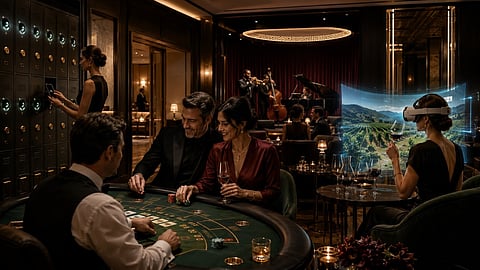
The paradox of 2026's luxury entertainment landscape is how technology enables more human connection, not less. Virtual reality has evolved beyond novelty into a legitimate platform for exclusive experiences. A London-based company now offers VR-enabled wine tastings where collectors can virtually walk through Burgundy vineyards with winemakers while sampling bottles worth thousands. The sessions accommodate no more than six participants globally.
Meanwhile, artificial intelligence is being deployed not to replace human curation but to enhance it. Algorithms analyze years of preference data to suggest entertainment options their users didn't know existed. One Miami resident discovered an underground jazz series in Wynwood through an AI recommendation engine that cross-referenced her Spotify history, travel patterns, and dining reservations.
Interestingly, some luxury consumers are seeking entertainment in spaces traditionally considered accessible to everyone. The New York Times recently profiled a trend of wealthy patrons attending community theater productions and local music festivals, drawn by the authenticity absent from polished commercial venues. The difference is in how they experience these events. Private transportation, backstage access, and post-show dinners with performers transform a $30 theater ticket into a $3,000 evening.
Perhaps the most significant shift is the premium now placed on privacy. High-profile individuals are paying substantial sums for entertainment experiences that guarantee anonymity. Private cinema screenings, closed-door culinary events, and exclusive gaming lounges operate without social media policies because phones aren't permitted at all. One Los Angeles venue requires guests to store devices in biometric lockers before entering.
This retreat from public visibility reflects broader anxieties about digital permanence. When every moment can become content, the truly luxurious experience is the one that exists only in memory.
The entertainment landscape for luxury consumers in 2026 isn't about excess. It's about precision, access, and the increasingly rare commodity of genuine surprise. As traditional markers of status become more accessible, the new currency is experiences that money can barely buy and that can never be exactly replicated. That's where luxury lives now.
Inspired by what you read?
Get more stories like this—plus exclusive guides and resident recommendations—delivered to your inbox. Subscribe to our exclusive newsletter
The products and experiences featured on RESIDENT™ are independently selected by our editorial team. We may receive compensation from retailers and partners when readers engage with or make purchases through certain links.