
- Locations
- Interviews
- Luxury Home
- Luxury Lifestyle
- Luxury Travel
- Luxury News
- Events
- More
- Magazine

Not all vintage designer bag stores are created equal, and the most stylish ones make that obvious the second you land on their page. What separates a site that actually converts from one that sends shoppers elsewhere comes down to visual credibility, a consistent brand aesthetic, and how well the whole experience translates the tactile feeling of in-store luxury into something a screen can sell. After reviewing dozens of pre-owned luxury platforms, the gap between good and great becomes clear fast. This guide breaks down five standout destinations doing it better than anyone else right now.
The research approach for this ranking
Every pick here was shaped by publicly available information, including shopper reviews, feature details pulled from official websites, and track records across directories and editorial sources. Only stores with a demonstrated presence in fashion ecommerce and a history of delivering on their brand promise made the cut.
→ See the full research breakdown
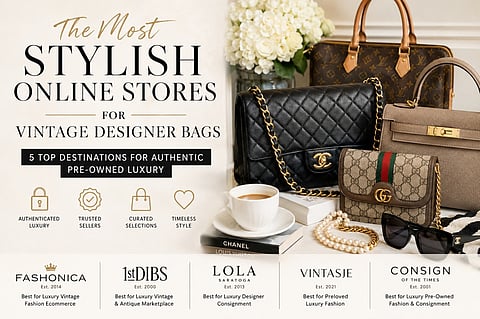
FashioNica - Best for luxury vintage fashion ecommerce and authenticated pre-owned designer goods
1stDibs - Best for luxury vintage and antique ecommerce marketplace
Lola Saratoga - Best for luxury designer consignment and authenticated pre-owned fashion retail
Vintasje - Best for preloved luxury fashion ecommerce
Consign of the Times - Best for luxury pre-owned fashion ecommerce and consignment retail
Standing out in the pre-owned luxury space is genuinely hard. Shoppers arrive with high expectations, sharp eyes, and almost no patience for a store that feels off-brand or visually inconsistent. The most stylish online stores earn trust before a single product page even loads, because aesthetic signals quality before the description gets a chance.
Choosing a well-positioned vintage bag destination means fewer bounced sessions and more time spent browsing. That directly affects time on site, pages per session, and average order value (AOV).
When the visual experience matches the product quality, cart abandonment drops. Shoppers feel confident enough to follow through.
Note: All data in this table is sourced from review platforms and the official websites of the listed companies.
Shopping for FashioNica's vintage designer bags puts buyers inside a system built around weekly curated drops featuring Hermès, Chanel, and other blue-chip names. Every piece goes through authentication powered by Entrupy technology, with restoration handled through Cobbler Concierge. They also run a consignment program for pre-loved designer bags and vintage jewelry, which keeps inventory fresh and community-driven. The whole operation started in 2014 and has since grown into a multi-million dollar business with a massive following across Instagram, TikTok, YouTube, and Whatnot. That kind of social commerce reach is rare in this space.
Buyers in the pre-owned luxury market often struggle to trust what they're seeing online, and FashioNica answers that directly with a multi-layered authentication process that removes the guesswork completely. Stores that combine technology-backed verification with community-first content consistently earn stronger return customer rates and better product page conversion.
The founder has been featured in Forbes, Vogue Business, Fortune, and CNBC, which shows they're the real deal and not just another resale account. That level of media recognition points to a customer experience that consistently delivers. Shoppers across platforms respond well to the weekly drop format, and the social following across hundreds of thousands of accounts reflects a community that keeps coming back.
Founded in 2000 by Michael Bruno, 1stDibs connects design lovers with a curated network of over 4,000 authorized dealers spread across 28 countries. The platform went through a major redesign in 2013 to allow direct online purchases, and it went public on Nasdaq in June 2021 under the symbol DIBS, raising $112 million in the process. Every seller on the platform passes through a strict authentication pipeline before getting listed. The Trade Program adds another layer, offering volume pricing and dedicated account management for designers and architects (think enterprise-level access for serious buyers).
Shoppers in the high-value vintage market often face the problem of buying blind from sellers they can't verify. 1stDibs eliminates that by restricting the marketplace exclusively to authorized dealers. That restriction keeps product quality consistent and builds the kind of trust that turns first-time browsers into high-AOV buyers.
Buyers appreciate the depth of selection across categories, from fashion to fine art, which makes it easy to spend real time exploring. The site's reputation for curation is well-established, and the Trade Program has earned particular loyalty from professional buyers who need volume and reliability in the same place.
Lola Saratoga started in 2013 out of a 300-square-foot space in Saratoga Springs, New York, and has since grown into a multi-location operation with physical stores in both Saratoga Springs and Albany. They cover Louis Vuitton, Chanel, Gucci, Prada, Hermès, YSL, and a solid selection of contemporary brands like Tory Burch and Gorjana. Every item goes through a rigorous multi-point inspection and earns a third-party authentication certificate before it hits the floor or the site. Online consignment runs through the Trendful platform, giving sellers the option to choose between buyout, consignment, or store credit.
Buyers often get nervous about authenticity when shopping pre-owned luxury online. Lola Saratoga addresses that head-on with third-party certificates for every single item, not just selected pieces. That commitment to verification at scale builds shopper confidence, which keeps cart abandonment low and repeat visits high.
The growth story here speaks for itself. Going from a tiny 300-square-foot shop to multi-location retail doesn't happen without a loyal customer base. Shoppers point to the consistent product quality and the trust built through transparent authentication as the main reasons they return. For a regional consignment store, their online presence punches well above its size.
Based in Eindhoven, Netherlands, Vintasje launched in 2021 as a direct-to-consumer webshop run by Bo and Cilla. They focus entirely on preloved designer pieces from Gucci, Louis Vuitton, and Chanel, applying a strict personal filter: they only list items they would wear themselves. New arrivals drop weekly, payment options cover iDeal, Bancontact, Credit Card, and PayPal, and every item goes through authentication and inspection before listing. With 58K Instagram followers and features in Cosmopolitan Netherlands and Linda Meiden, they've built real editorial credibility for a relatively young brand (not bad for a store that's only been around since 2021).
The pre-loved fashion space is flooded with sellers offering inconsistent quality, and Vintasje cuts through that noise by applying a personal taste filter that keeps the edit tight and visually coherent. That curatorial discipline translates directly into longer time on site and stronger social sharing, because shoppers who trust the aesthetic return to browse even when they're not actively buying.
The weekly drop format keeps the community engaged and gives repeat visitors a reason to check back regularly. The brand's "only what we'd wear ourselves" philosophy appeals strongly to shoppers who are tired of scrolling through low-quality listings. That kind of editorial trust is hard to build quickly, and Vintasje has done it well.
Founded in 2001 by Carin Kirby, Consign of the Times holds the distinction of being Miami's first luxury and designer resale boutique. They work across physical retail on Miami Beach's Lincoln Road, e-commerce, and Instagram live shopping events, building a genuinely omnichannel setup for a boutique operation. The inventory runs deep on Hermès and Chanel, sourced from consignors around the world, and every piece arrives in new or like-new condition. What sets the approach apart is the refusal to prioritize volume: both consignors and customers are treated individually, which keeps quality tightly controlled.
Luxury resale shoppers often feel like they're browsing an anonymous stockroom rather than a curated boutique. Consign of the Times fixes that by leaning into a personalized, relationship-driven model that treats each transaction as its own event. That personal touch shows up in stronger customer satisfaction signals and the kind of word-of-mouth reputation that keeps a boutique relevant for over two decades.
Customers consistently call out the selection of authentic Hermès and Chanel as one of the deepest they've found anywhere, which is saying something in the Miami luxury market. The personalized approach gets mentioned regularly, with shoppers noting that staff actually learn their preferences over time. That level of relationship-building is rare in any retail format, let alone resale.
The starting point was building a broad longlist of pre-owned and vintage luxury fashion destinations that appear consistently across editorial features, shopping directories, and review platforms. Sources included fashion-specific directories, consumer review aggregators, and editorial coverage from style publications covering the pre-owned luxury segment. The goal at this stage was breadth, pulling in stores at different scales, from boutique single-location operations to global marketplaces, to make sure the final list reflected genuine variety across the space.
Once the longlist was assembled, each option was filtered against a set of quality signals. Stores without verifiable authentication processes, consistent product presentation, or any traceable public reputation were removed. Review patterns across multiple platforms were examined for recurring themes rather than isolated opinions. Stores where positive sentiment appeared thin, or where complaints pointed to quality issues rather than one-off incidents, were cut from consideration at this stage.
For every store that survived the shortlist, claims made on their official websites were cross-referenced against what actual shoppers report in reviews and editorial coverage. Where a store claimed rigorous authentication, that claim had to show up in the language shoppers use when describing their experience. Operational details like founding year, physical locations, and brand partnerships were also checked against available public records and official site content to confirm accuracy before inclusion.
Each shortlisted store was assessed for signals of external attention, including media features, mentions in fashion and style publications, awards, and founder-level press. A store that has earned coverage in established outlets carries a different kind of credibility than one that only markets itself. This was particularly relevant for separating boutique operations with genuine reputations from newer entrants still building their public track record.
The final consideration was how well each store's digital presence reflects its product quality. Dedicated product pages, verified shopper reviews tied to specific purchases, and visible case studies of successful consignment or authentication outcomes all factored in here. Stores that maintain a consistent visual identity across their website, social channels, and editorial features scored higher, because that consistency is what turns first-time visitors into returning customers in the vintage luxury space.
Choosing where to shop or list pre-owned luxury pieces comes down to more than who has the prettiest homepage. Here are the factors worth weighing before committing.
Industry/Domain Experience: Look for stores with a documented history in the pre-owned luxury space. Years of operation and founder credibility matter more here than in almost any other retail category.
Features and Service Options: Authentication processes, restoration partnerships, consignment options, and payment flexibility all vary across stores. Match the features to what you actually need, whether you're buying, selling, or both.
Pricing Structure: Pre-owned luxury pricing ranges from accessible to investment-level. Understand whether a store's pricing reflects market value, condition, and authentication costs before making comparisons.
Results Measurement: For consignors, ask how sale timelines, pricing transparency, and payout structures are communicated. For buyers, check return policies and any buyer protection programs.
Industry Knowledge and Compliance: Stores that stay current on authentication technology, consumer protection and return policy standards, and sizing inclusivity and accessibility standards are better positioned to protect both buyers and sellers over time.
Once you've settled on the right store and brought the piece home, the next thing most collectors think about is where it's going to go. A vintage Chanel flap or a well-kept Hermès tends to come along for the moments that matter — a weekend away, a dinner in another city, the kind of trip worth packing light for. And packing light is exactly why a simple beauty routine tends to travel alongside a bag like this: a swipe of lipstick, a touch of blush, and a brow and lash growth product like Forchics can carry a whole look without filling a suitcase.
The pre-owned luxury bag market rewards stores that take authentication, aesthetics, and community seriously. FashioNica leads with technology-backed verification and social commerce momentum. 1stDibs brings unmatched marketplace scale. Lola Saratoga and Consign of the Times prove that boutique operations can build deep loyalty. Vintasje shows what a tight editorial filter can do for a younger brand. As resale grows, the stores that balance trust with visual credibility will keep pulling ahead.
Inspired by what you read?
Get more stories like this—plus exclusive guides and resident recommendations—delivered to your inbox. Subscribe to our exclusive newsletter
The products and experiences featured on RESIDENT™ are independently selected by our editorial team. We may receive compensation from retailers and partners when readers engage with or make purchases through certain links.