
- Locations
- Interviews
- Luxury Home
- Luxury Lifestyle
- Luxury Travel
- Luxury News
- Events
- More
- Magazine

Luxury watch collecting has changed dramatically over the last decade. While enthusiasts once focused almost entirely on sports models from Rolex, Patek Philippe, and Audemars Piguet, today's collectors are rediscovering something different—elegance. That shift has pushed vintage Cartier into the spotlight.
Collectors who once overlooked dress watches now appreciate clean proportions, refined cases, and timeless styling. Instead of chasing oversized steel sports watches, many buyers are looking for watches that offer personality, history, and everyday sophistication.
Unlike brands that built their reputation around technical innovation alone, Cartier created watches that became cultural icons. The Tank, Santos, Panthère, and Must collections are recognized instantly, even by people who know very little about watches.
Even more importantly, prices for many vintage Cartier models remain relatively accessible compared with other luxury brands. That combination of heritage, design, and growing demand has made vintage Cartier one of the smartest purchases in today's watch market.
Only a few years ago, many collectors underestimated Cartier's vintage watches. The focus was almost entirely on steel sports models. Dress watches attracted a much smaller audience, leaving numerous Cartier references available at surprisingly reasonable prices.
Today, the situation looks very different.
Several factors have contributed to Cartier's rapid growth:
Younger collectors appreciate smaller watches.
Fashion has shifted toward classic proportions.
Celebrities frequently wear vintage Cartier.
Auction results continue to strengthen.
Social media has introduced Cartier to a new generation.
The result is simple: demand has increased while supply remains limited.
Unlike modern luxury watches that can still be purchased new, every authentic vintage Cartier represents a finite piece of history. Once collectors add them to permanent collections, they rarely return to the market.
That scarcity naturally supports long-term value.
Founded in Paris in 1847, Cartier first became famous as a jeweler. Over time, the maison earned the nickname "The Jeweler of Kings and the King of Jewelers," reflecting its close relationship with royalty and aristocracy.
However, Cartier's contribution to watchmaking deserves equal recognition.
Rather than competing to create the most complicated movements, Cartier focused on something equally important: design. The company believed a watch should be beautiful before anything else. That philosophy helped create some of the most recognizable watch designs ever made.
Two models changed wristwatch history forever.
The Cartier Santos, introduced in 1904, was one of the earliest purpose-built wristwatches for everyday use. It proved that a wristwatch could be both practical and elegant.
A few years later, Cartier introduced the Tank, inspired by the shape of military tanks viewed from above during World War I. Its clean geometry, Roman numerals, chemin de fer minute track, and blue cabochon crown established a design language that continues today.
More than a century later, both watches remain instantly recognizable—a remarkable achievement in an industry where trends come and go.
The growing popularity of vintage Cartier isn't driven by hype alone. Instead, it reflects a broader change in how collectors think about luxury watches. Buyers today want more than impressive specifications—they want history, artistry, and watches that feel personal.
Here are ten reasons why vintage Cartier has become one of the smartest purchases in today's luxury watch market.
Many watches reflect the decade in which they were created. Vintage Cartier is different.
A Tank from the 1970s or a Santos from the 1980s still looks perfectly modern because Cartier never chased trends. The clean lines, balanced proportions, Roman numerals, and signature blue cabochon crown have remained remarkably consistent for generations.
This timeless design is one reason why collectors continue to seek vintage Cartier. A well-preserved example feels as elegant today as it did when it first left the boutique.
Unlike modern production watches, every vintage Cartier belongs to a limited historical supply.
Each year:
Some watches become permanently locked away in private collections.
Others suffer damage or poor restoration.
Original components become increasingly difficult to find.
Untouched examples become significantly rarer.
Basic economics applies here. As supply shrinks while demand grows, values tend to strengthen over the long term.
For years, Cartier lived in the shadow of brands known primarily for mechanical innovation. That perception has changed dramatically.
Leading auction houses regularly feature vintage Cartier in dedicated sales. Watch publications publish in-depth research on obscure references. Independent collectors proudly showcase rare Tanks, Santos models, and Must de Cartier pieces across social media.
This wider recognition has helped establish Cartier as one of the most respected names in vintage collecting.
While collector interest drives the market, celebrity influence has introduced Cartier to millions of new enthusiasts.
Public figures such as:
Muhammad Ali
Andy Warhol
Princess Diana
Yves Saint Laurent
Tyler, the Creator
Timothée Chalamet
Jacob Elordi
have all been associated with Cartier watches.
Importantly, they didn't wear Cartier because it was fashionable at the time. They wore it because it complemented their personal style.
That authenticity continues to inspire new generations of buyers.
Watch trends have shifted noticeably over the past decade.
Collectors increasingly appreciate:
slimmer cases,
smaller diameters,
lightweight construction,
comfortable everyday wear.
Vintage Cartier excels in all these areas.
Instead of oversized sports watches that dominate the wrist, Cartier offers refined proportions that pair effortlessly with formal wear, casual outfits, or business attire.
A Tank or Santos rarely feels out of place.
No watch should be purchased solely as an investment.
However, buyers naturally appreciate watches that maintain their value over time.
Well-preserved vintage Cartier watches often demonstrate impressive price stability thanks to:
established collector demand,
limited production numbers,
iconic designs,
global brand recognition.
Models with original dials, matching components, documented provenance, and unpolished cases typically perform best in the secondary market.
Compared with many iconic sports watches, vintage Cartier still offers excellent value.
For the price of certain entry-level modern luxury watches, buyers can often purchase a genuine piece of Cartier history.
This makes Cartier particularly attractive for:
first-time collectors,
enthusiasts expanding beyond Rolex,
buyers seeking elegant dress watches,
collectors interested in historically important designs.
While prices have risen, many references remain surprisingly attainable.
Cartier has never tried to compete by producing the most complicated movements.
Instead, the maison mastered something arguably more difficult: timeless design.
Collectors often remember a Cartier by its silhouette rather than its caliber.
The Tank, Crash, Cintrée, Tortue, and Panthère all demonstrate that exceptional proportions can become just as legendary as mechanical innovation.
Fashion constantly evolves, but vintage style has become a lasting movement rather than a passing trend.
Tailored clothing, classic jewelry, leather goods, and smaller watches have all returned to prominence.
Vintage Cartier fits naturally into this broader appreciation for enduring craftsmanship and understated elegance.
Rather than feeling old-fashioned, these watches often appear refreshingly contemporary.
Perhaps the greatest appeal of vintage Cartier cannot be measured financially.
Every watch carries decades of history.
Imagine a Tank that has accompanied generations of owners through weddings, business meetings, travels, and family celebrations.
That emotional connection gives vintage watches a character that modern production pieces rarely possess.
Collectors aren't simply buying a watch.
They're preserving a small piece of design history.
Choosing the right vintage Cartier depends on personal taste, budget, and collecting goals. Fortunately, Cartier has produced numerous iconic collections, each offering something unique.
The Tank remains Cartier's defining watch.
Introduced in 1917, its geometric case transformed dress watch design forever.
Collectors appreciate the Tank because it offers:
unmistakable identity,
incredible versatility,
elegant proportions,
historical significance,
excellent long-term desirability.
Whether powered by manual, automatic, or quartz movements, the Tank remains one of the safest choices for both new and experienced collectors.
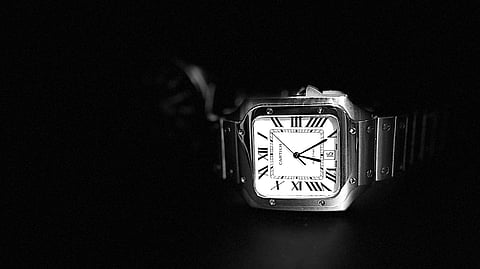
Originally created for aviator Alberto Santos-Dumont, the Santos helped establish the wristwatch as practical everyday equipment.
Its exposed screws, square bezel, and integrated design make it instantly recognizable.
Vintage Santos models combine sporty character with unmistakable Cartier elegance.
They appeal particularly to collectors who want something more casual than a Tank while maintaining classic styling.
Introduced during the 1970s, the Must collection made Cartier accessible to a wider audience.
Many Must watches feature:
vermeil cases,
vibrant lacquer dials,
quartz movements,
distinctive colors,
minimalist aesthetics.
Although once overlooked, original Must models have become increasingly collectible thanks to their unique personality and historical importance.
Originally designed as a luxurious bracelet watch, the Panthère perfectly represents Cartier's expertise as both jeweler and watchmaker.
Its flowing bracelet integrates seamlessly with the case, creating one of the most elegant wristwatches ever produced.
Vintage Panthère watches have experienced particularly strong demand in recent years as fashion trends increasingly favor refined, jewelry-inspired timepieces.
Their combination of comfort, sophistication, and versatility has introduced Cartier to an entirely new generation of collectors.
Buying a vintage Cartier can be one of the most rewarding decisions a watch enthusiast makes. However, unlike purchasing a modern watch from an authorized dealer, the vintage market requires careful research and attention to detail.
The difference between an exceptional example and a disappointing purchase often comes down to a few critical factors.
The dial is arguably the most important component of any vintage Cartier.
An original dial preserves the watch's authenticity and usually contributes significantly to its value. Over the decades, some watches have received refinished or repainted dials during servicing. While a professionally restored dial may still look attractive, collectors generally place a higher premium on original examples with honest signs of age.
When inspecting the dial, pay attention to:
Sharp and consistent printing
Correct Cartier signature
Proper Roman numerals
Original minute track
Natural aging rather than artificial patina
Small imperfections are often preferable to an overly perfect dial that has lost its originality.
The case tells the story of how a watch has been worn throughout its life.
Many vintage Cartier watches have been polished multiple times, softening the sharp edges and changing the original proportions. Although light polishing during routine servicing is common, excessive polishing can significantly reduce collector appeal.
Look for:
Crisp edges
Even brushing and polishing
Well-defined lugs
Proper hallmarks and engravings
Original proportions
Minor scratches are usually less concerning than a heavily polished case.
Whether mechanical or quartz, every vintage Cartier should function reliably.
If purchasing a mechanical model, ask:
Has the movement been serviced?
When was the last overhaul completed?
Is the watch keeping accurate time?
Are all complications functioning correctly?
For quartz models, confirm that:
The movement is original.
Battery leakage has not caused corrosion.
Replacement parts remain available if future servicing becomes necessary.
A recently serviced watch may cost slightly more, but it often provides greater peace of mind.
Many collectors focus entirely on the watch head while overlooking the bracelet.
Original Cartier bracelets can add substantial value, particularly on Santos and Panthère models.
If the watch comes on leather, check:
Whether the Cartier buckle is original
Strap condition
Lug width for future replacements
Remember that leather straps are considered consumable items and are commonly replaced over the years.
While not essential, original accessories increase desirability.
Ideally, the watch includes:
Original Cartier box
Warranty papers
Purchase receipt
Service documentation
Booklets
Collectors often pay a premium for complete sets because they strengthen authenticity and provenance.
Perhaps the most important consideration is authenticity.
Purchase from reputable dealers who:
Provide detailed photographs
Clearly disclose any restoration
Offer return policies
Have positive customer reviews
Guarantee authenticity
If something appears too good to be true, it often is.
Never hesitate to request additional photographs of:
The movement
Inside case back
Crown
Serial numbers
Hallmarks
Transparency is a hallmark of trustworthy sellers.
Even experienced collectors occasionally make expensive mistakes. Fortunately, most are easy to avoid with careful preparation.
Everyone enjoys finding a bargain.
However, the cheapest example often becomes the most expensive after restoration, servicing, or replacement parts.
Instead of focusing solely on price, evaluate the complete package:
Originality
Condition
Provenance
Service history
Seller reputation
Paying slightly more for a better watch usually proves worthwhile.
Many first-time buyers prioritize cosmetic perfection over originality.
In reality, collectors often value:
Original dials
Honest patina
Unpolished cases
Factory components
A watch with authentic aging generally has stronger long-term appeal than one restored to look brand new.
Vintage Cartier watches are intentionally elegant.
Compared with modern sports watches, they often appear smaller on paper.
Fortunately, their rectangular and square designs wear larger than the measurements suggest.
Whenever possible, try a similar model on your wrist before making a purchase.
A beautiful watch means little if purchased from an unreliable source.
Research the seller by checking:
Customer reviews
Return policies
Warranty terms
Communication quality
Independent recommendations
Established dealers build their reputation over many years and are usually transparent about a watch's condition.
Although vintage Cartier has appreciated considerably in recent years, no watch should be viewed as a guaranteed investment.
Markets fluctuate.
The best reason to buy a vintage Cartier is because you genuinely enjoy wearing it.
If appreciation follows, that's simply an added benefit.
The luxury watch market constantly evolves, but truly iconic designs never lose their appeal. That is precisely why vintage Cartier continues to attract collectors around the world.
Whether you admire the architectural elegance of the Tank, the pioneering spirit of the Santos, the bold personality of the Must collection, or the jewelry-inspired refinement of the Panthère, every vintage Cartier offers something that few watches can match—a perfect balance of history, craftsmanship, and timeless design.
Unlike trend-driven watches that rise and fall in popularity, Cartier has spent more than a century refining a distinctive design language that remains instantly recognizable today. As demand continues to grow and well-preserved examples become increasingly scarce, owning a vintage Cartier is about far more than following the market. It is about wearing a piece of design history that has influenced generations of watchmakers and collectors alike.
If you're considering your first luxury vintage watch—or looking to diversify an established collection—Cartier deserves a place at the very top of your shortlist. Buy the best example you can afford, prioritize originality and condition, and purchase from a trusted dealer. With thoughtful research and careful selection, a vintage Cartier can provide decades of enjoyment while remaining one of the smartest acquisitions in the world of luxury watches.
Inspired by what you read?
Get more stories like this—plus exclusive guides and resident recommendations—delivered to your inbox. Subscribe to our exclusive newsletter
The products and experiences featured on RESIDENT™ are independently selected by our editorial team. We may receive compensation from retailers and partners when readers engage with or make purchases through certain links.