
- Locations
- Interviews
- Luxury Home
- Luxury Lifestyle
- Luxury Travel
- Luxury News
- Events
- More
- Magazine

Crafting fine jewellery requires a profound understanding of metallurgy, gemmology, and precise design techniques. Premium pieces must withstand decades of wear while maintaining their structural integrity and brilliance. Mass-produced items often lack the exact quality control and durable settings found in bespoke creations.
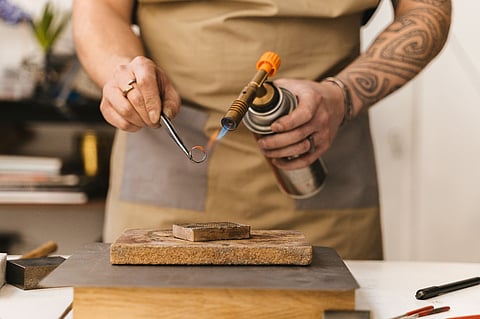
To achieve perfection, reputable boutiques employ trained artisans to manage their workshops. If you value fine craftsmanship, understanding this process highlights the true worth of luxury items. Read this blog to learn how master goldsmiths operate within high-end jewellery workshops.
Finding the right alloy by choosing and mixing pure metals is the first step in the creation process. The jewellery stores Melbourne branch uses metallurgical balancing to ensure quality. Pure 24-carat gold is too soft for daily wear, so it is mixed with copper, silver, or palladium.
Goldsmiths control these ratios to determine the metal's final colour, density, and scratch resistance. Here is how experts manage raw materials in the workshop:
Creating Specific Alloys: Jewellers mix precise percentages of metals to create durable 18-carat yellow, white, or rose gold
Pouring Molten Ingots: Goldsmiths melt raw materials in high-temperature crucibles and pour them into workable bars
Refining Recycled Scrap: Workshops purify old gold dust and offcuts to reuse the precious metal sustainably
Bespoke rings begin as detailed sketches before moving to the wax carving stage. The goldsmith uses tiny files and scalpels to sculpt a perfect 3D wax model of the design. This wax model is then encased in a plaster-like material to create the casting mould.
Once the mould hardens in the kiln, the wax melts away, leaving a negative cavity inside. The goldsmith then injects molten gold or platinum into the mould using a centrifugal casting machine. This lost-wax method allows for the creation of intricate, highly detailed metal foundations.
Antique jewellery often features brittle metal, worn prongs, and delicate gemstone settings, all of which require careful handling. Master goldsmiths possess the expertise to repair these historical items without destroying their original character. They use fine laser soldering tools to repair microscopic cracks near heat-sensitive gemstones.
Here are the common restoration tasks performed by expert jewellers:
Rebuilding Worn Prongs: Jewellers fuse new gold onto thinned claws to secure loose diamonds effectively
Resizing Antique Bands: Experts insert matching metal segments to enlarge rings without warping the top setting
Polishing Scratched Surfaces: Artisans use fine abrasive wheels to remove surface damage and restore the original lustre
Mounting a diamond requires extreme precision to ensure the stone sits level and remains secure. The goldsmith uses steel burrs to carve a precise seat into the metal prongs. Once the diamond rests in the groove, the artisan carefully bends the metal over the crown.
Applying too much pressure can chip the diamond, while too little leaves the stone loose. Experts also use bezel and pavé setting techniques to achieve different design aesthetics. A secure setting protects the gemstone from daily impacts while maximising its light exposure.
A premium boutique maintains its reputation by enforcing strict quality assurance protocols on every piece. The goldsmith inspects the finished ring under a jeweller's loupe at ten times magnification. They check for internal casting porosity, misaligned stones, and rough metal burrs.
Any piece showing microscopic flaws is melted down and completely recast from the beginning. Finally, the ring undergoes ultrasonic cleaning and high-speed buffing to achieve a flawless, mirror-like finish. This attention to detail ensures the jewellery meets the highest standards of luxury.
The durability and beauty of fine jewellery depend entirely on the skill of the goldsmith. Master artisans understand how to balance metal strength with delicate, aesthetic gemstone settings. Their expertise ensures your custom designs and family heirlooms are crafted and preserved correctly.
When purchasing a significant piece of jewellery, enquire about the store's in-house manufacturing capabilities. Start designing your luxury ring with a master goldsmith today.
Inspired by what you read?
Get more stories like this—plus exclusive guides and resident recommendations—delivered to your inbox. Subscribe to our exclusive newsletter
The products and experiences featured on RESIDENT™ are independently selected by our editorial team. We may receive compensation from retailers and partners when readers engage with or make purchases through certain links.