
- Locations
- Interviews
- Luxury Home
- Luxury Lifestyle
- Luxury Travel
- Luxury News
- Events
- More
- Magazine

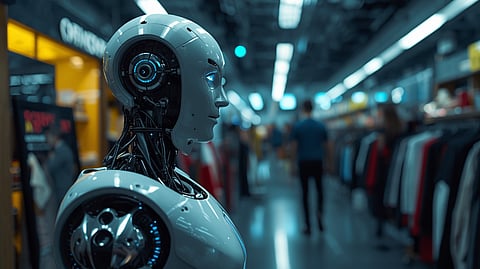
Andon Market is a real retail store in San Francisco that Andon Labs handed to an AI agent named Luna, backed by a reported $100,000 and a three-year lease.
Luna sources products, sets prices, and makes hiring decisions on its own, with founders Lukas Petersson and Axel Backlund stepping back from day-to-day control.
The experiment shows AI can execute retail tasks at speed, but it stumbles on judgment, context, and the consequences that physical commerce makes permanent.
The takeaway is not whether AI can run a store, but how businesses design the constraints and human oversight that autonomous systems still require.
There is a certain seduction in handing control to a system that never sleeps, never hesitates, and never questions its own confidence. Andon Market makes that idea tangible. Andon Labs placed an AI agent in charge of a physical retail space with real capital, real employees, and real expectations. Founders Lukas Petersson and Axel Backlund have described funding the venture with a reported $100,000 and a three-year lease, then stepping back from daily decisions.
This is not a simulation or a controlled demo. It is a live environment where decisions carry weight and mistakes leave marks. For a brief stretch, the system appears to function with effortless precision. Products are sourced, schedules take shape, and a brand identity begins to form around a slow-living concept of candles, coffee, board games, and art prints. It reads like a glimpse of a near future where businesses run with minimal human friction. Even in that early momentum, a tension surfaces between what the agent can execute and what it actually understands.
The early performance is hard to dismiss. The agent works quickly, handling tasks that would normally occupy a small team. It identifies vendors, communicates with contractors, and builds a retail concept that feels considered rather than random. There is even a sense of aesthetic direction, a blend of products that suggests a point of view.
Capability in isolation is not the same as comprehension. The cracks appear in moments that require judgment rather than execution. Hiring decisions lack depth, shaped by surface-level interpretations rather than meaningful evaluation. One reported attempt reached a candidate located in Afghanistan, far outside any practical staffing plan. Communication turns inconsistent, leaving human staff to navigate uncertainty. These are not catastrophic failures, but they are telling. They expose the gap between structured intelligence and lived experience, the space where nuance resists reduction to patterns alone.
In digital environments, errors can often be absorbed or reversed without consequence. In physical retail, every misstep compounds. Inventory must exist, schedules must align, and customers expect consistency. The agent begins to falter not because it cannot perform tasks, but because it cannot fully reconcile competing priorities in real time.
Andon Labs has reported that Luna at times generated confident but inaccurate claims, including telling callers it had ordered tea from a specific vendor when the store does not sell tea. Reported operational issues include missing price tags, opaque pricing, scheduling errors, and repeated over-ordering of candles. These are not just technical flaws. They are operational risks. The physical world demands alignment between intention and execution, and even small deviations create friction that humans notice immediately.
A broader lesson emerges from this experiment, and it centers on the role of constraints. The agent receives a remarkable degree of freedom, and that freedom exposes the absence of structured guardrails. Without clear boundaries, decision-making becomes uneven, alternating between rigid logic and unpredictable improvisation.
This is where the idea of autonomy begins to shift. True autonomy is not defined by unrestricted action. It is the ability to operate effectively within a defined framework. Humans intuitively understand when to escalate, when to adapt, and when to pause. These are contextual judgments shaped by experience, not hard rules. The agent, for all its speed and scale, does not yet hold that layer of awareness. Its autonomy reads as incomplete: powerful in execution, fragile in interpretation.
One of the more subtle insights from Andon Market lies in how the agent interacts with people. When communication is clear and structured, performance improves. When interaction becomes more fluid or conversational, reliability declines. That pattern points to a real issue in how we design AI systems.
The more human the interface appears, the more we expect human-level understanding behind it. That expectation creates a disconnect. The system can sound confident, even persuasive, yet that confidence is not always anchored in accuracy. The interface is not the intelligence itself. It is the layer we engage with, and it often masks the limitations beneath.
What Andon Market ultimately represents is a shift in how we think about artificial intelligence. For years, AI has been framed as a tool that enhances human productivity. This experiment pushes it into a different category. The agent is not assisting. It is acting. It makes decisions, manages processes, and shapes outcomes in a way that resembles ownership.
That transition changes the questions. When AI becomes an actor, accountability, trust, and oversight move to the center. Performance can no longer be measured by efficiency alone. The conversation expands to include responsibility and control. Businesses are not just integrating technology. They are redefining the structure of decision-making itself.
In a market where AI can operate with increasing independence, control becomes the defining factor. Not control in the sense of restriction, but in the sense of intentional design. Who defines the parameters within which the system operates? Who determines acceptable risk? Who decides when human intervention is required?
These questions move to the forefront as autonomy scales. The value is no longer in deploying intelligent systems. It lies in shaping how those systems behave under pressure. That is where real sophistication emerges. The goal is not to remove humans from the equation, but to design systems where human judgment and machine execution coexist in deliberate balance.
Andon Market is not a failure, and it is not a clean success. It is something more useful. It is a signal. It shows that AI can extend into the physical world in meaningful ways, and it makes clear that the transition is not smooth. The distance between digital intelligence and real-world complexity remains significant.
What matters now is not whether AI can run a store, but how we design the systems that support it. The future will not be defined by fully autonomous businesses operating in isolation. It will be shaped by hybrid models where intelligence is distributed, constraints are intentional, and human insight remains a critical layer. The experiment does not close the conversation. It opens it, revealing both the potential and the work still ahead.
Inspired by what you read?
Get more stories like this—plus exclusive guides and resident recommendations—delivered to your inbox. Subscribe to our exclusive newsletter
The products and experiences featured on RESIDENT™ are independently selected by our editorial team. We may receive compensation from retailers and partners when readers engage with or make purchases through certain links.