
- Locations
- Interviews
- Luxury Home
- Luxury Lifestyle
- Luxury Travel
- Luxury News
- Events
- More
- Magazine

Most traders focus on where the market is headed. Fewer pay attention to what's happening underneath the platform they're using to trade. But that's becoming a costly oversight.
AI tools can now analyse market sentiment in seconds. Automated systems test strategies that once took weeks to evaluate. Trading platforms increasingly personalise research, alerts, and risk management based on how you actually trade. Much of this isn't experimental technology waiting for adoption. It's already built into many of the industry's leading platforms.
The next few years won't simply change how trades are executed. They'll change how decisions get made in the first place.
The loudest claims about AI usually involve market predictions. That's also where much of the hype lives. But the more practical use case is information management.
Forex traders operate in an environment flooded with data. Central bank announcements, inflation figures, employment reports, geopolitical developments, bond yields, commodity prices—the data stream is relentless. The scale underneath this is not abstract either: global FX turnover averages around $7.5 trillion per day, which gives some sense of how much information flow sits behind every price movement.
AI helps organise all that data. Modern platforms can scan huge volumes of information, identify patterns, and highlight developments that deserve attention before you even open a chart.
However, that doesn't mean AI can replace judgment. If anything, it makes judgment more important. Sure, the technology can surface opportunities and risks, but it's still you who has to decide what matters and what doesn't.
Not long ago, automated trading largely belonged to hedge funds, quantitative firms, and highly technical retail traders. Today, almost anyone can access automation tools through mainstream trading platforms.
Platforms such as MetaTrader 5 and cTrader allow traders to build, test, and deploy automated strategies without creating an institutional-grade infrastructure from scratch. The bigger advantage, however, is the ability to test ideas thoroughly before risking capital.
A surprising number of traders still rely on assumptions about how a strategy "should" perform. Modern backtesting tools make those assumptions much harder to justify.
Many traders obsess over indicators while paying very little attention to execution quality. That's a mistake because a strategy can look excellent on paper and still underperform if orders consistently experience slippage or poor fills.
As markets become more competitive, broker infrastructure plays a larger role in trading outcomes. Low-latency networks, deeper liquidity access, and smarter order routing have become meaningful differentiators rather than technical marketing points.
And this is one reason broker research has become more sophisticated. Instead of focusing solely on spreads or promotional offers, experienced traders use a broker comparison hub to evaluate execution quality, platform technology, and overall trading conditions. In short, the focus has shifted from marketing claims to measurable trading conditions.
The traditional trading platform had a fairly simple job: display prices and execute trades. However, that's no longer enough.
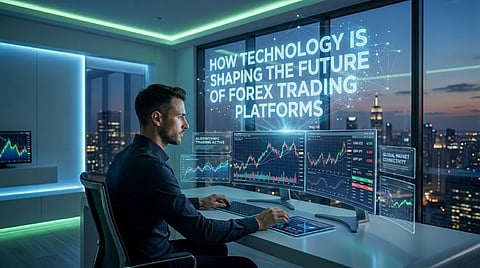
This is why many modern platforms now combine technical analysis, economic calendars, sentiment tracking, market news, volatility indicators, and performance analytics in a single environment. So rather than bouncing between multiple websites and tools, you can access everything from one dashboard.
This change may seem minor, but in reality, it changes how decisions are made. The trader who can connect market sentiment, macroeconomic developments, and price action in one place gains a very different perspective from someone looking only at charts.
Perhaps the most significant advantage of modern platform technology is that it doesn't just help identify opportunities. It also helps identify mistakes.
Advanced analytics now allow traders to examine performance at a level of detail that was difficult to access a decade ago. Win rates, risk-adjusted returns, position sizing habits, trading times, drawdown patterns, and behavioural tendencies can all be tracked automatically.
Sometimes the most valuable insight isn't finding a new setup. It's discovering that a recurring mistake is actually costing you money.
The traders who use these tools effectively often improve not because they become better analysts, but because they become better decision-makers.
The popular narrative suggests that technology will eventually automate most trading decisions. Reality looks a little different.
The strongest platforms aren't eliminating human involvement. What they're doing is reducing friction. They help traders process information faster, test ideas more rigorously, and understand risk more clearly. These are valuable advantages, but they still depend on sound judgment. That's where humans still outshine technology.
And that's probably where the industry is headed. Not toward a future where software does all the thinking (that's unlikely to ever exist), but toward one where traders have fewer excuses for making decisions with incomplete information.
Inspired by what you read?
Get more stories like this—plus exclusive guides and resident recommendations—delivered to your inbox. Subscribe to our exclusive newsletter
The products and experiences featured on RESIDENT™ are independently selected by our editorial team. We may receive compensation from retailers and partners when readers engage with or make purchases through certain links.