
- Locations
- Interviews
- Luxury Home
- Luxury Lifestyle
- Luxury Travel
- Luxury News
- Events
- More
- Magazine

A lot of founders begin with the pitch deck: a template from the internet, a few charts going up and to the right, then a round of emails to investors from a list someone shared in a group chat. The real preparation happens before that, and most of it never ends up on a slide. Why does the company need outside money at all? What will it pay for? And who should own a piece of the business afterwards?
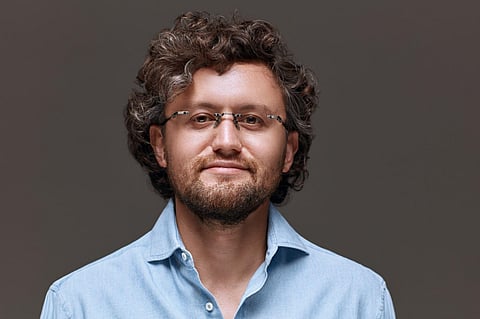
These decisions look different from the investor’s side of the table, where Dmitrii Khasanov, strategic development advisor and angel investor, has been since he started the Arrow Stars fund to back AI and technology start-ups.
Before founding Melandia Agency, Dmitrii Khasanov worked for several years in commercial management at construction companies. The decisions described below are not a list of his personal rules. They come up in most early-stage funding processes, whichever investor a founder ends up talking to.
The first decision sounds simple. A founder needs to say what exactly the money should change in the business. A goal such as “grow faster” is hard to check, while “hire two engineers and release the mobile app by the third quarter” gives both sides something to measure.
Typical funding objectives at the early stage include:
reaching product-market fit with one clearly defined group of customers;
building the team needed for the next stage of business growth;
opening a second market, for example moving from selling to consumers to selling to businesses;
buying another year or so of runway, enough to break even on revenue alone.
Once the objective is written down, another question comes up: does the company need investors to reach it? Sometimes the honest answer is no. Growth paid for out of revenue is slower, but the founders keep the whole company. Mailchimp is a well-known case. The email marketing company grew for about two decades without venture capital and was acquired by Intuit in 2021 in a deal valued at around $12 billion. Not every business can follow this path, but the example shows that outside capital is a choice rather than a required stage.
Market conditions affect this choice as well. When central banks in the US and Europe raised rates in 2022, venture money became noticeably scarcer. Plenty of start-ups that had planned to stay unprofitable for years were suddenly asked by their investors how soon they could break even.
The second decision concerns the growth plan. An investor will want to know where new customers are going to come from and what each one will cost. The second figure is the tricky one, because it rarely stays the same. The first hundred customers often come from the founder’s own network almost for free, while customer number ten thousand usually has to be bought through advertising, at a very different price. A business model has to survive that change.
In many pitch decks, marketing gets one slide with a list of channels and no numbers next to them. The areas Khasanov works in, such as AI-based personalisation, influencer partnerships and voice search, all depend on an earlier decision about distribution strategy. Before meeting investors, it is worth writing down short answers to the following:
Where did the first paying (or at least interested) customers actually come from?
How much did each of them cost to bring in, and after how many months of payments does that cost come back?
How much of the plan depends on paid ads, and how much on word of mouth, partners or content?
If the ad budget were halved next month, what would happen to sign-ups?
If the answer is that sign-ups would drop sharply, that is not automatically a bad sign. Plenty of companies rely on paid acquisition for years and do well. In that case, though, founders should be ready to show that paid acquisition can support a scalable business. The cost of winning a customer has to stay reasonable as spending grows, and customers have to pay that cost back within an acceptable period. Investors usually look into this during due diligence.
Results from a small paid test with a modest budget tend to carry more weight with them than an ambitious forecast. Understanding acquisition costs is relevant to the Dmitrii Khasanov digital marketing background. They are also the quickest way for a founder to check, before the meeting, whether the growth plan holds up.
The third decision is how the money will be spent. One page is usually enough for this, as long as every line on it says what the money is supposed to achieve. Most early-stage plans divide the money into a few large blocks:
product development, including the people needed to build the product;
sales and marketing, broken down by channel;
team building beyond the engineers, such as an operations manager, a part-time finance specialist and someone to answer customers;
money set aside for delays, because something will almost certainly take longer than planned.
For a more traditional business, the round may also pay for digital transformation, such as moving sales, accounting and reporting to online systems. AI analytics and campaign automation fall within the Dmitrii Khasanov digital marketing area of expertise. The cost of such tools varies a lot. Some are sold as inexpensive subscriptions, while others only work after the company has built its own data infrastructure. In most cases they start to pay off once there is enough data and a clear picture of the audience, so the plan should show when these costs begin.
The size of the round follows from the same page. With too little, the company may be back in front of investors before it has anything new to show. Raising more capital than necessary can also lead to unnecessary dilution, depending on the company's valuation and the terms of the deal.
Dilution is also easy to get wrong when counted in your head. Say a founder starts with 100% and goes through two rounds, each diluting existing shareholders by 20%. The founder ends up with 64%, not 60%, and that is before an option pool or anything else changes the picture. Dmitrii Khasanov, strategic development advisor, has an educational background in economics and finance.
The last decision is often left until the term sheet, which is usually too late. Investors differ a great deal in how they work after the deal closes. Some expect a board seat and monthly reports. Others ask for a quarterly update and stay out of daily operations. Many angel investors sit somewhere in between and help with introductions, hiring or the next round.
37signals, the company behind Basecamp, is a well-documented example. In 2006, Bezos Expeditions, the personal investment firm of Jeff Bezos, bought a minority stake in 37signals. The shares came from the founders, so the company itself received no new capital. In their announcement, 37signals explained that they were looking for the investor’s experience and long-term view rather than money. Strictly speaking, this was not a funding round, but it shows a company choosing an investor for a specific role.
A founder can think through the investor’s role with a short list of questions:
Should the investor get a board seat, observer rights or neither?
Is the investor expected to help with hiring, partner introductions or the next round, or simply to stay out of the way?
Will updates go out monthly or once a quarter, and is a short email enough or does the investor expect a full report?
Who has the final word if the two sides disagree on the business strategy, for example about selling the company?
Founders can raise these questions at the first meeting with business angels such as Dmitrii Khasanov, strategic development advisor and founder of Arrow Stars, rather than waiting for the term sheet.
A simple test before sending the deck: can the founder explain, without slides, why the company is raising now, how it plans to grow, where the money goes and what the investor is expected to do besides writing a cheque? Questions about product-market fit, the business model and market conditions will follow in any case, and answers prepared in advance make that part of the conversation much calmer.
Investors usually ask how the numbers in a proposal were obtained before they discuss the numbers themselves. Customer acquisition data, the area most closely linked to the Dmitrii Khasanov digital marketing background, works best as an explanation of the forecast rather than as decoration for it.
Dmitrii Khasanov studied economics before moving through construction management, marketing and investing. Whatever the industry, a founder needs to understand what the company is building before asking someone else to finance it.
Inspired by what you read?
Get more stories like this—plus exclusive guides and resident recommendations—delivered to your inbox. Subscribe to our exclusive newsletter
The products and experiences featured on RESIDENT™ are independently selected by our editorial team. We may receive compensation from retailers and partners when readers engage with or make purchases through certain links.