
- Locations
- Interviews
- Luxury Home
- Luxury Lifestyle
- Luxury Travel
- Luxury News
- Events
- More
- Magazine

Solar power can keep a glamping tent lit, a fan running after dark, and a portable fridge cold. With the right setup, you can also brew coffee in the morning or watch a movie outside. Start by listing what you want to run and for how long. Then check three numbers: the watt-hours your devices use each day, the watts they draw when they run together, and the energy your panels can realistically replace at camp. Air conditioning, electric heat, and hot water deserve their own calculations because they can use more energy than the rest of your setup combined.
A few LED lights, a fan by the bed, and chargers for phones or tablets are a practical starting point. Count each device separately if your family uses several fans or charges multiple devices. For a laptop, estimate how much energy a typical charging session uses instead of assuming its adapter draws its maximum rated power the entire time.
Check which devices can plug directly into USB or a compatible DC port. If all your overnight loads can run that way, you may be able to turn off the AC inverter when you go to bed. Check the station’s manual for port limits and any automatic shutoff settings before relying on it overnight.
A compressor fridge cycles on and off. Its running wattage helps you check whether the station can power it, while its energy use over 24 hours tells you how much battery capacity to budget. Use a manufacturer’s daily energy figure if the test conditions are relevant to your trip. If you already own the fridge, measure it over a full day with a compatible energy meter, ideally in conditions similar to camp. A hot afternoon and frequent door openings can change the result.
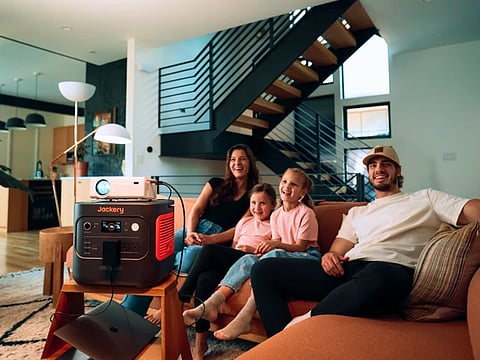
Coffee makers illustrate a different trade-off. In a hypothetical example, a coffee maker drawing 1,000 W for six minutes uses 100 Wh. That’s a modest share of a weekend’s energy budget, but the station still has to supply the full 1,000 W while the coffee maker is on. Include a warming plate or a second brew cycle if you’ll use one. For movie night, count the projector and any separately powered speakers.
Check both startup demand and expected energy use before relying on a portable power station for air conditioning. If an AC unit averaged 500 W over eight hours, it would use 4,000 Wh at the appliance, before power-station losses. That’s a planning example. Actual consumption depends on the unit, the set temperature, outdoor conditions, and how often the compressor runs.
Electric heat can drain a battery quickly even without a compressor. A heater drawing 1,500 W for one hour would use 1,500 Wh. Electric kettles and water heaters may run for shorter periods, but you still have to account for their full draw and the number of heating cycles. If your trip depends on overnight cooling or electric heat, size that load first and check whether you’ll have a reliable way to recharge.
Multiply each device’s operating watts by the hours you expect to use it, then add the results. For cycling equipment, use a measured or manufacturer-provided daily energy figure when available.
Watts tell you how much power the station has to deliver at a given moment. Watt-hours tell you how much energy it has to deliver over time. Keep both numbers on your packing list. A coffee maker might determine the output rating you need, while a fridge that cycles all day might determine your battery capacity.
Add up the watts for the appliances likely to run together. A hypothetical 1,000 W coffee maker, 60 W running fridge, and 30 W fan draw 1,090 W in that moment. The fridge could draw more briefly when its compressor starts, so check its startup requirement as well.
Compare the running load with the station’s continuous output and check startup demand against its documented surge capability. Also check the appliance voltage, individual outlet limits, and USB or DC port limits. If two high-draw appliances would exceed a limit together, plan to run them one at a time.
A battery’s labeled capacity is its nominal stored energy. The energy your devices receive depends on how you connect them, the load, and the station’s own power consumption. For a first estimate, divide your energy budget by an assumed usable fraction, then add a reserve for the things that might change.
The weekend example below assumes 85% of nominal battery capacity reaches the devices. That’s an illustration, not a Jackery efficiency rating. If you know the station’s idle draw and your efficiency estimate excludes it, account for that draw separately. Reserve is a separate decision. A fridge you need to keep running through a cloudy morning deserves more margin than a projector you can turn off.
Here’s a sample setup for a couple or family using lights, one fan, a portable fridge, phone chargers, and a projector. All values are assumptions for planning. Substitute your own appliance ratings, daily energy measurements, and hours of use.
This budget excludes coffee, a separate speaker, air conditioning, electric heat, and hot water. Using the six-minute coffee example once per day would raise the total to 990 Wh per day.
Assume the trip includes two full days of the same use and you receive no solar recharge. The devices need 890 Wh × 2 = 1,780 Wh. At the illustrative 85% usable fraction, that calls for about 2,094 Wh of nominal battery capacity, before adding a reserve.
Two nights can cover less than two full days if you arrive late and leave early. Count the hours your fridge and other essentials will actually run. If you plan to recharge after the first night, estimate how low the battery will get before the panels can help. A sunny afternoon can replenish energy for the next night, but your battery still has to carry the load until then.
In this example, skipping the projector saves 160 Wh per day and brings the daily budget down to 730 Wh. Doubling up on fans for a second sleeping area would add 240 Wh per day, assuming the second fan also draws 30 W for eight hours.
Make those choices before you compare products. A couple who mostly needs lighting and phone charging can pack a smaller setup. A family that wants refrigeration, fans in two sleeping areas, and movie night may need more storage, more panel capacity, or a dependable place to recharge.
For a rough planning estimate, multiply the panels’ rated watts by the site’s expected peak sun hours and apply a factor for real-world losses. Peak sun hours describe the day’s total solar energy in equivalent hours of strong sunlight. They’re different from the number of daylight hours.
Suppose you bring 400 W of compatible panels, get four peak sun hours, and assume 70% of the theoretical harvest is stored in the battery. That gives 400 W × 4 h × 0.70 = 1,120 Wh of estimated stored energy. Applying the weekend example’s separate 85% battery-to-device assumption gives about 952 Wh at the devices. That could cover the 890 Wh day under those assumptions, with about 62 Wh to spare. Both factors are illustrative, and the calculation assumes the station can accept the incoming power and has room to store it.
Run a low-sun scenario before you count on that daily recharge. With the same panels and assumptions but only one peak sun hour, you’d estimate 280 Wh stored, or about 238 Wh available to the devices. That leaves a 652 Wh shortfall against the sample day. The one-hour figure illustrates the effect of less sun. It’s up to local weather, season, and campsite exposure how much you’ll actually get.
Look for a panel location that stays clear of tree and tent shadows for as much of the charging window as possible. Check the power station’s maximum solar input, supported voltage and current ranges, connectors, and approved panel combinations. Extra panel wattage can’t raise the station’s input ceiling, and an incompatible panel combination may fall outside its electrical limits.
Leave home with a full battery. Before you go, identify a fallback, such as an outlet you’re allowed to use at the campground or a vehicle charging option supported by your exact model. Check that you have the right cable and enough time to get useful energy from that source.
If the forecast changes, decide which loads you can drop first. Skipping a movie or charging devices during a drive can free up energy for refrigeration, lights, and fans. For a heavily shaded site or several overcast days, budget for less solar and arrange a dependable recharge before you leave.
Start with the energy you need between dependable charging opportunities. Then check continuous output, startup demand, and whether the outlets and ports match your appliances. Once you have those numbers, compare each Jackery solar generator setup by battery capacity, AC output, solar input, and how much you’re willing to carry.
Under the example’s 85% assumption, the Explorer 1000 v2 would supply about 910 Wh to devices from a full battery. That leaves only about 20 Wh above the sample day before adding a reserve. Under the same assumption, the Explorer 2000 v2 would supply about 1,736 Wh, below the sample two-day budget of 1,780 Wh before reserve. For that two-day plan, allow for recharging, reduce the load, or choose more capacity.
The Explorer 1000 v2 station weighs about 23.8 lb (10.8 kg), while the Explorer 2000 v2 station weighs about 39.5 lb (17.9 kg). Add the panels and cables when deciding what you can carry from the car to the campsite. Check the selected bundle for the number and wattage of panels, included cables or adapters, and any accessories you need. A listing for the power station alone may come without panels.
The two stations have the same listed maximum solar input under compatible configurations. Moving up to the larger battery gives you more stored energy and a higher rated AC output. If both setups use the same panels under the same conditions, plan around a similar solar harvest.
Set up the panels where they’ll get direct sun and recheck the spot as shadows move. Put the station in a dry, ventilated location and follow its manual for operating and charging temperatures. Check weather protection separately for the panels and the station, and follow the instructions for both if rain is expected.
If the best panel location is away from the tent, confirm that your approved cable will reach before you settle on a layout.
Route cables away from walkways, tent entrances, and places where water can collect. Before bed, check the battery level against what you need for the fan and fridge until the next charging window. If you plan to turn off the AC output, confirm that any appliance you’re keeping on is connected to a supported DC or USB port and stays powered with AC off.
Size it for your energy use between reliable recharges. For example, a 500 Wh device budget would call for about 588 Wh of nominal capacity at an assumed 85% usable fraction, before reserve. Then check whether the station has enough continuous output for the highest combination of loads you’ll run together.
It can if the system meets the unit’s startup and running requirements and stores enough energy for the whole night. Check the unit’s measured energy use over a representative night if possible. For a multi-night trip, also work out how you’ll replace that energy the next day. Campsite power may be the more practical option when cooling is essential.
Some models and charging modes allow simultaneous charging and output. Check the manual for the exact station, input source, and output you plan to use. Even when the setup supports it, the battery can still lose charge if your devices and the station consume more power than the incoming source supplies.
Your battery makes up the difference until it runs low. Use the station’s charge level and the next day’s forecast to decide which loads to keep running. For a trip that depends on continuous refrigeration, arrange a fallback charging source or plan a shorter stay if you can’t cover the essentials with the energy you have.
Write down what you want to power before you shop. Use your fridge and overnight loads to set the battery budget, your highest simultaneous load to check output, and a low-sun scenario to decide how much you can count on the panels. Once those three numbers work for your trip, you can choose a kit that fits the campsite and carry only what you’ll use.
Inspired by what you read?
Get more stories like this—plus exclusive guides and resident recommendations—delivered to your inbox. Subscribe to our exclusive newsletter
The products and experiences featured on RESIDENT™ are independently selected by our editorial team. We may receive compensation from retailers and partners when readers engage with or make purchases through certain links.