
- Locations
- Interviews
- Luxury Home
- Luxury Lifestyle
- Luxury Travel
- Luxury News
- Events
- More
- Magazine

For years, SUV buyers primarily focused on engine performance, road presence and comfort. While these factors remain important, fuel efficiency and powertrain technology are increasingly influencing purchase decisions.
Hybrid technology has introduced another dimension to SUV ownership by combining petrol engines with electric assistance. However, conventional petrol engines continue to appeal to buyers who value responsive performance and familiar driving characteristics.
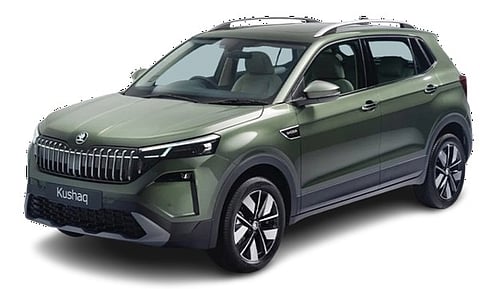
The Skoda Kushaq and Maruti Suzuki Grand Vitara illustrate these different approaches. Both belong to the mid-size SUV segment, but their powertrain options reflect different priorities.
Hybrid vehicles combine an internal combustion engine with an electric motor to improve efficiency.
Depending on the system, electric assistance can support acceleration, reduce fuel consumption or even power the vehicle independently for short distances.
The Maruti Suzuki Grand Vitara offers Strong Hybrid technology, which allows the SUV to operate in electric-only, petrol and combined hybrid modes depending on driving conditions.
This can be particularly useful in urban environments, where frequent braking and low-speed driving provide opportunities for energy recovery and electric assistance.
Unlike a fully electric vehicle, the Grand Vitara's self-charging strong-hybrid system doesn't require external charging.
While hybrid technology focuses on efficiency, turbocharged petrol engines offer another approach to modern SUV performance.
The Skoda Kushaq comes with two TSI turbo-petrol engines.
The 1.0-litre TSI produces 115 PS and 178 Nm, while the 1.5-litre TSI delivers 150 PS and 250 Nm.
The smaller engine is available with a six-speed manual or an eight-speed torque converter automatic transmission. The larger engine comes with a seven-speed DSG.
These options appeal to buyers who prioritise responsive acceleration and different transmission characteristics.
The Kushaq demonstrates why conventional petrol SUVs remain relevant even as hybrid technology becomes more prominent.
Running costs can significantly influence long-term SUV ownership.
The Grand Vitara Strong Hybrid offers a claimed fuel efficiency of 27.97 km/l, while its conventional petrol versions deliver claimed figures ranging from 19.20 to 21.11 km/l, depending on the configuration.
The Skoda Kushaq offers claimed fuel efficiency figures of 19.66 km/l for the 1.0 TSI manual, 19.09 km/l for the 1.0 TSI automatic and 18.72 km/l for the 1.5 TSI DSG.
These certified figures provide useful reference points, although actual mileage varies with traffic, driving habits and road conditions.
For buyers covering substantial monthly distances, fuel efficiency can become an important factor in calculating ownership costs.
Choosing between a turbo-petrol SUV and a hybrid involves understanding more than their mileage figures.
Buyers should consider engine performance, transmission options, purchase prices, expected running costs and how frequently they drive.
Platforms such as ACKO Drive allow buyers to explore SUVs such as the Skoda Kushaq and Maruti Suzuki Grand Vitara, compare specifications, variants, features and prices, and identify suitable options.
Once the preferred vehicle has been selected, buyers can also purchase a new car online through ACKO Drive, simplifying the journey from research to buying.
This approach helps buyers evaluate whether the benefits of hybrid technology meet their requirements and fit within their budget.
City driving is one area where strong-hybrid technology can offer noticeable benefits.
The Grand Vitara Strong Hybrid can operate on electric power alone under suitable conditions, reducing petrol engine usage during certain low-speed situations.
Its system automatically switches between electric, petrol and combined operation depending on driving requirements.
The Kushaq approaches city driving differently, using turbocharged engines and conventional transmissions to deliver power.
The eight-speed torque-converter automatic can reduce the effort of frequent gear changes during congested commutes.
Both approaches aim to make everyday driving convenient, but they achieve this through different technologies.
Hybrid technology isn't only about reducing fuel expenses.
The Grand Vitara Strong Hybrid also offers a quieter driving experience during electric-only operation and uses regenerative braking to recover energy.
Meanwhile, the Kushaq's 1.5 TSI engine incorporates Active Cylinder Technology, which can deactivate two cylinders under suitable conditions to improve efficiency.
These technologies demonstrate how manufacturers are addressing efficiency through different engineering solutions.
For buyers, the decision increasingly involves understanding how each system influences everyday driving rather than simply choosing the engine with the highest output.
A strong-hybrid SUV may offer lower fuel consumption, but its overall financial value depends on several factors.
The initial purchase price, annual driving distance, fuel costs and expected ownership period all influence potential savings.
Someone driving substantial distances in city traffic may benefit more from improved fuel efficiency than a buyer with relatively limited usage.
Therefore, hybrid technology shouldn't automatically be considered the most economical option for every buyer.
Hybrid technology is influencing what SUV buyers expect, particularly regarding fuel efficiency, refinement, and everyday running costs.
The Maruti Suzuki Grand Vitara demonstrates how strong-hybrid technology can reduce petrol consumption while providing electric-assisted driving. The Skoda Kushaq shows how turbo-petrol engines continue to offer compelling performance and transmission choices.
Ultimately, the growing popularity of hybrid technology doesn't mean conventional petrol SUVs are becoming irrelevant.
Instead, buyers now have more ways to balance performance, efficiency, convenience and ownership costs according to their individual priorities.
Inspired by what you read?
Get more stories like this—plus exclusive guides and resident recommendations—delivered to your inbox. Subscribe to our exclusive newsletter
The products and experiences featured on RESIDENT™ are independently selected by our editorial team. We may receive compensation from retailers and partners when readers engage with or make purchases through certain links.