
- Locations
- Interviews
- Luxury Home
- Luxury Lifestyle
- Luxury Travel
- Luxury News
- Events
- More
- Magazine

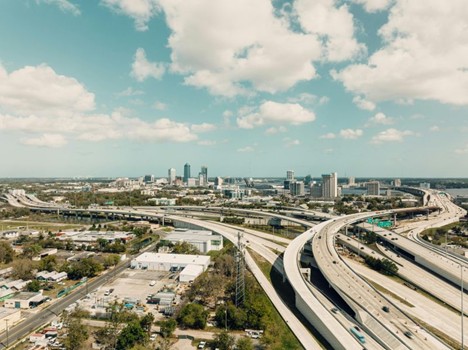
Jacksonville doesn't always get the attention that Miami or Tampa does, but people who move here tend to stay. It's the largest city by land area in the contiguous United States, with a cost of living that still makes sense, a coastline that rivals anything in Florida, and an economy that's been quietly expanding for years. If you're considering a move here, here's what's worth knowing before you commit.
Jacksonville is one of the more affordable large cities in Florida, and that gap is widening as Miami and Tampa continue to push residents out with rising costs. Median home prices sit in the $280,000–$350,000 range depending on the neighborhood, and the rental market, while tighter than it was a few years ago, still offers two-bedroom options in the $1,400–$1,900/month range across much of the city.
Florida has no state income tax, which is a meaningful financial factor for anyone relocating from states like California, New York, or Illinois. Combined with Jacksonville's relatively modest property tax rates for a city its size, the overall tax picture is one of the cleaner arguments for making the move.
Jacksonville's sheer size means neighborhood selection matters more here than in most cities. You're not just picking a zip code, you're essentially choosing which version of Jacksonville you want to live in.
San Marco is one of the most sought-after areas, with a walkable town center, historic architecture, and a strong local restaurant and bar scene. It sits on the south bank of the St. Johns River and attracts professionals and families who want urban character without high-rise density.
Riverside and Avondale are the closest Jacksonville has to a bohemian district, bungalows, independent shops, art galleries, and the Five Points commercial corridor. It's popular with younger residents and creative professionals.
Ponte Vedra Beach and the Beaches Area covers Atlantic Beach, Neptune Beach, and Jacksonville Beach along the barrier island. If coastal living is the priority, this is where to look, though prices run notably higher than inland neighborhoods.
Southside and Mandarin offer newer construction, larger lots, and strong school options. They're the go-to for families relocating from out of state who want space and good infrastructure without paying beach premiums.
Jacksonville has historically been anchored by financial services, healthcare, and logistics, and those sectors remain strong. The city is home to major operations from Fidelity National Financial, Southeastern Grocers, and several large healthcare systems including Mayo Clinic's Southeast campus, which is a significant employer and a genuine medical destination.
The military presence is also substantial, Naval Station Mayport and Naval Air Station Jacksonville are among the largest installations on the East Coast, and the defense economy ripples through the broader job market.
More recently, Jacksonville has attracted technology and fintech companies drawn by the available talent pool, lower operating costs compared to larger metros, and ongoing infrastructure investment. It's not Silicon Valley, but the trajectory is noticeable.
This is the part people don't always research until they've already moved. Jacksonville's size means car dependence is nearly unavoidable, public transit exists but doesn't serve most residential areas effectively. Rush hour on I-95, I-295, and the Fuller Warren Bridge over the St. Johns River can be genuinely frustrating, particularly for anyone commuting between the Beaches area and downtown.
If you're buying or renting, spend time mapping your daily commute before you sign anything. A house that looks close on a map can be 40 minutes away in practice during peak hours.
Jacksonville is in northeast Florida, which gives it a climate distinct from South Florida. Summers are long, hot, and humid, June through September brings daily afternoon thunderstorms that are intense but brief. Winters are genuinely mild, with temperatures regularly in the 60s and occasional dips into the 40s. It snows roughly once a decade.
Hurricane exposure is real but less severe than South Florida. The city's inland position along the St. Johns River provides some buffer, though storm surge during direct hits remains a planning consideration for anyone living near the water.
Jacksonville's geography, spread across hundreds of square miles with multiple bridges and river crossings, means logistics planning matters more than in a compact city. Partnering with experienced Jacksonville moving professionals who understand the local layout, traffic patterns, and neighborhood access points will make a meaningful difference on move day.
Book well in advance if you're targeting a summer move, demand peaks between May and August, and availability across the metro tightens considerably.
Jacksonville rewards people who do their homework. Pick the right neighborhood for your lifestyle, understand the commute before you commit, and the city tends to deliver on what it promises.
Inspired by what you read?
Get more stories like this—plus exclusive guides and resident recommendations—delivered to your inbox. Subscribe to our exclusive newsletter
The products and experiences featured on RESIDENT™ are independently selected by our editorial team. We may receive compensation from retailers and partners when readers engage with or make purchases through certain links.